Spartacus Party, Fire Island’s big end-of-season LGBTQ+ party

Spartacus, the Fire Island Party Not to Be Missed
koitz says that Spartacus Party on Fire Island is one of those rituals worth witnessing at least once.
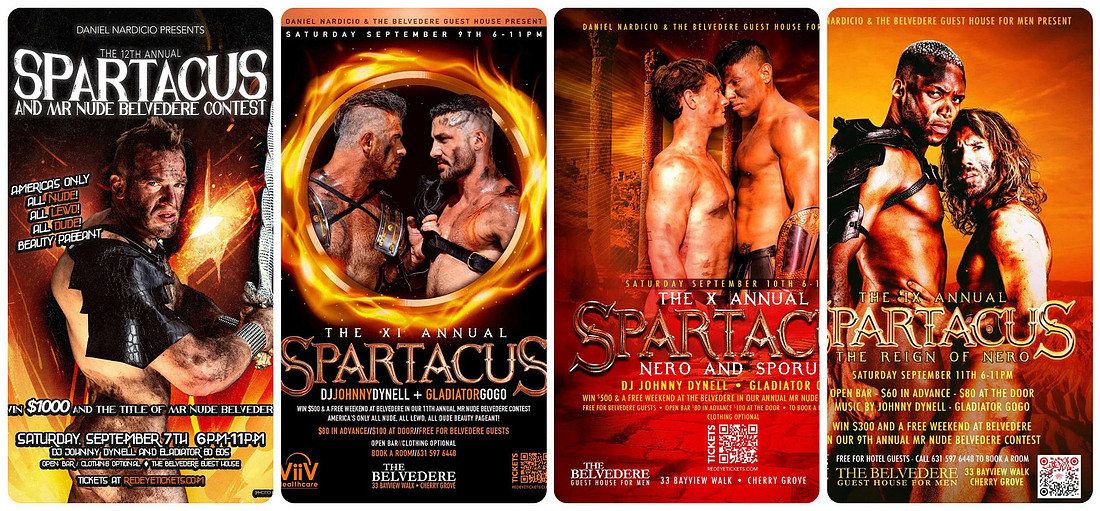
Every year, as summer begins its slow retreat from Fire Island, Daniel Nardicio and the Belvedere Guest House in Cherry Grove throw open their doors for Spartacus—a celebration that has become one of the island’s most uninhibited queer traditions. Now in its 14th year, Spartacus arrives a little later than usual in 2026, taking place on Saturday, September 19, at the Belvedere.
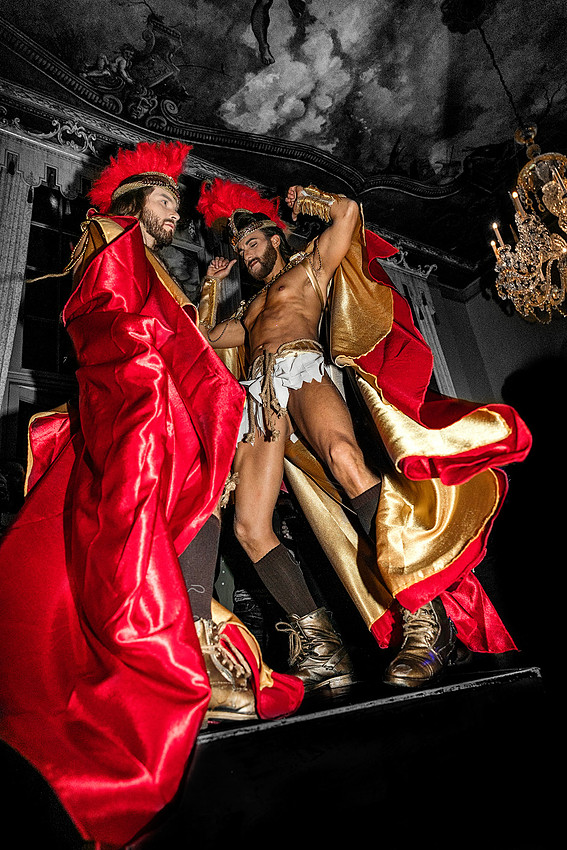

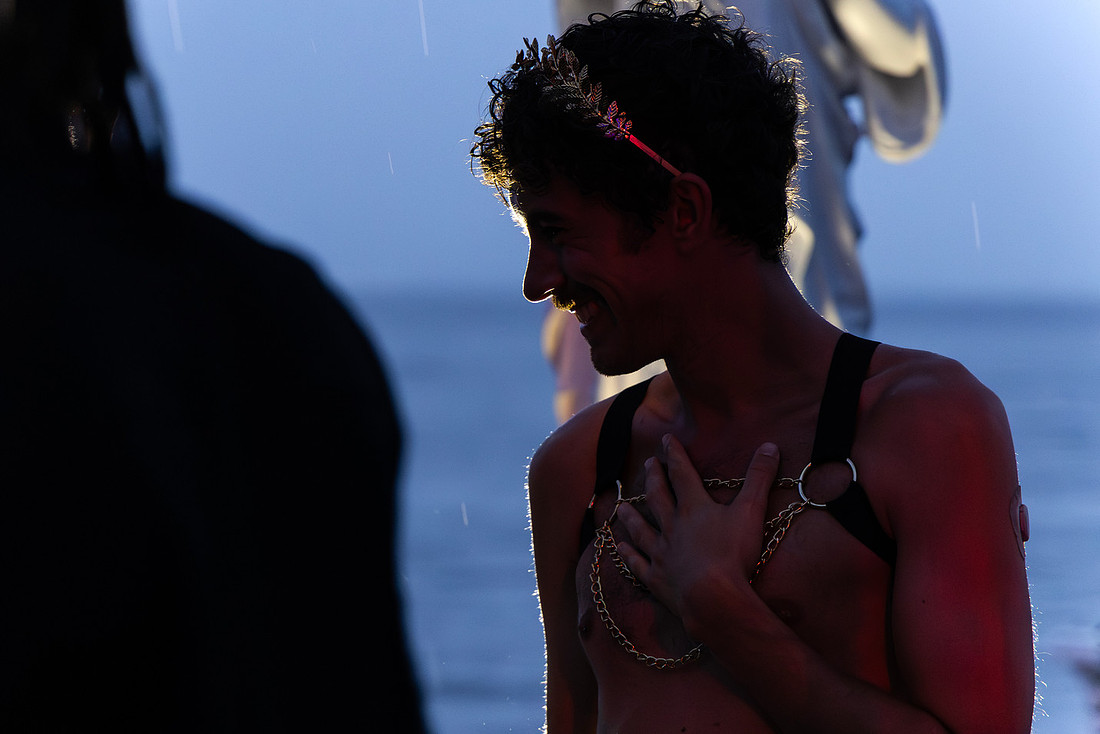
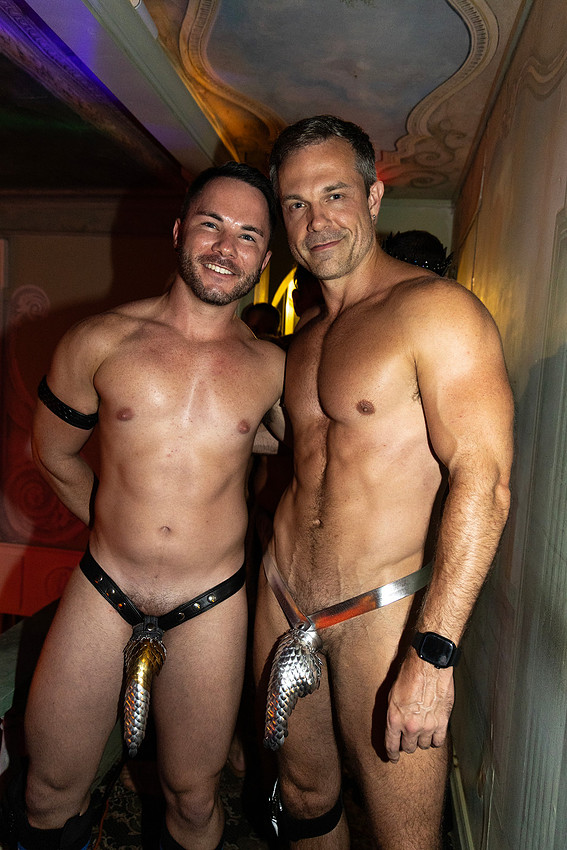
The party wears its excess proudly. Raunchy, campy, body-positive and unapologetically queer, Spartacus is a place where inhibition is left at the door and the body becomes part of the spectacle. Clothing is optional, the atmosphere is deliberately provocative, and the night’s centerpiece is the Mr Nude Belvedere contest, beginning at 10 PM—a gloriously irreverent celebration of nudity, performance and queer freedom.
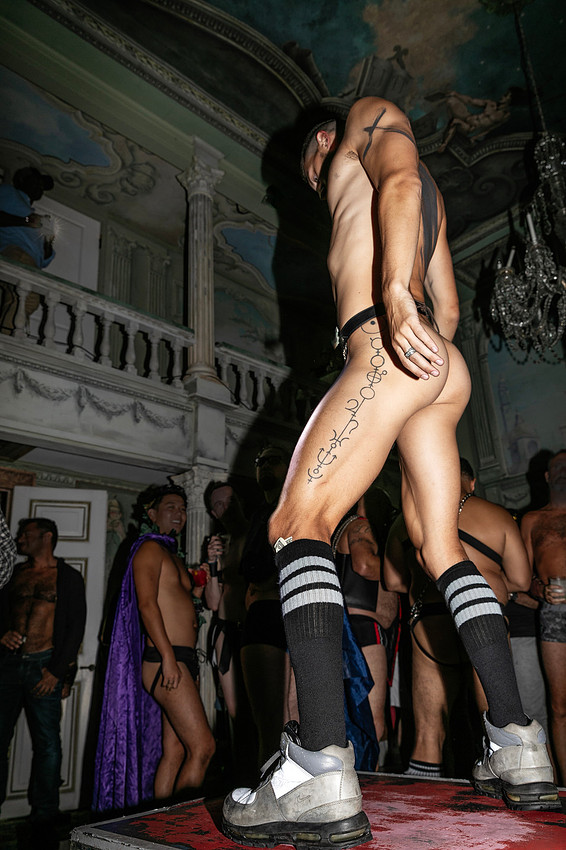
Mr Nude Belvedere
At the heart of Spartacus is the Mr. Nude Belvedere, an outrageous adult male beauty pageant that has become one of the party’s defining spectacles. The organizers cheekily call it “America’s only all nude, all lewd, all dude beauty pageant,” a title that leaves little to the imagination. The winner walks away with $1,000 and the coveted title of Mr. Nude Belvedere.
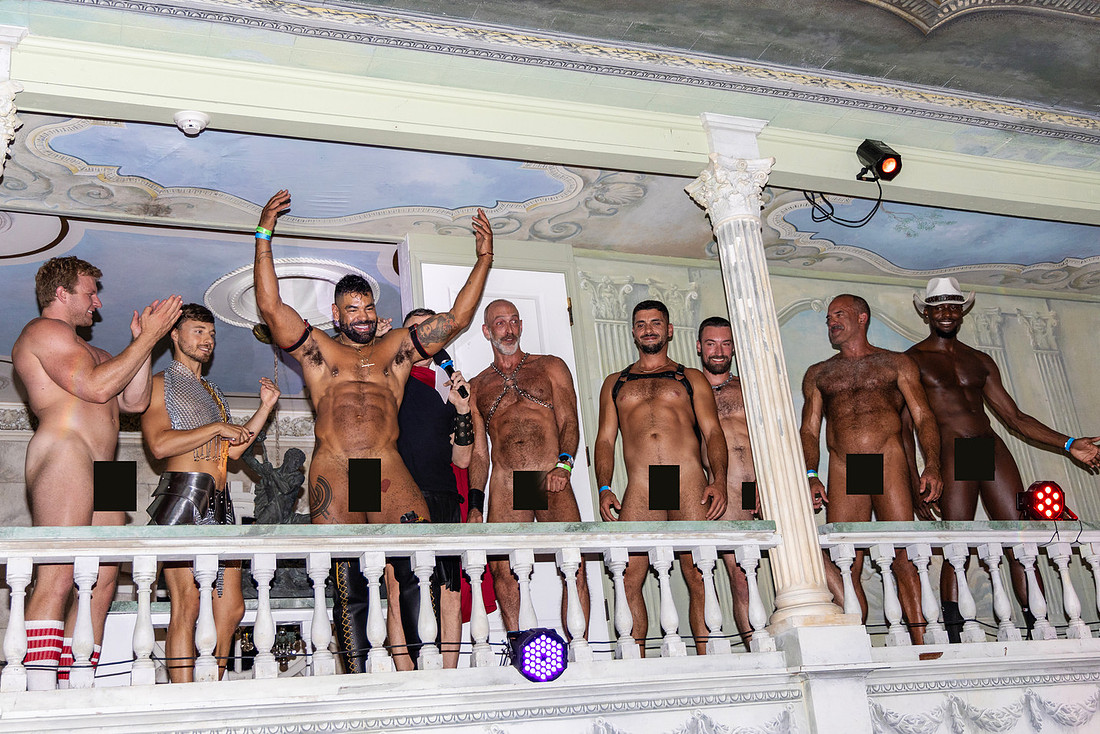
Guiding the proceedings is Daniel Nardicio, whose sharp wit and mischievous sense of humor transform the contest into something far more theatrical than a simple display of flesh. Nudity is only the starting point; personality, humor, confidence, exhibitionism and audience interaction are all part of the performance. The contestants take the stage completely naked, vying for the crowd’s attention as Nardicio orchestrates the evening into a gloriously campy and unabashedly sexual piece of queer theater.
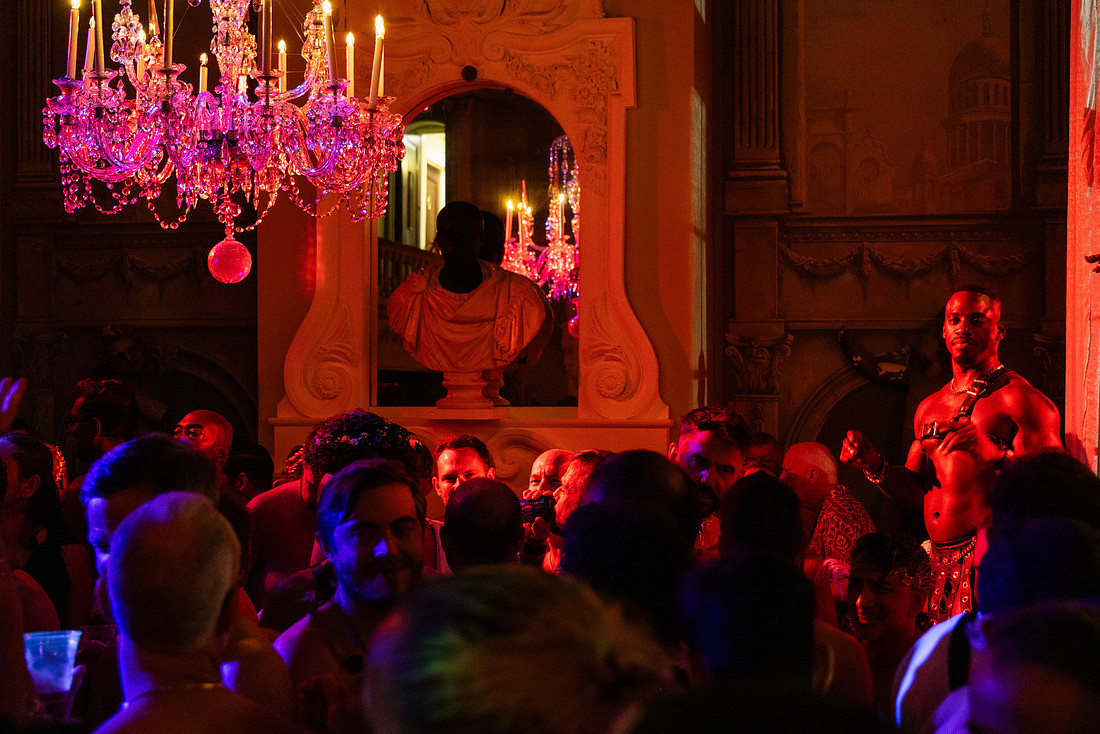
koitz and the Spartacus Party
For years, nightlife photographer koitz has returned to Spartacus with his camera, capturing the party in all its unruly, liberated glory. Most of the posters created for the event’s contests feature his photographs, themselves shot on Fire Island, preserving the particular mythology of the night from one season to the next. One of his most iconic images—a completely naked gorgeous go-go boy appears in his 2020 coffee-table book, koitz Gay Fire Island.
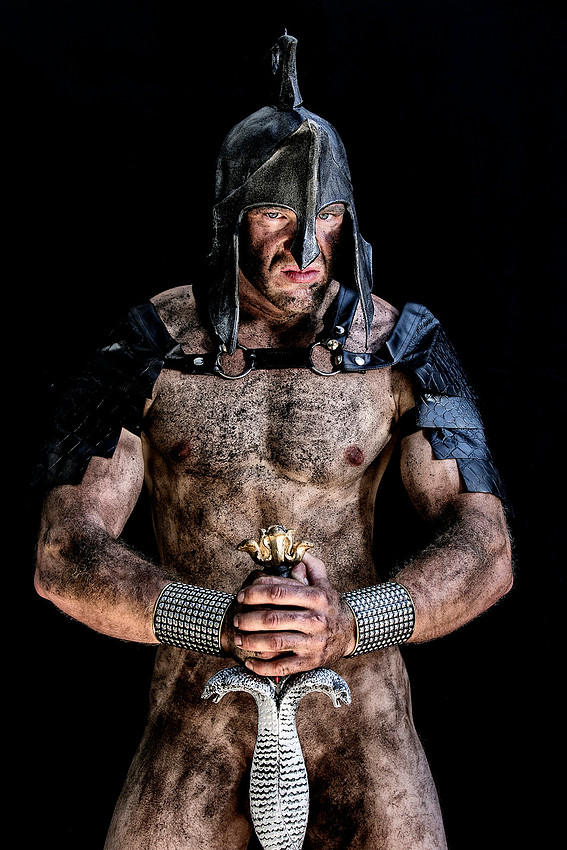
For koitz, Spartacus may be his favorite party of the season. He is drawn to the strange alchemy of it all: the costumes and characters, the uninhibited crowd, the gloriously naked go-go boys, the sense that the usual rules have been temporarily suspended—and, of course, the unapologetic nudity. There is something about the particular freedom of Spartacus that, in his view, sets it apart from anything else in either Cherry Grove or the Pines.
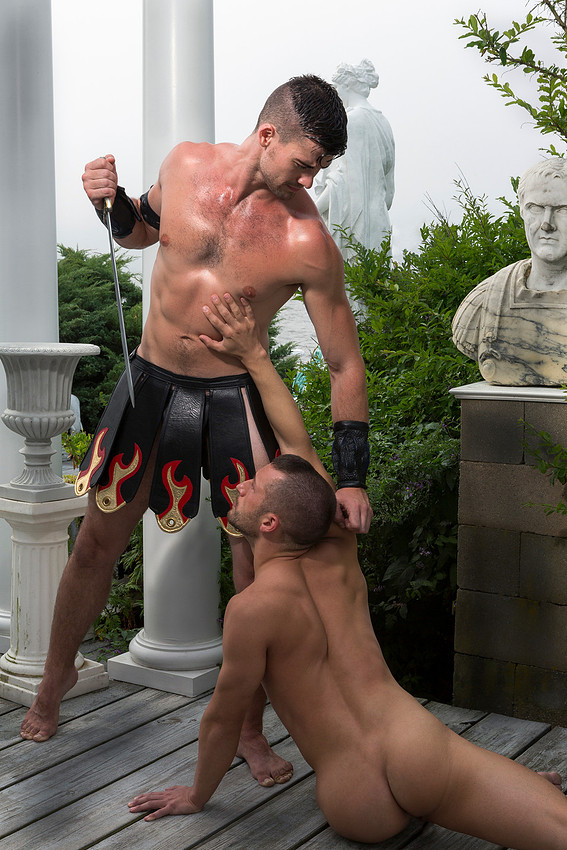
For a queer man who has never experienced it, he says, Spartacus is one of those Fire Island rituals worth witnessing at least once: a night when bodies become costumes, costumes become theater, and the boundary between celebration and spectacle seems to disappear.
The History of the Belvedere Hotel
More than a hotel, the Belvedere is a piece of Fire Island mythology: an extravagant refuge born from tragedy, shaped by theater, and preserved through generations as one of Cherry Grove’s most flamboyant expressions of queer life.
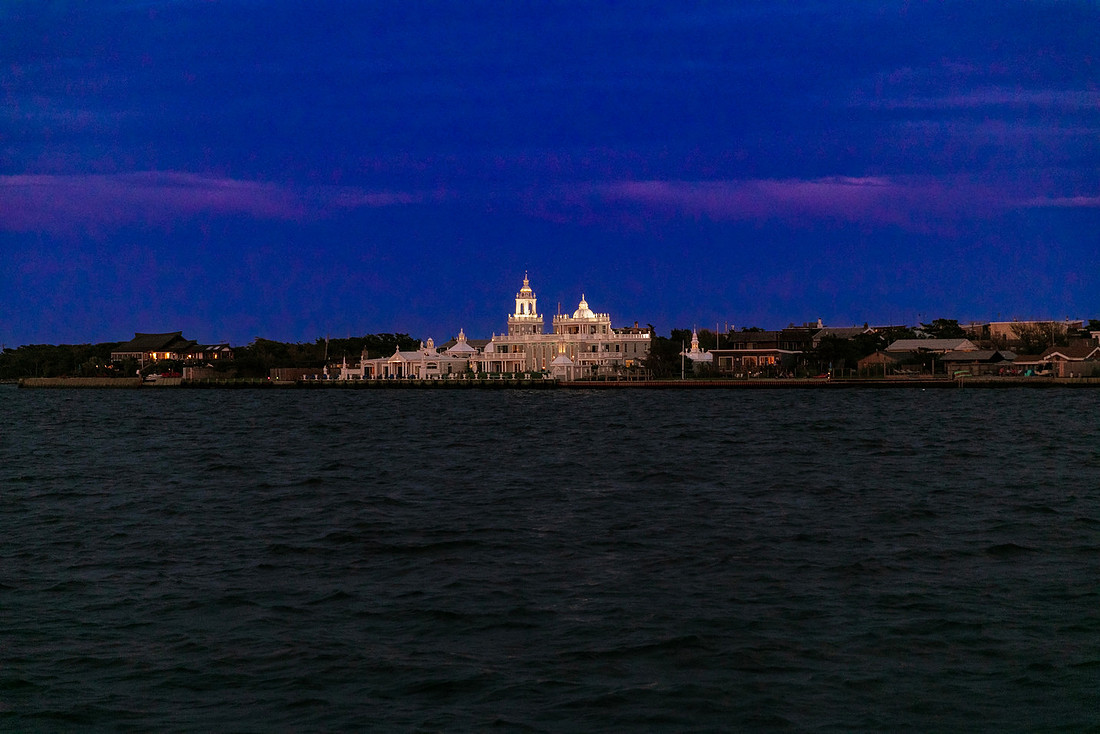
Rising from the pine trees of Cherry Grove like a fever dream from another era, the Belvedere is one of Fire Island’s most distinctive—and historically significant—landmarks. Part Venetian palace, part theatrical fantasy, and part intimate guesthouse, it feels almost impossibly elaborate against the simplicity of the island around it. Yet that theatrical quality is precisely what makes the Belvedere so quintessentially Cherry Grove.
The story begins with John Eberhardt, a scenic artist and set designer who first arrived in Cherry Grove in 1949. With a career rooted in Broadway and television, Eberhardt brought the sensibility of the stage to the island, treating architecture as an opportunity for fantasy and spectacle. Over the years, he would go on to design and build more than 50 houses in Cherry Grove.
The Belvedere, as it exists today, dates to 1957. Eberhardt originally conceived it not as a hotel, but as his own extravagant private residence. He imagined a kind of Venetian-Palladian fantasy, complete with towers, domes, statues, elaborate interiors and trompe-l’œil paintings. It was less a house than a stage set made inhabitable—a world deliberately removed from the ordinary.
Then, in 1957, disaster struck. A devastating fire tore through much of Cherry Grove, destroying the community’s existing hotel and leaving visitors with nowhere to stay. Eberhardt responded by changing his plans. What had been intended as his private home was opened, in part, to guests, and the Belvedere began its unexpected second life as a guesthouse.
Over the following decades, Eberhardt and his partner, Craig Eberhardt, continued to expand the property, adding wings and rooms until it grew to more than 30. John filled the interiors with the treasures of his imagination: antiques, salvaged architectural fragments, statues, chandeliers and elaborate hand-painted murals. Many of the rooms acquired their own individual themes, turning a stay at the Belvedere into something closer to entering another character’s dream.
From its earliest days, the Belvedere operated primarily as a guesthouse for men and gradually became much more than a place to sleep. It evolved into an important social and cultural space within Fire Island’s gay community—a place where generations of queer men could gather, flirt, celebrate and simply exist on their own terms. Although its identity has long been closely associated with gay men, the Belvedere also hosts several women’s events throughout the summer.
Today, the property is owned by Julian Dorcelien, who has continued the legacy of the Belvedere and its long relationship with the island’s queer community.
After roughly 68 years of family ownership, the Belvedere was put on the market in 2025 for $10.9 million.