Cherry Grove vs. Fire Island Pines: What's the Difference?
Cherry Grove and Fire Island Pines are two of the most famous LGBTQ+ communities on Fire Island, a barrier island off the south shore of Long Island, New York.
Located next to one another, the two communities share a long connection to gay and lesbian history, summer culture, nightlife, and LGBTQ+ community life. Yet they have developed noticeably different identities.
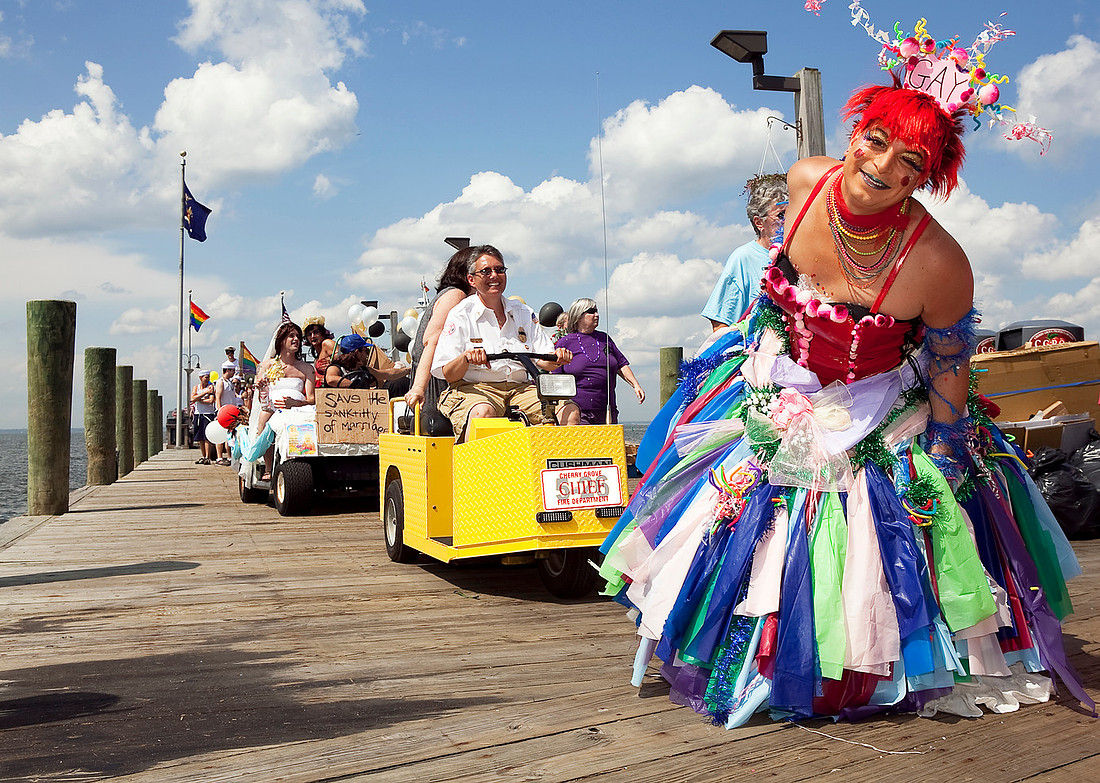

Cherry Grove is known for its welcoming, artistic, theatrical, and community-oriented atmosphere. Fire Island Pines has developed a reputation for modern architecture, design, sophisticated nightlife, and a strong gay male social scene.
Both are important destinations in the history of LGBTQ+ America, but they offer very different experiences.
Where Are Cherry Grove and the Fire Island Pines?
Cherry Grove and Fire Island Pines are located on the eastern end of Fire Island, approximately 60 miles from New York City.
The two communities are separated by a relatively short distance and are connected by the beach and a network of walking paths. Neither community has conventional roads for cars, which contributes to the distinctive atmosphere of Fire Island.

Visitors generally arrive by ferry from Long Island.
Once there, the experience changes immediately. Cars and city traffic are replaced by wooden boardwalks, bicycles, beach paths, houses, restaurants, bars, and people walking between the communities.
Cherry Grove: A Historic LGBTQ+ Community
Cherry Grove has a long history as an LGBTQ+ refuge.
Gay men and lesbians began establishing a stronger presence in the community during the twentieth century, creating networks of friendship, relationships, businesses, and cultural life.
The community became particularly significant during a period when LGBTQ+ people faced widespread discrimination and limited opportunities to live openly.
Cherry Grove offered something different: privacy, freedom, and the possibility of being surrounded by other LGBTQ+ people.
Its history is therefore closely connected to the development of LGBTQ+ communities in the United States.
Fire Island Pines: Architecture, Design and Gay Culture
Fire Island Pines developed a somewhat different identity.
Although LGBTQ+ people have been part of its history for decades, the Pines became particularly associated with gay men, modern architecture, design, and an energetic summer social scene.
The community is famous for its collection of modernist houses, many of which were designed with the surrounding landscape in mind.
The architecture is an important part of the Pines experience. Houses are often surrounded by trees and vegetation, with large windows, terraces, decks, and outdoor spaces designed for summer living.
For architecture enthusiasts, the Pines offers a fascinating contrast to the more traditional houses and community atmosphere found in Cherry Grove.

Cherry Grove vs. Fire Island Pines: The Main Difference
The simplest way to understand the distinction is this:
Cherry Grove tends to emphasize community, history, performance, and inclusivity, while Fire Island Pines is particularly associated with architecture, design, gay male culture, and nightlife.
That distinction is not absolute.
Both communities welcome a diverse LGBTQ+ population, and both have changed considerably over time. People move between the Grove and the Pines throughout the summer.
Nevertheless, the cultural differences are part of what makes the two communities interesting.