20 Years Photographing Fire Island: koitz Reflects on a Queer Visual Archive
In a recent interview with Gayety, koitz reflects on this extraordinary photographic journey, recalling iconic Fire Island moments, unforgettable characters, changing landscapes, and the photographs that have unexpectedly become part of queer history. This article looks back at that work and at the role photography can play in preserving the atmosphere and memory of a community over time.
For more than two decades, Fire Island has been one of the central subjects of his photographic work. What began as an interest in photographing the people, parties, landscapes, and unexpected moments koitz encountered during summers on the island gradually became something larger: an evolving visual record of LGBTQ+ life.
That history is the subject of a recent interview with Gayety, which looks back at his years photographing Fire Island, from Cherry Grove and Fire Island Pines to the Meat Rack, the Underwear Party, the Invasion of the Pines, and the many people and places that have shaped the island's queer culture.
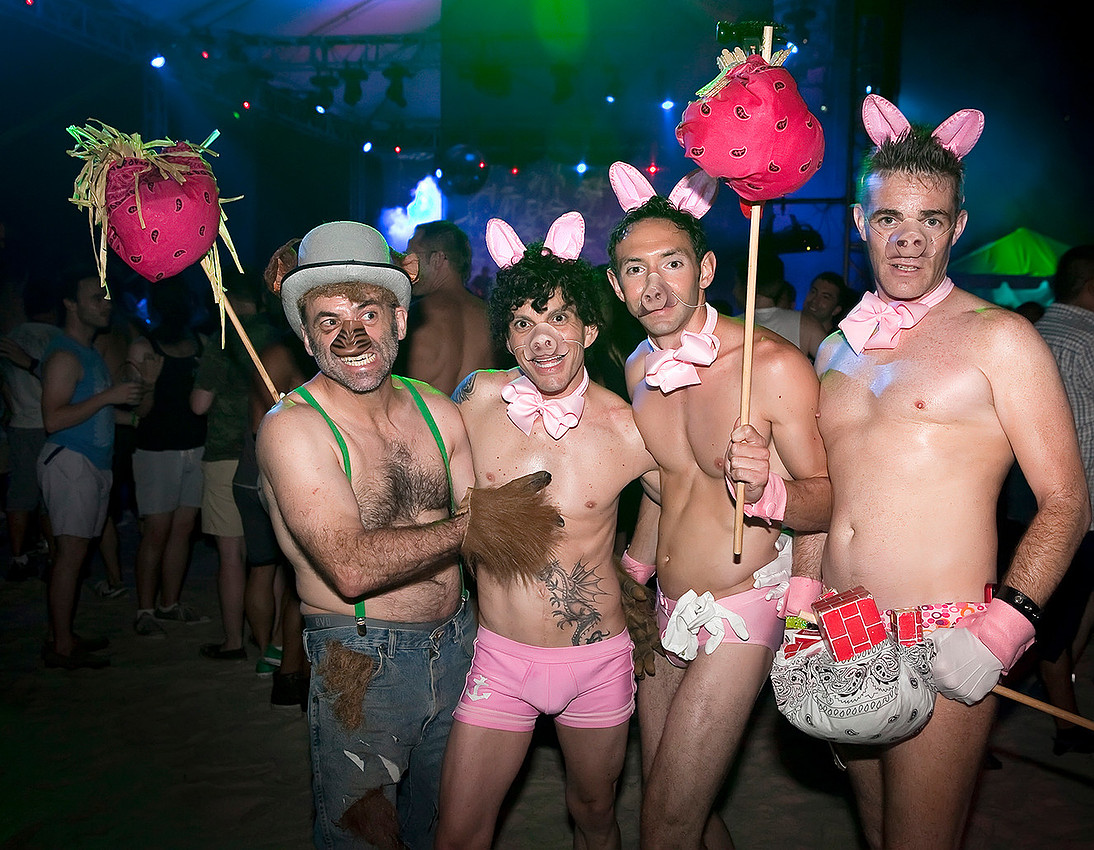

The interview gave koitz an opportunity to think about something he did not fully understand when he first began photographing Fire Island: an archive is often created before the photographer realizes that an archive is being made.
Discovering Fire Island Through Photography
koitz first began going to Fire Island regularly in 2006. Cherry Grove did not immediately reveal itself to him. Like many places with a strong internal culture, it took time to understand its rhythms, its characters, its social codes, and its particular sense of freedom.
Eventually, koitz began carrying a camera everywhere.
Cherry Grove, Fire Island Pines, the ferry, the beach, the Sunken Forest, the Meat Rack, house parties, bars, clubs, dinners, performances, and quiet afternoons all became part of the photographic landscape.
At first, these were simply photographs of a place and the people around him. Over the years, however, the photographs began to accumulate into something more significant.
People changed. Buildings disappeared. Parties moved to different locations. Some venues were lost to fire. People who seemed to be permanent fixtures of the island stopped returning. New generations arrived.
The photographs remained.
That is one of the things that makes photography particularly important when thinking about LGBTQ+ history and Fire Island. A photograph can preserve not only a face or an event, but an entire atmosphere that might otherwise be impossible to reconstruct.
From Personal Photographs to LGBTQ+ History
koitz never set out to create a historical archive.
koitz was photographing what interested me.
But after years of returning to the same places, koitz began to see the photographs differently. They documented not only his own experiences but also a community and a period of queer history.
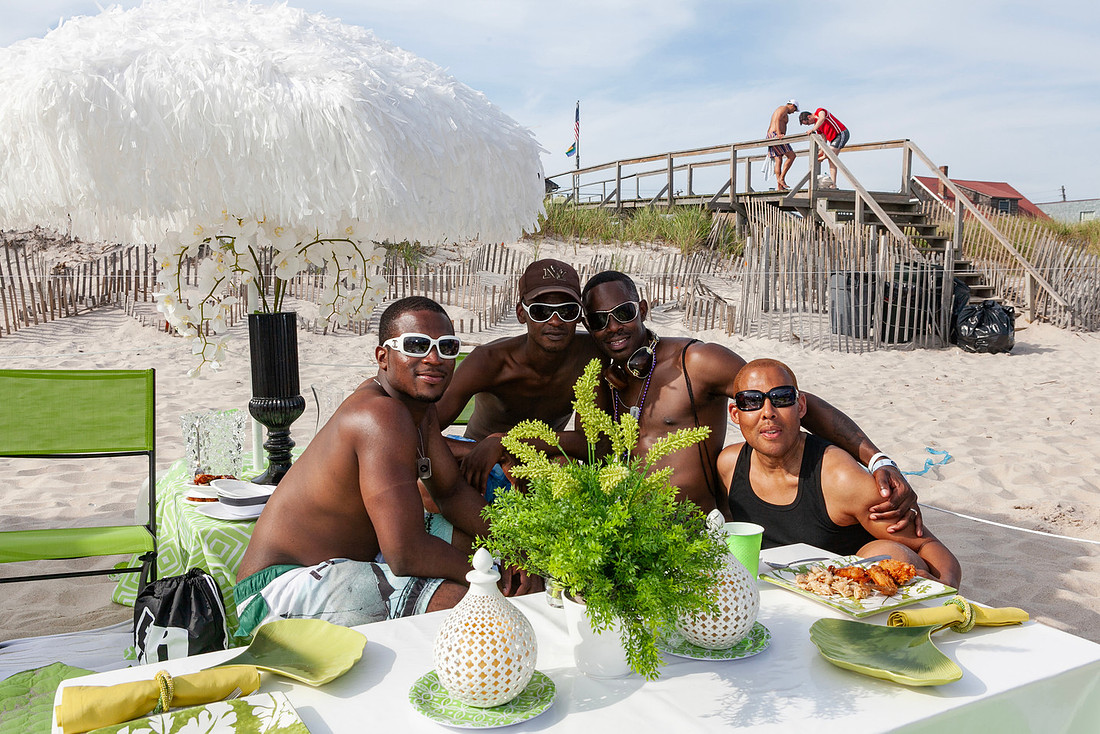
Fire Island has a particularly important place in LGBTQ+ culture in the United States. Cherry Grove and Fire Island Pines have long provided spaces where gay men, lesbians, artists, performers, and other LGBTQ+ people could live more openly and create communities outside the restrictions of mainstream society.
The photographs are therefore about more than nightlife.
They are about belonging.
They are about the freedom to be visible, to experiment with identity, to form friendships, to fall in love, to dance, to perform, to be ridiculous, to be beautiful, to disappear into the crowd, or simply to spend an afternoon on the beach without having to explain yourself.
That sense of freedom is one of the recurring themes in his Fire Island work.
The Meat Rack
Among the most distinctive places in his y Fire Island archive is the Meat Rack, the wooded area between Cherry Grove and Fire Island Pines that has long been associated with queer social and sexual culture.
Photographing the Meat Rack is very different from photographing a party.
There is no stage. There is no obvious audience. The landscape itself becomes part of the photograph.
The trees, paths, shadows, sand, weather, and changing light create a visual environment in which the human figure can become both intimate and mysterious.
The Meat Rack Series grew out of that relationship between landscape and body. Some photographs are playful or erotic; others are quieter and more contemplative. Following the devastating fire that passed through the area in 2014, the landscape changed dramatically, and the charred trees created an almost surreal environment.
Those photographs became a record of both the people and the landscape.
They document a particular moment in Fire Island's history that cannot be recreated.
Photographing the Underwear Party
Another major part of the archive is the Fire Island Underwear Party, an event associated with Daniel Nardicio that has been photographed repeatedly over many years.
The Underwear Party is quintessential Fire Island nightlife: crowded, theatrical, physical, spontaneous, and deliberately excessive.
It also provides a fascinating environment for documentary photography.
koitz doen't approach these events with a rigid shot list. koitz prefer to observe. koitz keep one eye on the viewfinder and another on everything happening around me. I don't generally direct people or manufacture moments.
koitz waits.
Sometimes the most interesting photograph is not the obvious one. It might be a gesture happening at the edge of the dance floor, a person watching a performer, an unexpected interaction between strangers, or a fleeting expression that lasts only a second.
Over time, those fragments become a portrait of the event.
And eventually, a portrait of an era.
The Lady Gaga Photograph
One of the more unexpected moments preserved in the archive occurred at the Underwear Party in 2009, when Lady Gaga performed at the event before she became the global pop star she would later become.
At the time, there was no way of knowing what the future would hold.
She was simply another performer at a Fire Island party.
That is one of the pleasures of working with a long photographic archive. History often looks different in retrospect.
A photograph made casually in one moment can acquire an entirely different meaning years later.
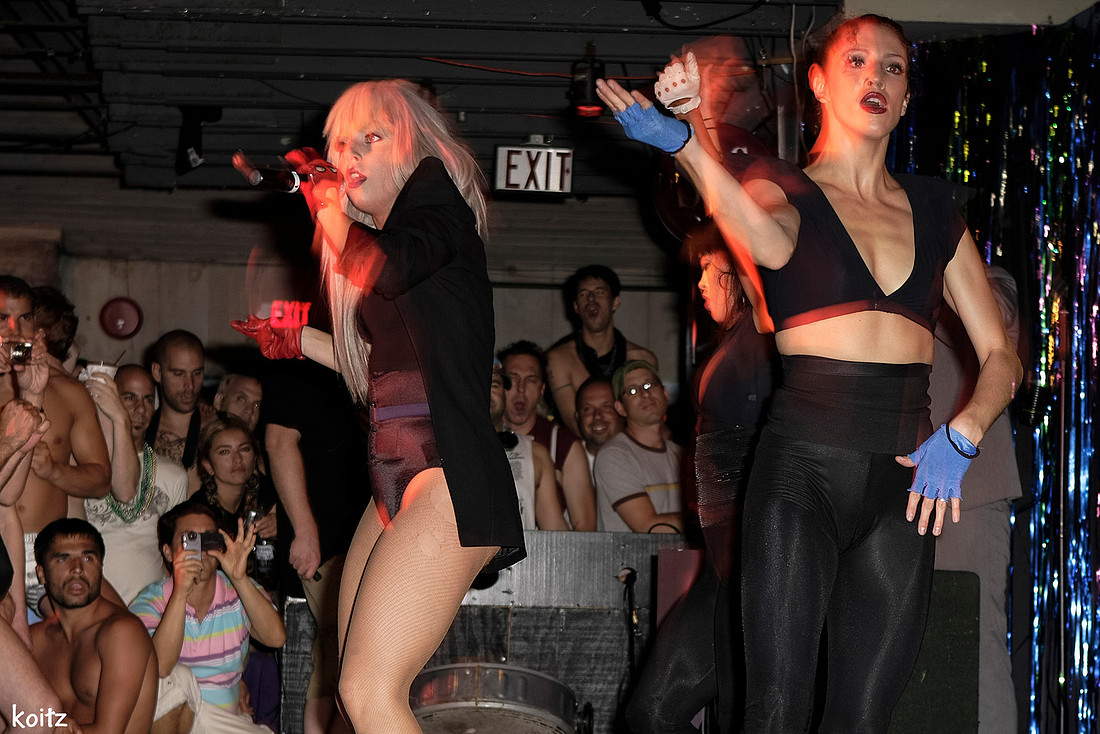 But the Lady Gaga photograph is also a reminder that Fire Island has always attracted an extraordinary mixture of people. Famous performers, artists, longtime residents, first-time visitors, partygoers, and people seeking anonymity can all find themselves in the same room.
The island has a remarkable ability to flatten those distinctions.
The Freedom of Fire Island
One of the reasons koitz continues photographing Fire Island is that the island can temporarily suspend many of the hierarchies that dominate life on the mainland.
People arrive on the ferry carrying their identities, careers, reputations, and expectations with them.
Then something happens.
They relax.
They dance.
They laugh.
They flirt.
They make friends.
They become part of the crowd.
That transformation is one of the most interesting things to photograph.
It is also difficult to photograph honestly because Fire Island is, for many people, a place of escape.
Privacy and the Queer Archive
Documenting queer communities requires a degree of responsibility.
Not every photograph belongs in a public archive.
Some moments are private. Some people are there precisely because they want to step outside their everyday identities and disappear for a while.
That has always influenced the way I select photographs for publication.
koitz often asks himself a simple question:
Would koitz want to be photographed this way?
That question matters particularly when photographing LGBTQ+ nightlife, intimate gatherings, and spaces where people feel safe enough to let their guard down.
The goal isn't simply to photograph everything.
It is to preserve something truthful without taking away the privacy that makes these spaces possible.
A Living History of Fire Island
Today, the archive includes photographs made over many summers across Cherry Grove, Fire Island Pines, the Meat Rack, beaches, ferries, parties, nightlife, performances, and private gatherings.
Some of the photographs are exuberant.
Some are erotic.
Some are funny.
Some are quiet.
Some document recognizable people or famous events, while others record individuals whose names may never be known outside the photograph.
Together, however, they tell a larger story.
They show what queer life looked like in particular places and particular years. They preserve changing fashions, bodies, architecture, nightlife, friendships, rituals, and landscapes. They also document the simple fact of LGBTQ+ people creating lives and communities for themselves.
That is what makes a photographic archive valuable.
It doesn't have to be grand to be historically important.
Sometimes history is contained in a party photograph.
Sometimes it is a portrait on the beach.
Sometimes it is a building that no longer exists.
Sometimes it is a person who was there every summer until, suddenly, they weren't.
Twenty Years and Counting
Looking back at two decades of photographing Fire Island, koitz is struck by how much has changed—and how much remains.
The island continues to attract people looking for community, freedom, friendship, intimacy, and escape.
New generations arrive.
Old traditions evolve.
Nightlife changes.
Venues disappear and new ones emerge.
But the essential attraction remains remarkably consistent: the possibility of being somewhere where you can feel that you belong.
His photographs are an attempt to preserve that feeling.
From the quiet landscape of the Meat Rack to the intensity of the Underwear Party, from Cherry Grove to the Pines, the work is ultimately about people.
It is about the extraordinary variety of ways LGBTQ+ people have created community on Fire Island.
And after twenty years, the archive continues to grow.