Beauty, mythology, and the male form
Antinous Fine Art Portraits is a photographic exploration of the male figure inspired by the enduring image of Antinous, the young Greek-Bithynian beloved of the Roman Emperor Hadrian whose idealized likeness became one of the most recognizable faces of the ancient world.
In this body of work, koitz approaches the male body through the language of fine-art portraiture, exploring beauty, vulnerability, sensuality, and the relationship between the contemporary figure and classical ideals.
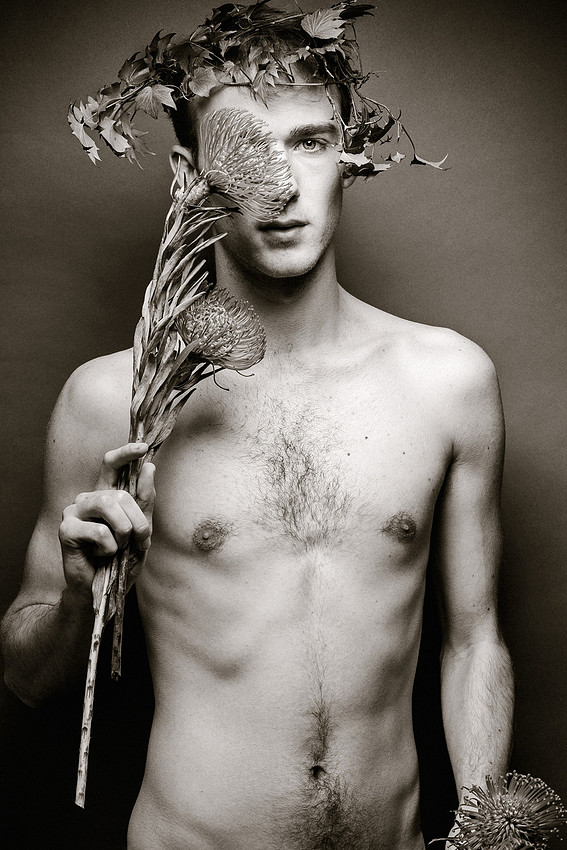

The photographs do not attempt to recreate antiquity. Instead, they enter into a dialogue with it.
The timeless qualities associated with Antinous—youth, beauty, melancholy, desire, and the idealized male form—become a starting point for contemporary images that are intimate, physical, and distinctly present.
The Male Form
Throughout the history of art, the male body has been represented as both an ideal and a human reality: powerful yet vulnerable, heroic yet sensual, monumental yet profoundly intimate.
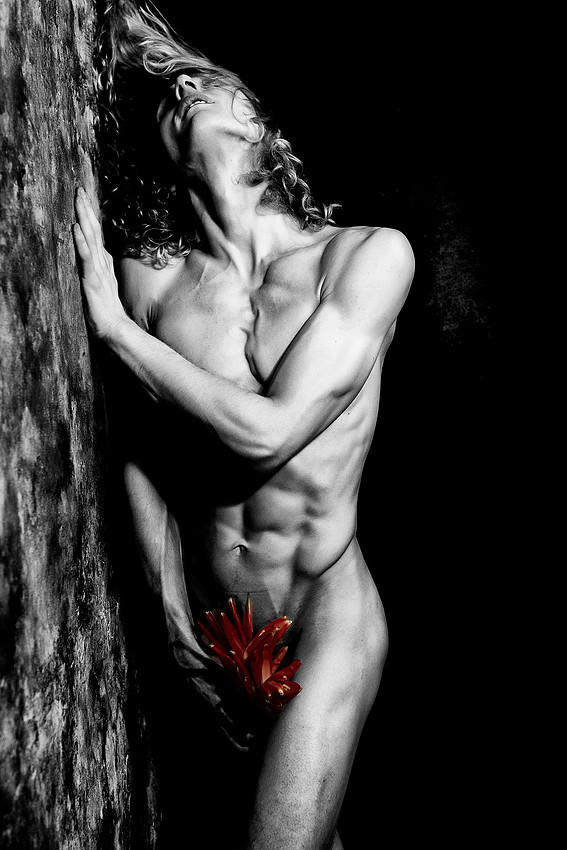
koitz's portraits exist within that tradition while approaching the body through a contemporary queer perspective.
The photographs allow the figure to occupy the frame without apology. Skin, gesture, expression, posture, and light become essential elements of the portrait, creating images that move between classical restraint and contemporary intimacy.
Echoes of Antiquity
Antinous has survived through art because his image continues to carry an unusual emotional ambiguity. He is remembered not simply as an ideal of male beauty, but through the grief and devotion that followed his death and the extraordinary number of portraits Hadrian commissioned in his memory.
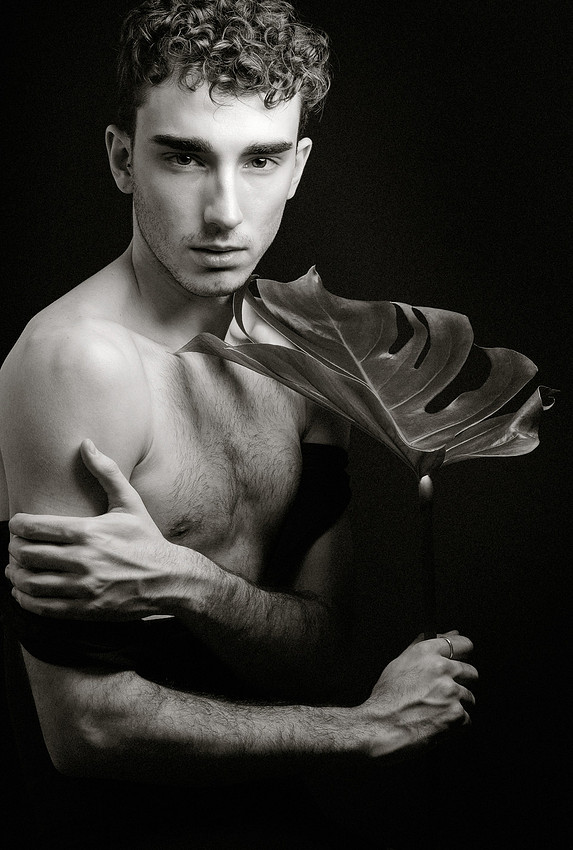
That tension between beauty and mortality remains central to the mythology surrounding him.
In these photographs, the classical reference becomes less a historical reconstruction than a visual echo—a way of considering why certain forms of beauty continue to speak to us across centuries.
Beauty, Desire, and Vulnerability
Portraiture is always an encounter between photographer and subject.
Here, the male body is not presented only as an object of aesthetic admiration. It is also a site of vulnerability, identity, desire, and presence.
The photographs invite the viewer to look slowly—to consider the body not as an anonymous ideal, but as an individual presence.
In this sense, Antinous Fine Art Portraits is both contemporary portraiture and a conversation with art history: a meditation on beauty that asks why certain images endure, how ideals are created, and what we bring to the act of looking.
About koitz
koitz is a Basque-American queer photographer who has lived and worked in New York City since 1994. His practice explores identity, portraiture, performance, queer culture, and the human body through documentary and fine-art photography.
For more than two decades, he has documented LGBTQIA+ life in New York City and on Fire Island. His first monograph, koitz Gay Fire Island (2020), was recognized by curator Elizabeth Avedon as one of the year's best photography books.
His work has been exhibited internationally, including at the University of Southern California in Los Angeles and the Cherry Grove Community House on Fire Island. Together with filmmaker Parker Sargent, he co-directed the award-winning documentary In the Meat Rack (2023).
koitz lives and works in Brooklyn, New York.
Explore Antinous Fine Art Portraits →
Fine-art photography by koitz