by New York City Queer Event Photographer koitz
If you ever find yourself in Zipolite, on Mexico's Pacific coast, there is one place you cannot miss: Playa del Amor, the Beach of Love. Zipolite is home to Mexico's only officially recognized nude beach, and Playa del Amor is where much of the LGBTQ+ crowd tends to gather. As with many places worth discovering, getting there is not quite as straightforward as you might expect. You walk all the way to the far end of the beach, climb a hill, and, once you reach the top, you see it. There it is, waiting for you on the other side.
I have to admit, it was smaller than I had imagined. A little less impressive, perhaps, than the picture I had built in my head. But appearances can be deceiving. Once you make your way down and spend some time there, you begin to realize that its simplicity is anything but ordinary. The beach itself is small, but the rocks are big and beautiful. The ocean is rough, wild and potentially dangerous. It has that untamed quality that makes you admire it while keeping a healthy distance. And then there are the men.
Young and older, beautiful and ordinary, all sorts of bodies and personalities. Most of them naked, of course. They seem almost oblivious to what is happening around them, yet somehow perfectly conscious of their surroundings. There is a peculiar combination of freedom and self-awareness in the way they inhabit this little stretch of sand.
There are only two small bars, the kind they would call chiringuitos on the Spanish coast. Nothing fancy. Just a beer, a chair, and a front-row seat to watch the crazy ocean and the wonderfully unpredictable men who seem to belong to it. And then, among all those guys (and a couple of girls), I spotted him. He was hard to miss!
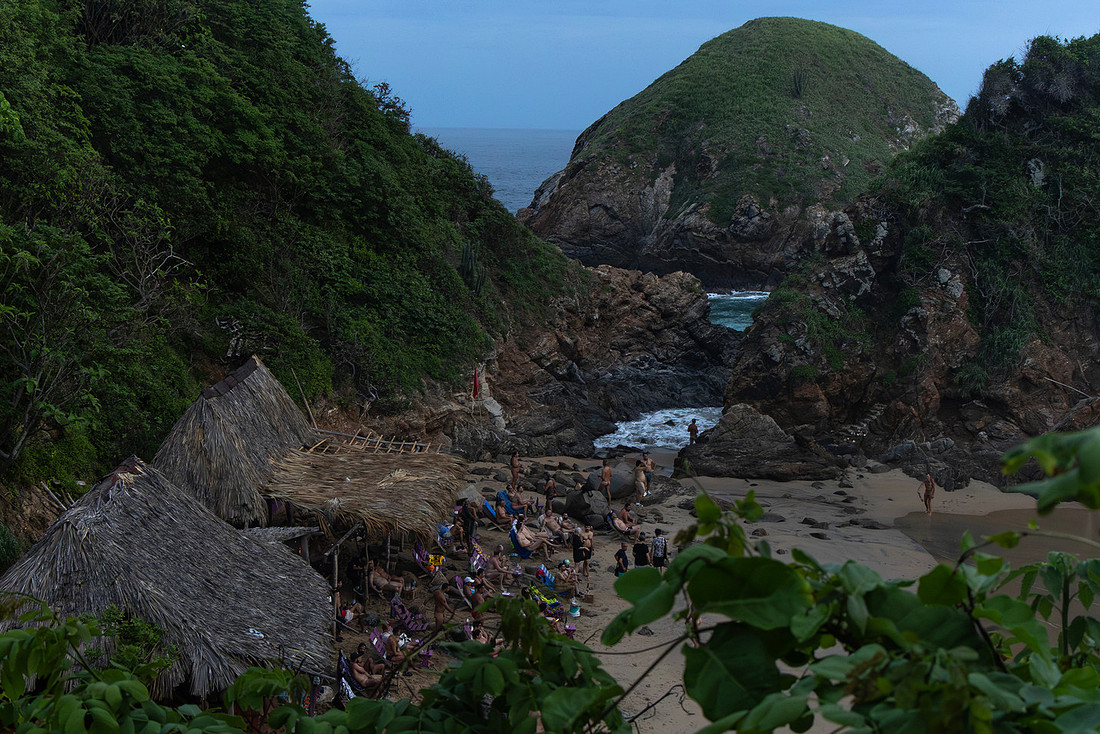
A naked man dancing like crazy while playing his ukulele. He seemed to be completely in his own world, enjoying himself without the slightest concern for what anyone else might think. Someone told me he was always there. Naturally, I wanted to photograph him.
I approached and asked whether he would mind if I took a few pictures. He was more than happy to oblige. In fact, he seemed genuinely pleased that I had asked. “A lot of people just take my picture without even asking,” he told me. “Oh, I would never do that,” I replied, almost apologizing on behalf of all those people who had photographed him without bothering to ask for his permission.
And so we began. He danced, played his ukulele and performed for my camera. He was having fun, and so was I. There was something wonderfully spontaneous about the whole encounter. At some point, perhaps when he had had enough of dancing, he started walking towards me. I kept taking pictures as he approached, camera still in my hands. He eventually sat down right in front of me, on the sand, and looked straight at me.I took one last photograph. And somehow, I knew that was the one.
It wasn't necessarily the most spectacular pose or the most technically perfect picture. But it was the photograph that, to me, captured something essential about him. His personality, his presence, his way of being in the world. His soul, if you like. So here it is.
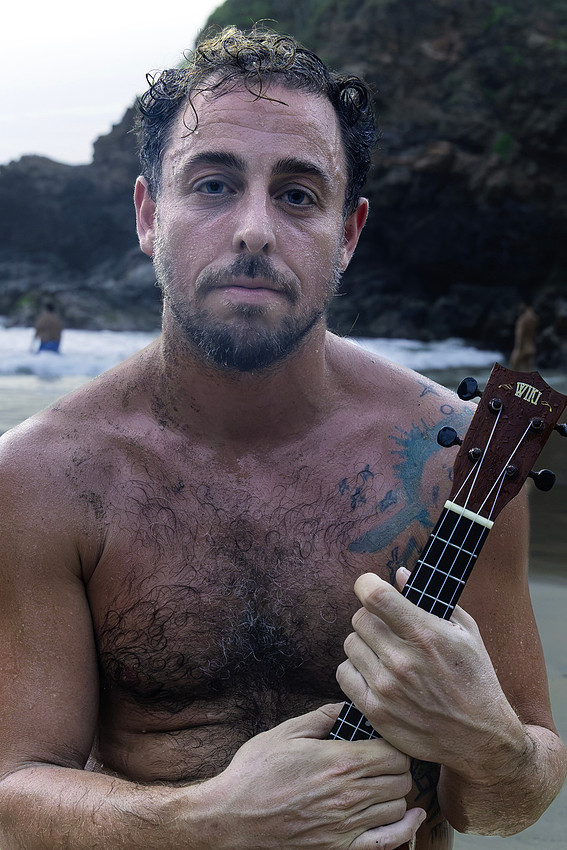
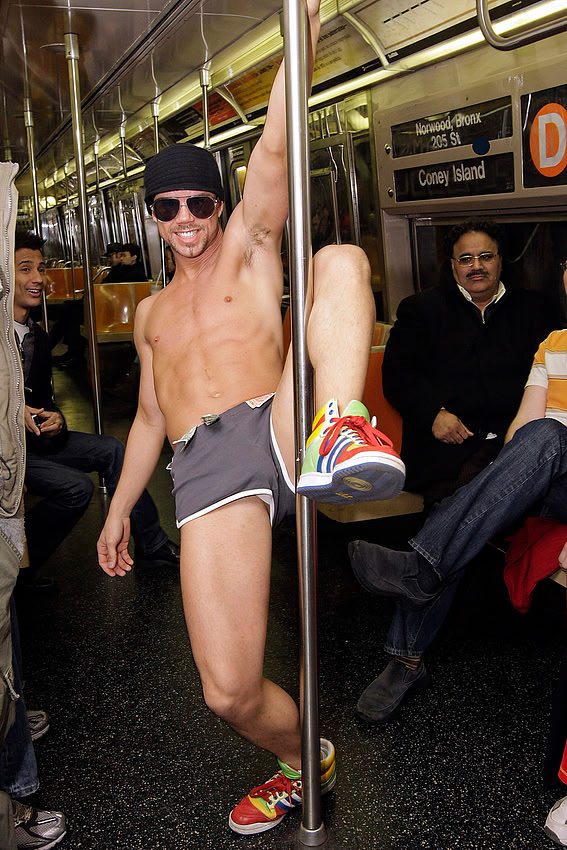
His name is Charles. He told me he was born and raised in New York City. He seemed genuinely happy to be in Zipolite, enjoying the beach, the ocean, the people and, presumably, the freedom of being exactly who he wanted to be.
And I was happy, too. Happy to have met him, happy that he had trusted me with his image, and happy to have captured a moment that felt so beautifully uncontrived. Because sometimes photography is not really about finding the perfect location, the perfect light or the perfect composition. Sometimes it is simply about being in the right place, approaching someone with respect, and allowing a moment to unfold.
That afternoon, in a little beach somewhere along the Mexican Pacific, I met a naked man with a ukulele, a big smile and a story that began in New York. And I got a photograph that, for me, says much more than a thousand words ever could. Beautiful. Authentic. Genuine. Just like Charles.
]]>Where It All Began: A Backyard in Williamsburg
by Queer Nightlife Photographer koitz
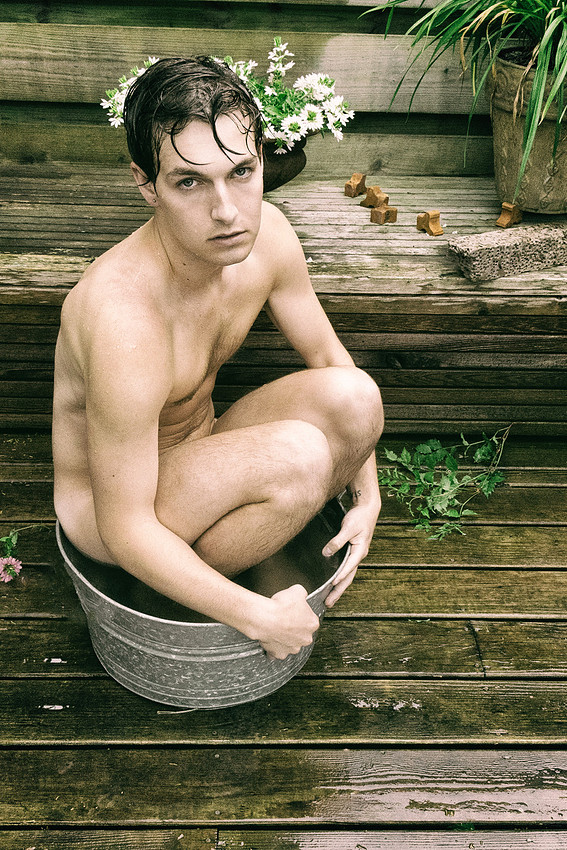
One of the first photographs I ever took of a naked man was this one, titled “Fetus.” It was shot in Williamsburg, Brooklyn, probably in 1996 or 1997, although I can't be entirely sure. Back then, I was shooting black-and-white ILFORD film.
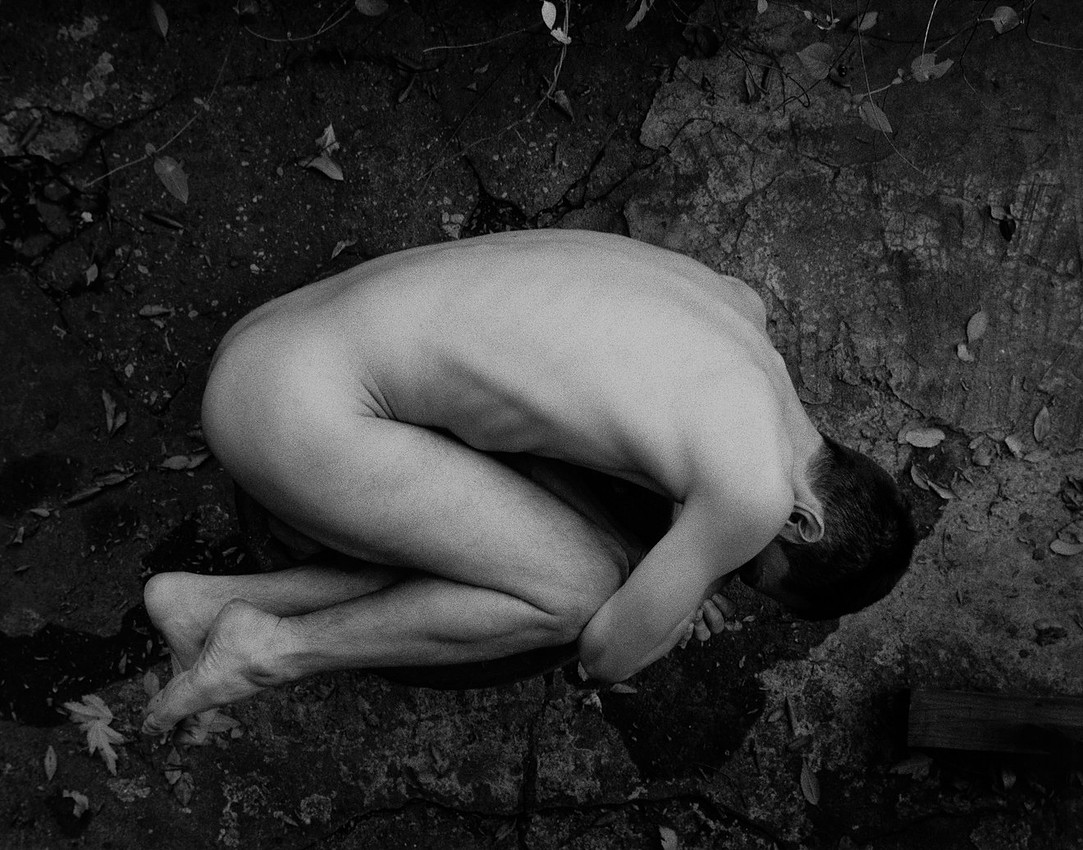
Paco was a friend, and we lived together for a while. He was full of ideas and incredibly easy to collaborate with. We made this photograph in the backyard of our apartment, and it was just the beginning. We went on to shoot many other images there, as well as in the upstairs apartment, which happened to be vacant between tenants. It was a wonderful time for experimenting, creating, and discovering what was possible with a camera and a willing collaborator.
These early photographs gave me the confidence to explore photographing the male nude. I've always believed that photographing someone naked requires a particular degree of sensitivity, care, and respect. Just because someone is willing to take their clothes off in front of a camera doesn't necessarily mean they know what to do or how to feel comfortable in that situation. That's where the photographer comes in. Part of our job is to guide the person in front of the lens, helping them feel at ease while creating an environment in which they can be themselves and feel safe.
Over the years, I've developed my own approach to this. Before a nude photo shoot, I usually spend 15 to 20 minutes talking with the person I'm photographing. I explain what we are going to do, what they can expect, and how I like to work. I make it clear that I won't ask them to do anything that makes them uncomfortable and that they can always say no. Some people feel particularly vulnerable when they're naked in front of a camera, and I think it's important to recognize that and be especially mindful of their feelings.
Since those early days with Paco, I've photographed dozens of men, mostly in the studio with flashes, but also in other settings, including my beloved Fire Island, a place that regular readers of this blog know I love.
I haven't done a nude photo shoot in quite a while. I think my photography has evolved, and lately I've felt the desire to explore something different. My interests have shifted, and I'm curious about other ways of seeing and photographing people. I still appreciate these early images, though. Looking back at them reminds me of where it all started, the excitement of experimenting, and the confidence I gained from those first collaborations.
And while my approach may have changed, I'm still drawn to the possibilities of photography and to discovering new ways of expressing myself through the camera. This photograph was taken relatively recently, are perhaps a better reflection of where I am creatively today.
]]>
PHOTO STORY
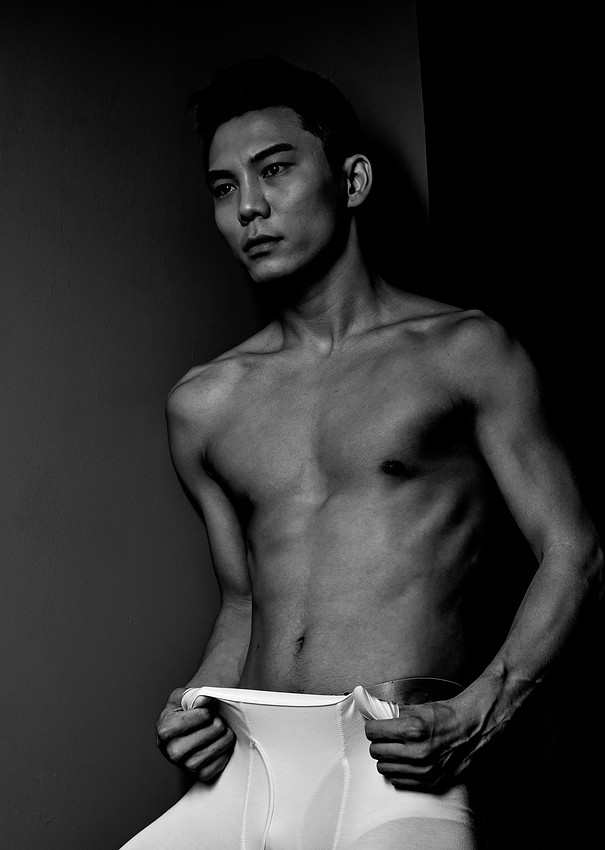
koitz knows that sometimes, the most beautiful images come from the most unexpected moments. This photograph of Sergey, a striking Eastern European male model, is a perfect example of why photographers should never be too quick to discard an image.
Taken in 2018, the photograph was actually the very first image captured during the session. Although koitz had already tested his lighting before the model arrived, he decided to make a few additional adjustments during the first minute of the shoot. As a result, the first frame was underexposed and, at the time, seemed like an obvious candidate for deletion. koitz immediately dismissed it, moving on to the rest of the session without giving the image a second thought.
Eight Years Later, the Model Through a Different Lens
Fast-forward eight years, and the story takes an unexpected turn.
From time to time, koitz revisits his old photo shoots, looking through images he may not have considered successful when he first edited them. During one of these trips down memory lane, he stumbled upon that very first photograph of Sergey. What had once seemed like a failed shot suddenly revealed a beauty he had overlooked years earlier. The image he had discarded in his mind was, in fact, a little gem waiting to be rediscovered.
This experience reinforces one of koitz's most important principles as a photographer: never delete a photograph unless there is an obvious technical reason to do so. If the lights failed to fire, the image is completely unusable, or something else went seriously wrong, deletion may make sense. But an image that simply seems underwhelming at first glance might deserve another chance.
koitz also believes in revisiting old photo shoots from time to time. Our eyes change, our tastes evolve, and the way we interpret an image today may be completely different from how we saw it years ago. What once looked like a mistake might reveal a new mood, an unexpected expression, or a quality that went unnoticed the first time around.
Sergey's photograph is a beautiful reminder of that possibility. Captured first, discarded almost immediately, and rediscovered eight years later, it proves that sometimes an image simply needs time before its true value becomes apparent.
The lesson from koitz is simple: keep your photographs, return to them, and give them another look. You never know when an image you once dismissed might turn out to be one of the hidden gems in your archive.
]]>
PHOTO STORY
Fire Island: Queer Life in the Shadow of the Fire
Even when a photographer has spent years capturing the same place, it is not always clear that the photographs being taken will one day become a record of history. At the time, they are simply moments of life unfolding—people gathering, celebrating, performing, and enjoying the freedom of being themselves. Yet, looking back, these images often reveal something much greater.
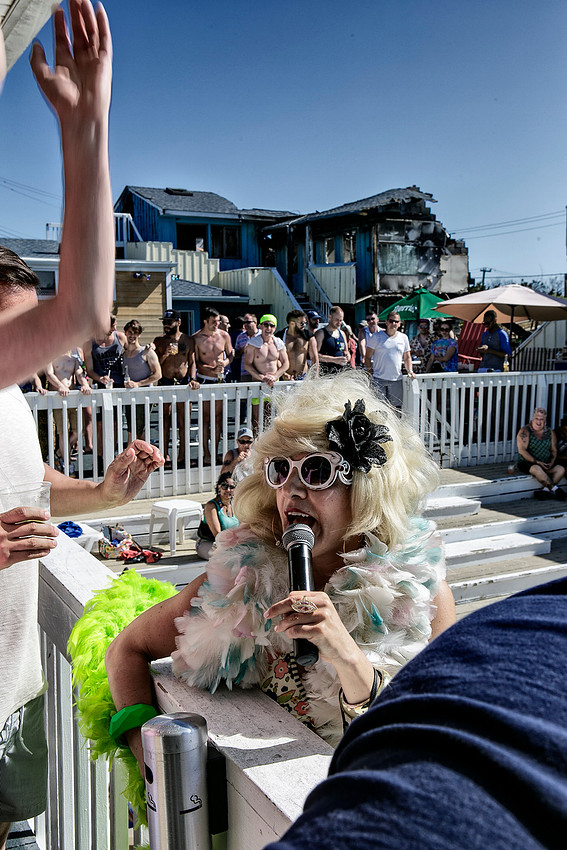
Queer New York nightlife photographer koitz captured a pool party at the Ice Palace and Grove Hotel just a few months after a devastating fire had destroyed much of the hotel that spring.
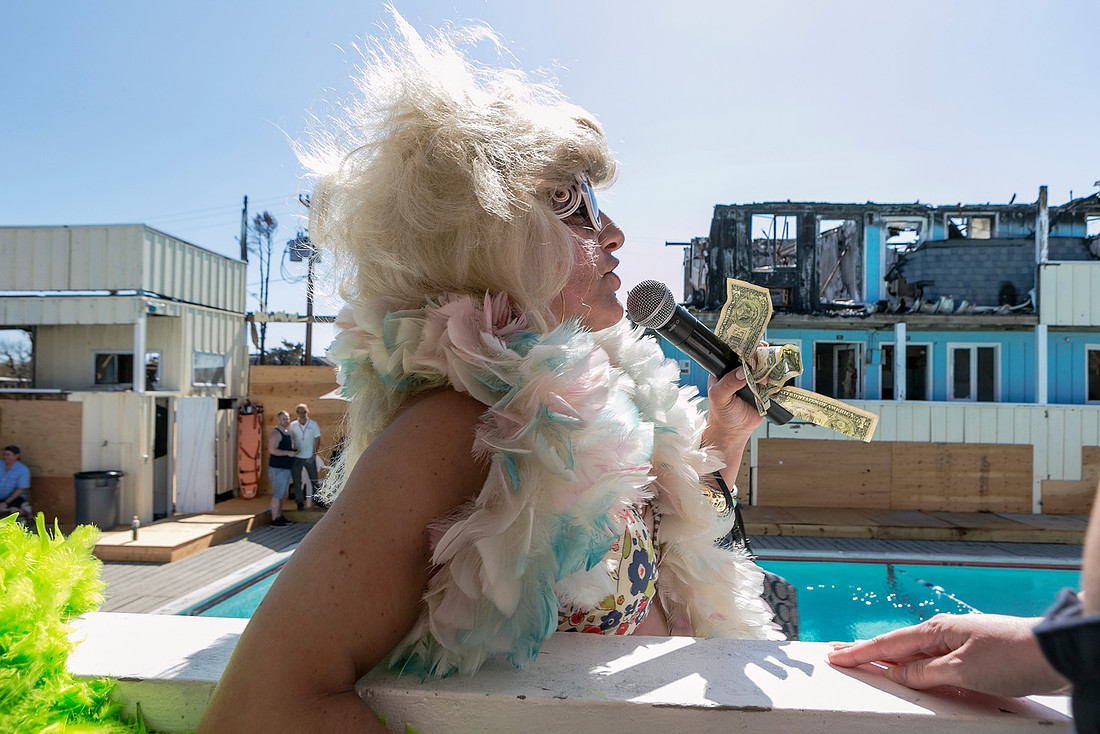
This photograph of performer Lavinia Draper at the pool party offers a glimpse into the vibrant world of queer life on Fire Island. More than a snapshot of a summer afternoon, it documents the people, places, and sense of community that shaped Cherry Grove, the Fire Island Pines, and the Meat Rack. Through koitz’s lens, we are able to revisit a moment in queer history that might otherwise have faded from memory—a world built around gathering, performance, freedom, and the simple joy of being together.
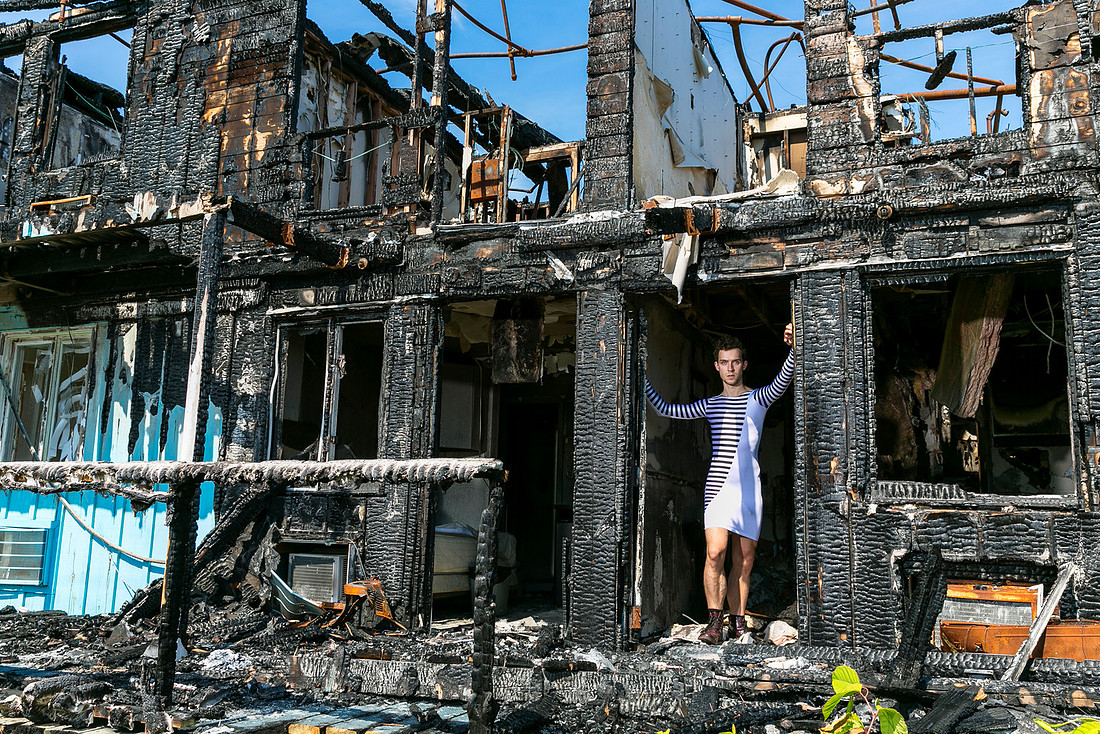
The remains of the burned hotel were eventually torn down, and just a year later, a brand-new Grove Hotel was ready to welcome hundreds of visitors back to Cherry Grove. The new building marked a fresh beginning, but something of the old hotel’s character and personality had been lost. Seen today, koitz’s photographs preserve more than the people who gathered there; they hold on to the atmosphere of a place in transition, capturing a fleeting moment when the past was still visible and the future had yet to take shape.
]]>
Queer New York nightlife photographer koitz keeps getting asked the same question: Will koitz Gay Fire Island ever be reissued?
But he isn’t interested in simply bringing the same book back to life. He has hundreds of photographs that never made it into the original, new stories to tell, and a different perspective on an island that may look familiar but has never really stood still.
Published in 2020, koitz Gay Fire Island captured a moment in the lives of the island’s LGBTQ+ communities even though it covered 14 summers. Since then, the world has changed—and Fire Island has changed with it, even if some of its rituals, characters, and unmistakable spirit remain remarkably intact. The pandemic marked a particularly extraordinary chapter. For koitz, photographs from the COVID years belong in any new book, documenting a time when the ways people gathered, connected, and experienced queer community were profoundly altered.
So why simply reissue a book when there is an opportunity to tell a bigger story

A New Gay Fire Island Book?
koitz believes there is room for a new coffee-table book about gay Fire Island—one that looks beyond nostalgia to capture the island as it is today, while preserving the moments that have shaped it. And any such project, he argues, should embrace both of its defining LGBTQ+ communities: Cherry Grove and the Fire Island Pines, each with its own character, history, and place in the island’s queer imagination.
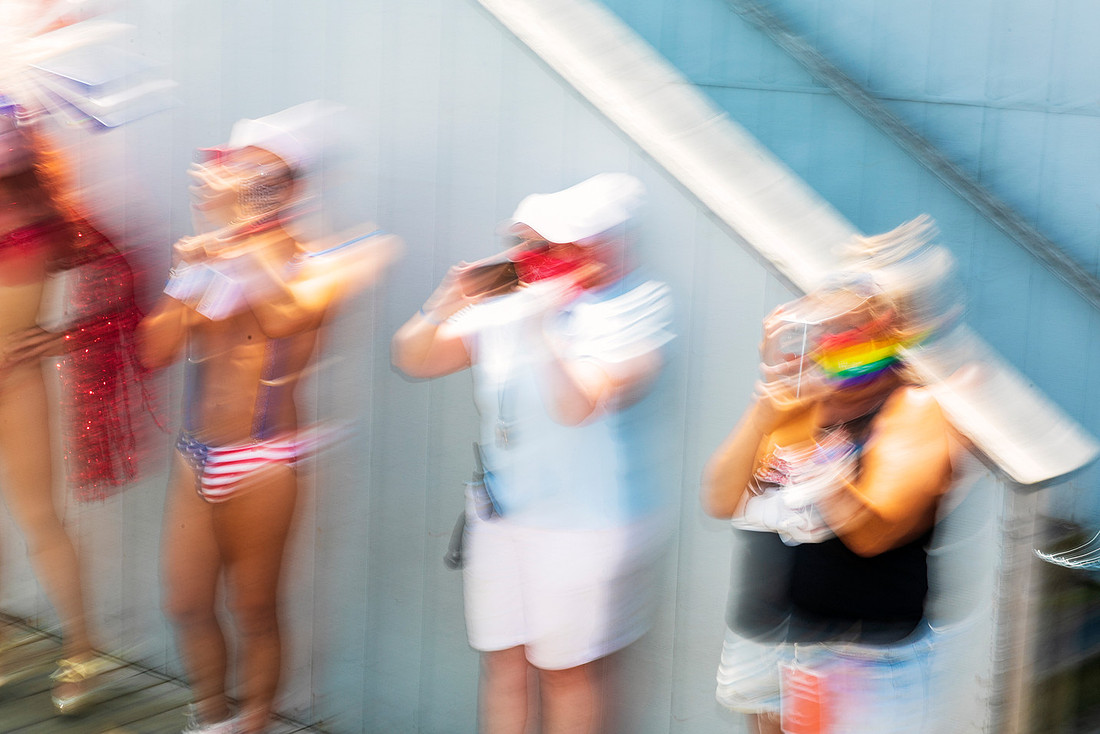
He is open to proposals from publishers willing to take on the project. The question, then, is not so much whether koitz Gay Fire Island deserves a second life, but whether there is still an appetite for a new photographic portrait of a place that has meant so much to generations of LGBTQ+ people.
After all, an island can remain familiar while its story keeps evolving. And through koitz’s lens, there may be plenty more of that story left to tell.
Would you make room on your coffee table for a new book about gay Fire Island?
Mitch Reflected in a Mirror in Black & White
For five years, koitz photographed Mitch in Southern California, creating an intimate and playful portrait of a particular time and place. From that body of work, twelve photographs were eventually selected and published in a postcard book titled Mitch in Wonderland, the second volume in the Pretty Gay postcard series.
Sadly, the series ended there. Only two Pretty Gay postcard books were ever published, and today both have become sought-after collectors’ items.
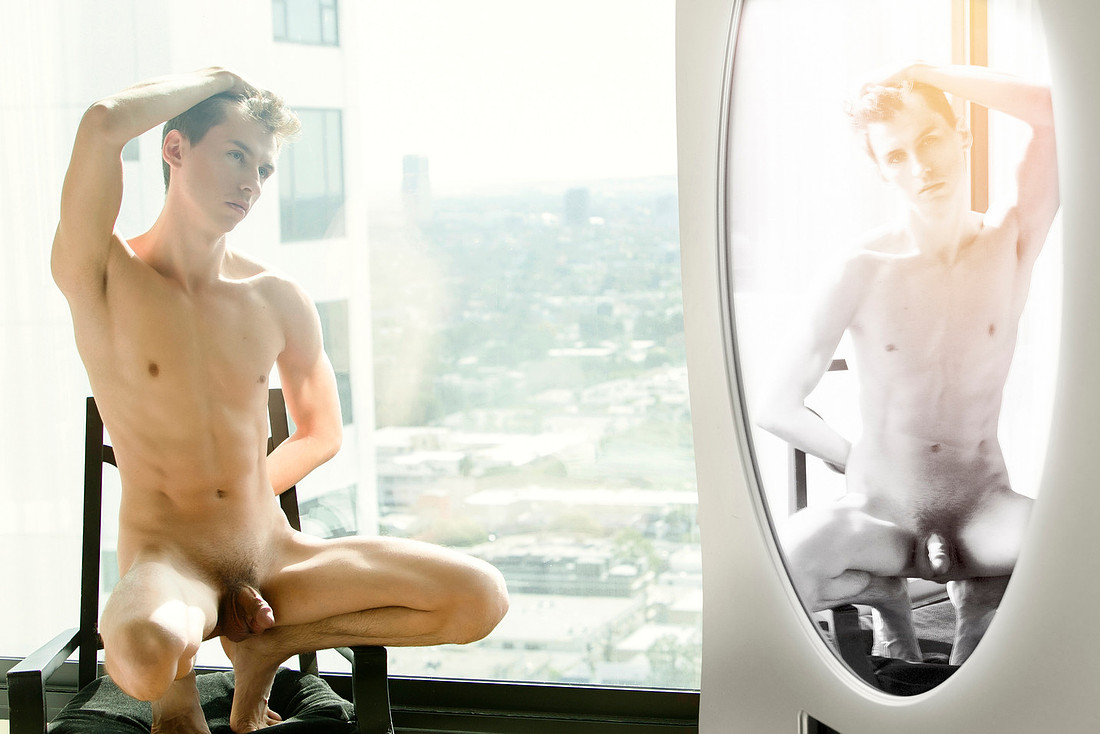
This photograph, however, never made it into Pretty Gay: Mitch in Wonderland. It remained outside the published collection, making it a rare glimpse into the larger body of work koitz created with Mitch over those five years.
]]>PHOTO STORY
Hollywood Comes to Fire Island
Celebrities of all kinds have long made their way to Fire Island. Some come to visit friends, hoping to stay under the radar. Others, like Wanda Sykes, have a house on the island and spend their summers here. And some come to perform.
New York queer nightlife photographer koitz remembers seeing comedian and writer Bruce Vilanch on Fire Island at least twice—first in the Fire Island Pines in 2010, and again in Cherry Grove in 2013.
The first time, as koitz remembers it, Vilanch came to the Pines in July to host the Fire Island Dance Festival, a benefit born out of the AIDS crisis and organized by Dancers Responding to AIDS, a program of Broadway Cares/Equity Fights AIDS.
Three years later, Vilanch was back—this time in Cherry Grove, as part of Daniel Nardicio’s Icon Series in 2023. The series brought Broadway stars, Hollywood personalities, and figures from queer culture to the stage at the Ice Palace.
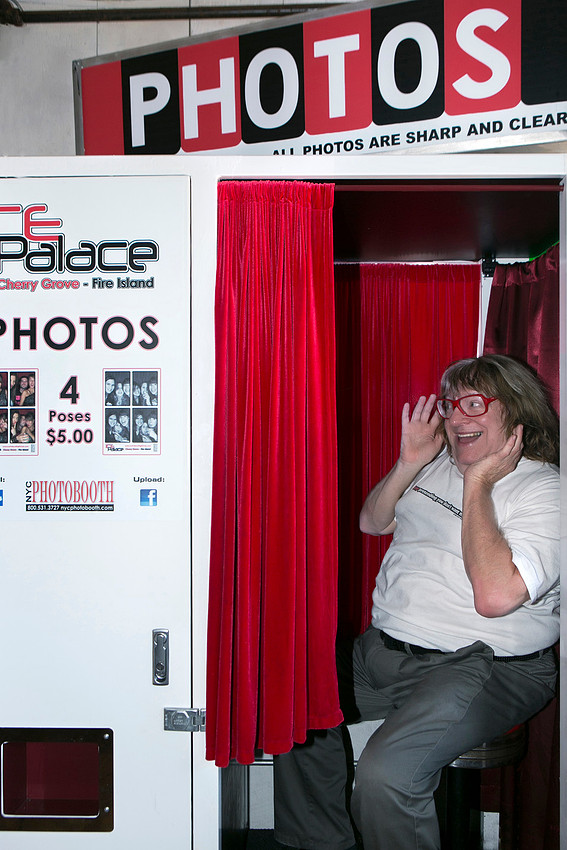
This photograph, taken by koitz at the Ice Palace in 2013, captures Bruce Vilanch during that visit.
koitz spotted Vilanch at the Ice Palace and approached him, asking if he would pose for a photograph. Vilanch immediately agreed. Without hesitation, he jumped onto the photo booth and struck a playful expression, as though he were already being photographed by the machine itself, while koitz quickly raised his camera and captured the moment.
The whole exchange lasted only a few seconds, but there was an effortless grace to it. Once he had taken the photograph, koitz thanked Vilanch, and the writer simply carried on with his business, leaving behind a brief but memorable encounter.
Bruce Vilanch
Vilanch was born in New York City and built a career behind the scenes as one of Hollywood’s best-known comedy writers. He wrote for the Academy Awards and became particularly associated with actress and television host Whoopi Goldberg.
But Vilanch was also a performer in his own right, appearing on Broadway and in live theater, including the musical Hairspray.
On Fire Island, though, audiences got something more personal: the stories, the jokes, and the Hollywood history of a performer who had spent decades behind the curtain.
]]>Fire Island: Queer Paradise, Complicated
What we call Gay Fire Island —the communities of Fire Island Pines and Cherry Grove— can be seen as a microcosm of the broader political landscape in the United States. Politics and controversy are not absent from island life; on the contrary, they are often part of the conversation. Residents and visitors do not always agree, and those disagreements can sometimes become public. From time to time, they are also picked up by LGBTQ+ media outlets, where local disputes can take on a larger profile.
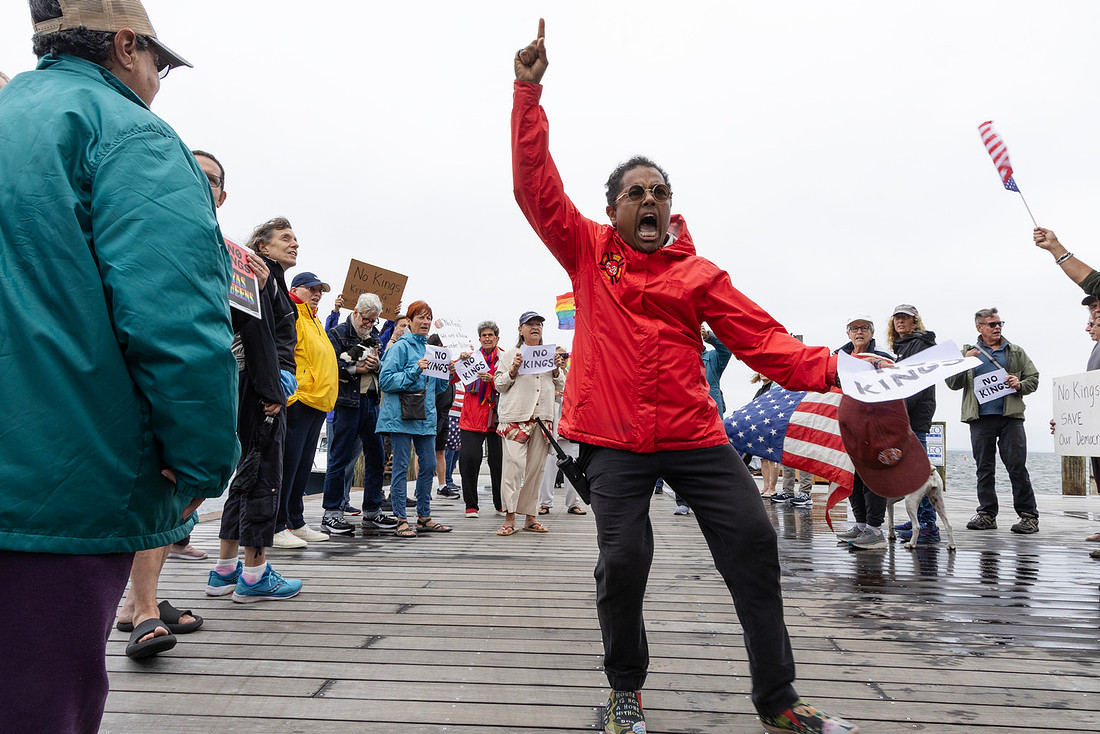
For instance, in 2025, the Pines and the Grove were among the communities that participated in protests against the Trump administration, including gatherings held as part of No Kings Day. We also advocate for causes we believe are just, such as Diversity, Equity, and Inclusion.
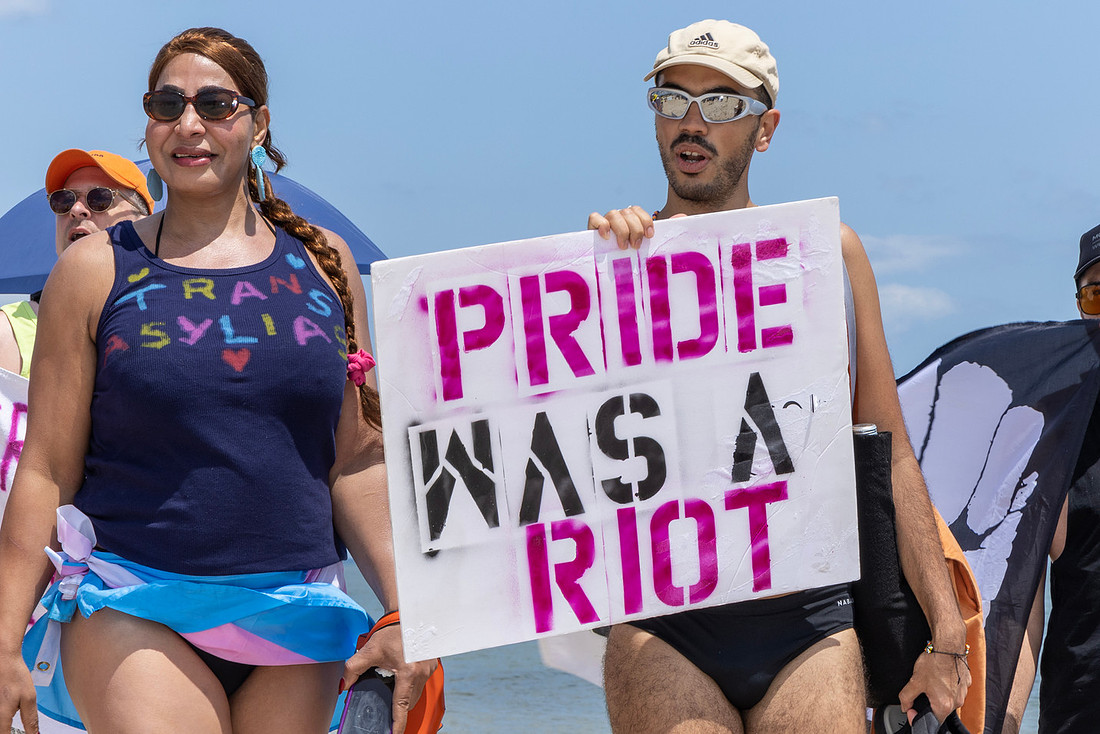
Over the years, the community has found itself at the center of more than a few controversial debates. On Fire Island, disagreement is not necessarily something to be avoided; it is part of the texture of island life. The Pines and the Grove are small, intensely social communities, and like any community, they reflect the tensions, debates and contradictions of the larger world around them. We hope that this willingness to engage, even when the conversations become uncomfortable, never disappears.
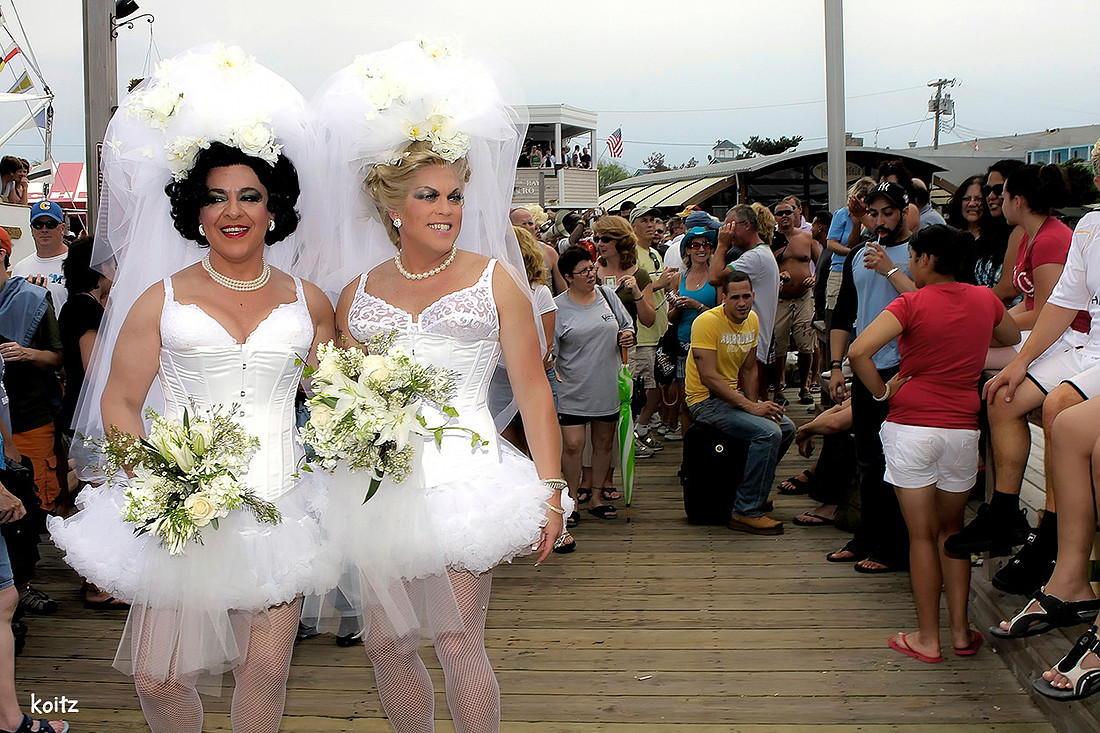
New York nightlife and queer photographer koitz has been documenting both the celebrations and the more contentious moments within the community for over two decades. His work captures the island not only at its most joyful, but also during the moments when debate, disagreement and controversy become part of its public life.
]]>It’s a story that has become part of Fire Island folklore but recently, we heard a different version.
A few weeks ago, queer New York nightlife photographer koitz crossed paths with Ana Matronic.
ANA MATRONIC
Ana is a storyteller, DJ and performer best known as the co-lead singer of pop phenomenon Scissor Sisters, and is the presenter of her own show every Saturday night from 6-10pm on Virgin Radio in the UK. She is the creator and host of history podcast Good Time Sallies, building on her ten year experience as a broadcaster for the BBC where she hosted her weekly show Dance Devotion from 2017-2022 on Radio 2.
Ana’s broadcasting history includes hosting the Eurovision semi-finals on television and radio, and DJ’ing live for special events broadcast from Ibiza, Blackpool, Manchester, and London’s Hyde Park. Ana enjoys a summer residency on Fire Island at Cherry Grove’s legendary home of disco, the Ice Palace, where she acts as house historian. She is featured in the joint BBC/PBS documentary Disco: Soundtrack of a Revolution, sharing Fire Island’s contribution to disco and the rise of the club DJ. Ana Matronic lives in Brooklyn, NY with her husband Seth.
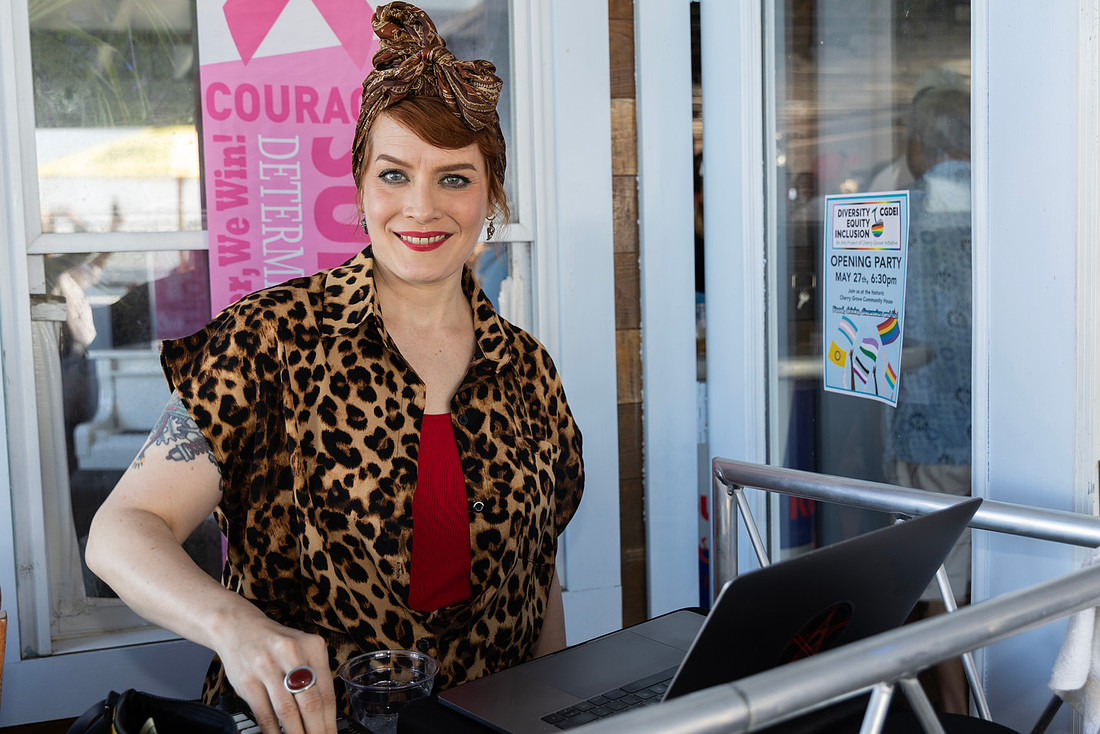
THE TEA DANCE
In conversation, Ana Matronic suggested something that caught our attention: what if the tea dance actually began in Cherry Grove?
Now, anyone familiar with Fire Island knows that the relationship between the Grove and the Pines comes with its own mythology — and, occasionally, a little friendly rivalry.
So naturally, we had questions.
Where did the tea dance really begin? Who started it? And how did this afternoon ritual become such an enduring part of Fire Island’s queer history?
Rather than rely on the stories we’ve heard over the years, we decided to go looking for the history behind the legend.
We spoke with artist and cultural historian Ana Matronic herself, to see what the record — and the memories of those who came before us — can tell us.
In other words, we went looking for the truth…and, along the way, we got the tea and even more!
Ana, when we saw you a few weeks ago you told us that the tea dance may have began in Cherry Grove. What can you tell us about it?
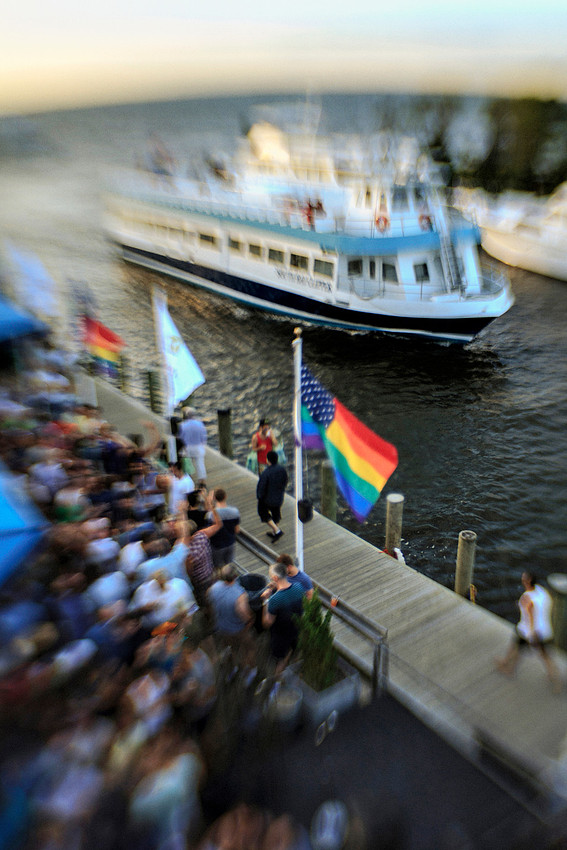
The tea dance as a phenomenon predates both Fire Island and the rise of the LGBTQ+ community as a sociopolitical class. The first tea dances ever held happened in the late 1700s or early 1800s, but the first on Fire Island were in Cherry Grove. According to Esther Newton’s book, the first and most definitive history of the island, “Despite the notoriety that tea dance gained in the Pines, narrators were emphatic and certain that it was invented by Jimmy Merry in the Grove, after which it was copied by John Whyte in the Pines, and subsequently became a gay American institution."
You also mentioned that it really began in France. Can you explain that?
Yes it did begin in France. In the late 1700s/early 1800s with the breakdown of the monarchy and the rise of popular forms of music and dancing with the Waltz, the dance floor began to democratize as well: Balls, which were elaborate courtship rituals for aristocracy, gave way to dances or as they were known in France “dansants” which were less formal gatherings designed to teach people the steps of the highly complex new dances like the Waltz. Some were public, some were private, and came in many forms that denoted who could attend and the level of refreshment attendees could expect. For example, a soiree dansant was a public ball open to all classes, while a matinee dansant was held during the day. A dejuner dansant was one where lunch was served, while a thé dansant (or tea dance) was an informal dance where one could attend in day clothes or ball attire without a hat, and expect light refreshments. In the mid-1800s when Tea Time became coded as an afternoon phenomenon, so too did tea dances. By the 1910s a Tea Dance meant an informal afternoon dance gathering where light refreshments were served.
So, who in your opinion started the tea dance in the United States?
It’s not opinion, it’s fact - look up “tea dance” on Wikipedia and you’ll see it’s older than Fire Island. I knew tea dances pre-dated Fire Island by virtue of being an F Scott Fitzgerald fan, who wrote about tea dances in his work (read “The Pearl and the Fur” for one), and was even arrested at one in Paris for jumping into a fountain! Tea dances were started in the US in New York and New Orleans and became especially popular as “coming out” events for debutantes in society starting in the late 1800s. The first reference I found for such an event was in 1890 in New York City, held as the coming out party for the daughter of influential doctor and hospital founder Francis Delafield held at Sherry’s Rooms, a popular restaurant in Manhattan. The first reference for a tea dance I could find in any newspaper was from the Charleston Mercury newspaper, 1821.
Was it really born on Fire Island?
No, it was not born on Fire Island. In the 1910s the popularity of the Tea Dance exploded in New York City and hotels employed professional dancers to teach the steps of the wildly popular ragtime dances and the tango. Tango teas were so popular they became a new way for men to make money as dance instructors and possibly more - this is the era where the term “gigolo” was born. Even better, the term “Tango Pirate” was invented to define this new class of young hooligans and their threat to respectable young girls - but it was also a stepping stone to possible fame and fortune. Ever heard the name Rudolph Valentino? He was a Tango instructor in New York City. Yes, a tango pirate! We also know Valentino was gay - so the tea dance was by no means a queer invention, but queer folks were there from its inception, and were instrumental in its revival and relevance to today’s culture.
What are you up to on Fire Island (DJing, etc.)?
I am the in-house historian and resident DJ at the Ice Palace. I DJ every Monday for Bingo with Ariel Sinclair, every Tuesday for my party Queerdo, and once a month for the Underwear Party. I’m also the DJ for the Drag Invasion at the Ice Palace and a judge for the Miss Fire Island pageant, and the newest member of the Cherry Grove Archives.
Where do you reside, the Pines or the Grove?
I reside in the Pines and work in Cherry Grove.
Why do you come here?
I come to Fire Island for the people, the culture, the community, and the landscape. In that order.
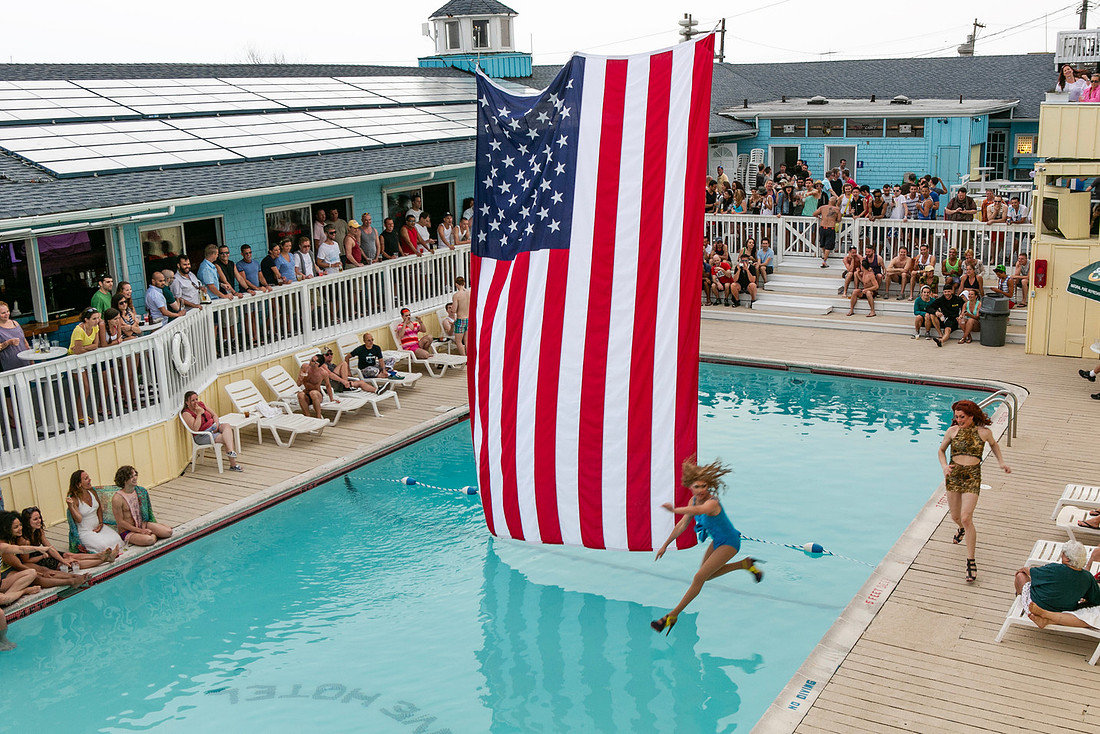
Photographing DJ Junior Vasquez on Fire Island
Queer New York nightlife photographer koitz photographed DJ Junior Vasquez on two occasions at the Pavilion in the Fire Island Pines, capturing a small but revealing glimpse of one of the most celebrated DJs of his generation.
Junior Vasquez
By the early 1990s, Vasquez was at the absolute height of his fame in New York City. The years from 1992 to 1995 marked the peak of his legendary Sound Factory era, when he was no longer simply a famous DJ but a bona fide New York nightlife institution. His influence extended well beyond the dance floor. Vasquez became renowned for taking the vocals of famous singers and rebuilding their songs almost from the ground up for the club, transforming familiar pop records into expansive, often radically different house tracks.
His relationship with Madonna produced some of his best-known work. In 1994, Madonna commissioned Vasquez to remix her single “Secret,” resulting in four official Junior Vasquez versions, including the “Junior’s Sound Factory Mix.” It was precisely this ability to take the voice of an internationally famous pop star and reshape it for a sweaty, demanding club crowd that helped make Vasquez such a powerful figure in New York dance music.
Like many DJs of his generation, Vasquez also brought that reputation to Fire Island, where DJs could play to intensely devoted crowds of men throughout the summer. koitz encountered him there twice, both times at the Pavilion in the Pines.
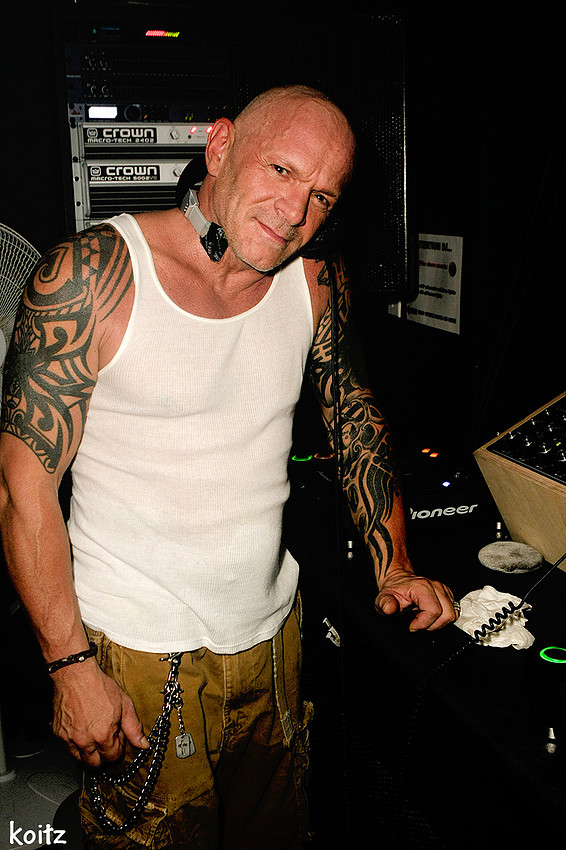
What koitz remembers about photographing Junior Vasquez
The first occasion was August 30, 2008. koitz remembers the assignment as a big deal. He was instructed to wait outside the Pavilion at a specific time, where he was met by Vasquez and the Pavilion's large entourage. Then he waited. He recalls that it may have been roughly half an hour before the internationally renowned DJ decided he was ready to be photographed. koitz was finally brought into the tiny booth above the dance floor, where he managed to take two photographs before being immediately escorted out.
What stayed with him was how transactional the encounter felt. He remembers the booth as tiny and austere, perched directly above the dance floor, a far cry from the glamour one might associate with photographing one of the world's most famous DJs. There was little time for conversation or experimentation: Vasquez posed, and the moment was over.
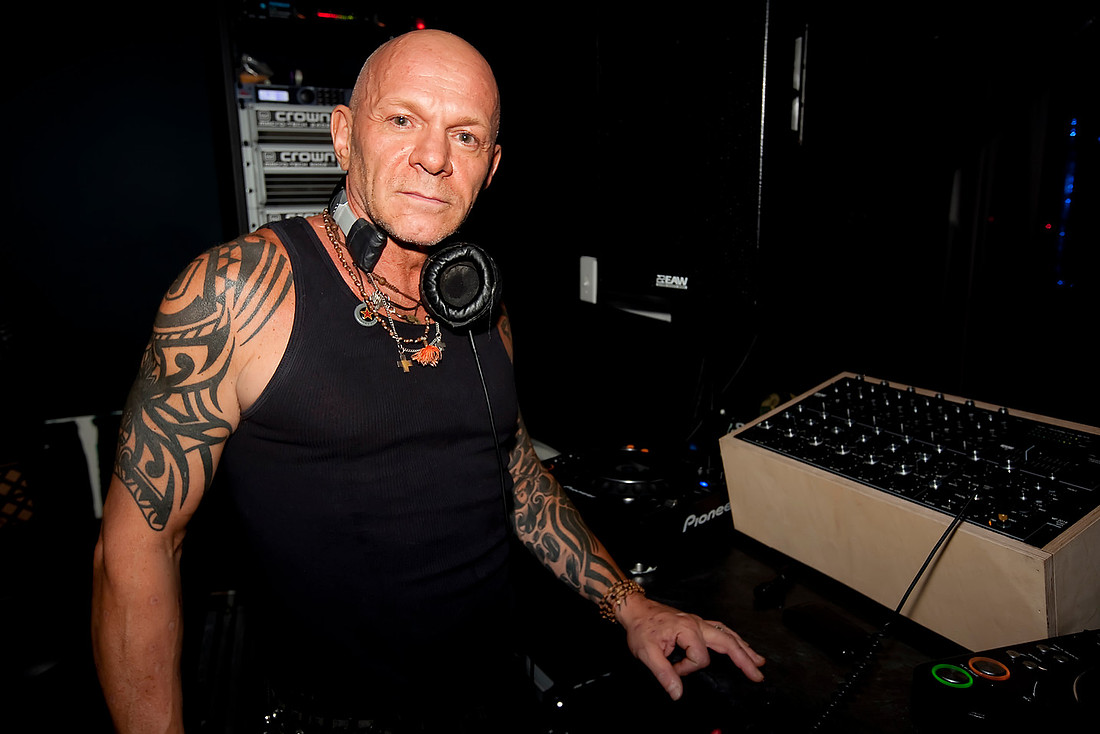
A year later, on July 4, 2009, koitz was asked to photograph Vasquez at exactly the same location. This time, the occasion was the Pavilion’s 30th anniversary, and Vasquez was DJing for the celebration. koitz remembers little about the encounter itself. Once again, the process was remarkably transactional. Vasquez posed for one photograph and turned away from the camera. koitz asked him to pose once more, which he did, and that was it.
Before leaving, koitz asked whether he could take a few photographs of the dance floor from the booth. He was given permission, but only briefly. A few seconds later, he was asked to leave.
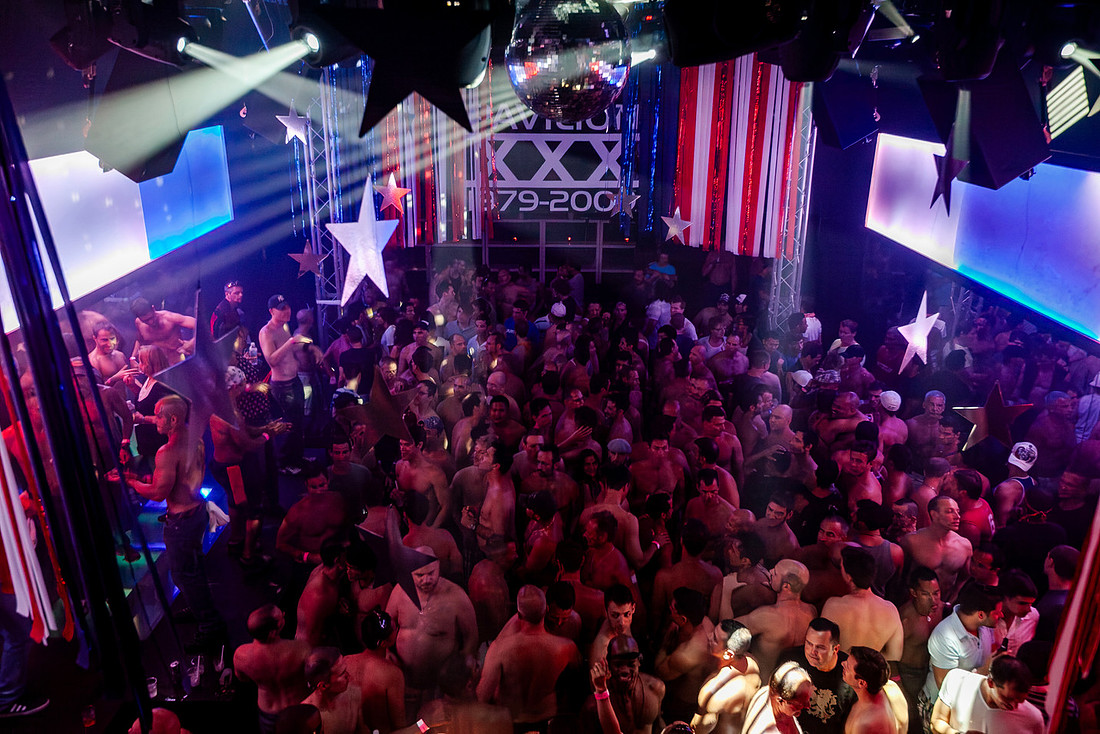
Those fleeting encounters—two photographs in 2008, another portrait and a handful of dance-floor images in 2009—are now part of koitz’s extensive archive documenting queer life on Fire Island. Seen together, they capture not only Junior Vasquez at a late point in his extraordinary career, but also something of the peculiar machinery surrounding celebrity in the gay nightlife world: the entourage, the anticipation, the tiny booth above the crowd, and the very brief moment when the famous DJ finally turned toward the camera.
]]>
(This was originally posted on the Facebook page Gay Fire Island on August 26, 2006 after Dolly Parton passed away the day before at the age of 80)
From London to Fire Island: The Art of Vicky Heller
If you’re an early riser on Fire Island, there’s a good chance you’ve seen her: a familiar figure jogging through the Grove, the Pines, the Meat Rack, or the Sunken Forest — some of her favorite places on the island.
Her name is Vicky Heller, an artist who is as well-known as she is loved in two of Fire Island’s most iconic communities: Cherry Grove and the Fire Island Pines.
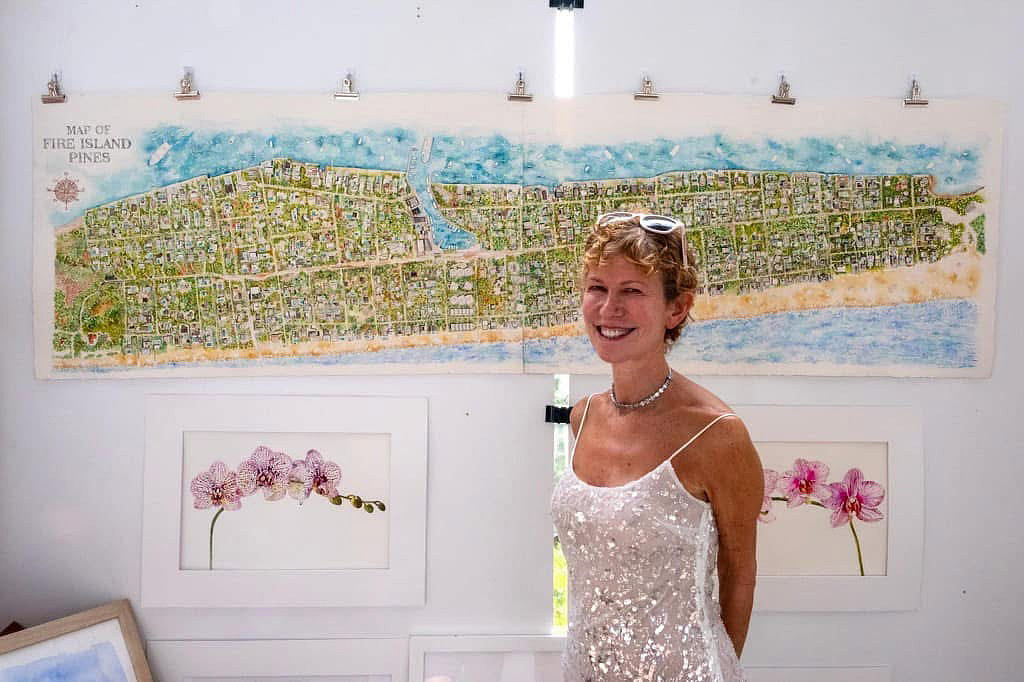
Vicky has spent every summer in Cherry Grove since 2008. And while the Grove is her home base, the Pines is another place she loves dearly. In fact, she visits her friends there almost every single day.
Vicky was born and raised in London and now lives in Chelsea, Manhattan, but when summer arrives, she heads back to the place she has come to love so much that she says she simply can’t imagine living in the United States without spending her summers in Cherry Grove.
18 summers in Cherry Grove
Over the years, she’s had several homes in the Grove. She first lived on Surf Walk, on the west side of the community. Then came a short stay at Pride House, the oldest house in the Grove. And for well over a decade now, she has called a beach house on the east end home.
But Vicky isn’t just a familiar face on the island. She’s a professional artist, creating artwork for the fashion and home-furnishings industries. Her specialty is watercolor — and that passion for detail would eventually lead her to take on what may have been one of the most ambitious artistic projects imaginable on Fire Island.
In 2023, Vicky decided to paint a map of the entire Fire Island Pines.
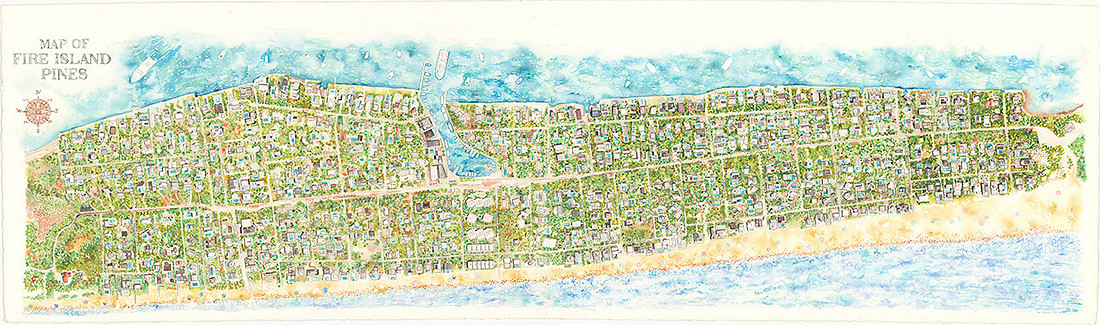
The idea came from a simple observation: there really wasn’t a detailed map of the Pines. So Vicky decided to create one herself — and not just a map showing walks and buildings. She wanted to paint every single house.
And knowing Vicky’s obsessive attention to detail, that meant she wanted to get everything right — from the architecture of each home to the color of the trees, and even the color of individual swimming pools.
What started as a self-assignment quickly became a monumental undertaking. Vicky jokes that the project almost killed her.
The Pines is a big community, and painting it house by house, detail by detail, took months of painstaking work. But eventually, she finished.
And in 2023, she brought her enormous watercolor — an impressive 80 inches long — to the Art Show at Whyte Hall in the Pines.
It was a huge success.
Vicky was thrilled with the result. And that success inspired her to take on another community close to her heart: Cherry Grove.
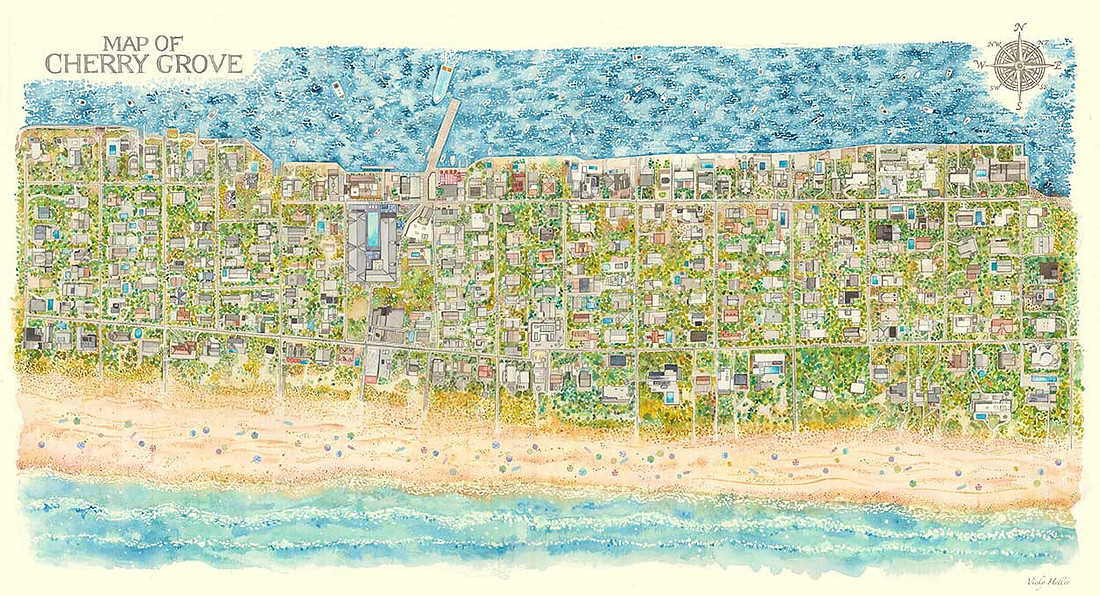
This time, she painted the place where she has spent so many happy summers, surrounded by friends — including her dear friend and fellow Brit, Keith Starkey with whom she has shared a house on the island for many years.
Vicky describes that painting as another labor of love. But compared with the Pines, she says, it was a little easier simply because the Grove is a smaller community.
Together, the two paintings have become much more than maps. They are portraits of two beloved Fire Island communities — and for many people, they are a way of seeing their own little piece of paradise preserved forever.
Every house, every detail, immortalized in watercolor.
And Vicky hopes the paintings will continue to bring people joy long after she is gone. As she puts it, hopefully people will still buy the maps, look at them, and see the houses they love so much.
Each map takes months to complete.
NEXT: A Map of the Meat Rack
And Vicky is already at work on her next project: a painting of the Meat Rack.
This one, she says, comes with a special responsibility.
The Meat Rack is a deeply meaningful place for so many people on Fire Island, and Vicky says she wants to do justice to it — and treat it with the respect it deserves.
Her maps are available through her ETSY shop, giving Fire Islanders and visitors alike the chance to take a little piece of these communities home with them.
https://www.etsy.com/shop/VictoriaHellerStudio
FUN FACTS ABOUT VICKY
Vicky came to New York in 1995 because, by her own admission, she was partying a little too much in London. She planned to stay for just two weeks but she never left.
While out at a nightclub, she met a couple of guys who worked at Calvin Klein. They helped her get a job, she got a visa — and the rest, as they say… well, you know!
And honestly, aren’t we all glad they did?
Vicky’s London connections also include a rather colorful character who would go on to become internationally known: Aidan Shaw, the former porn star who later in life became a fashion model and gave his name to a character in Sex and the City.
In the Pines, Vicky developed another close friendship — this time with renowned DJ Lina Bradford.
Then there’s her extended Fire Island family: Stevie, Chris, and the whole crew at the Pines Liquor Store, where Vicky is a regular.
So regular, in fact, that her friends have given her visits there their own name: “Vicky Tea.”
She has also designed many of the T-shirts sold at the store.
So if you see that familiar figure running through the Grove, the Pines or the Sunken Forest early in the morning, now you know who it is.
It’s Vicky Heller — artist, mapmaker, Londoner, New Yorker, Fire Island lover… and perhaps above all, someone who has spent years turning the places and communities she loves into works of art that can be treasured for generations.
]]>
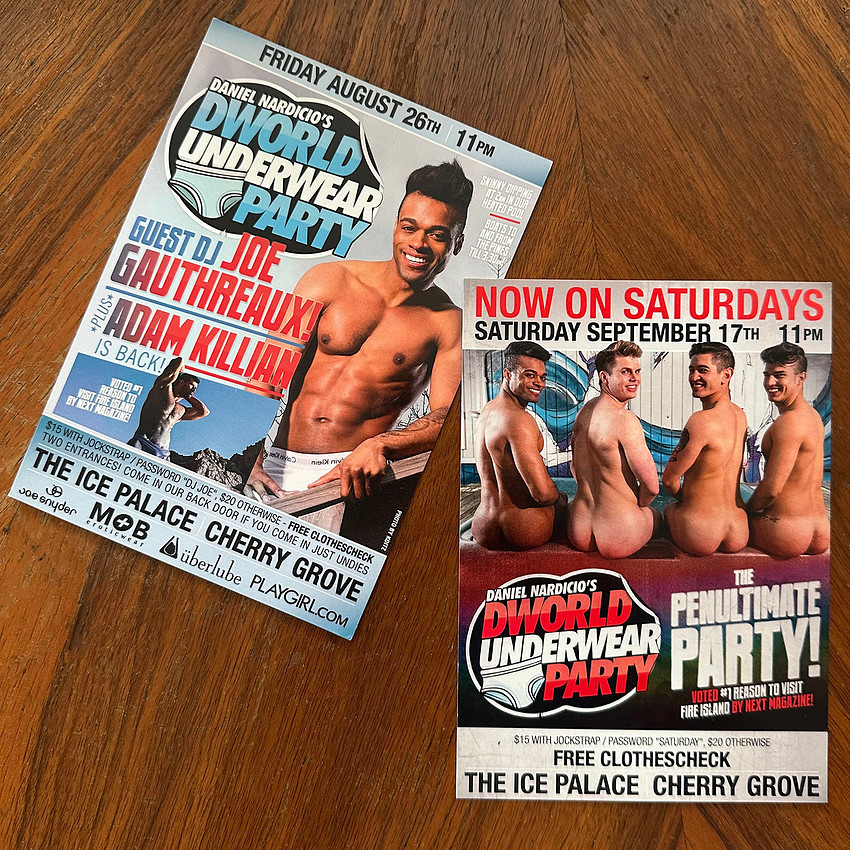
Back in the day, the models for the flyers for Daniel Nardicio's DWorld Fire Island Underwear Party were photographed right there on the island. Queer nightlife photographer koitz was behind the camera for several of those shoots.
But there’s one he remembers especially well: May 15th, 2016.
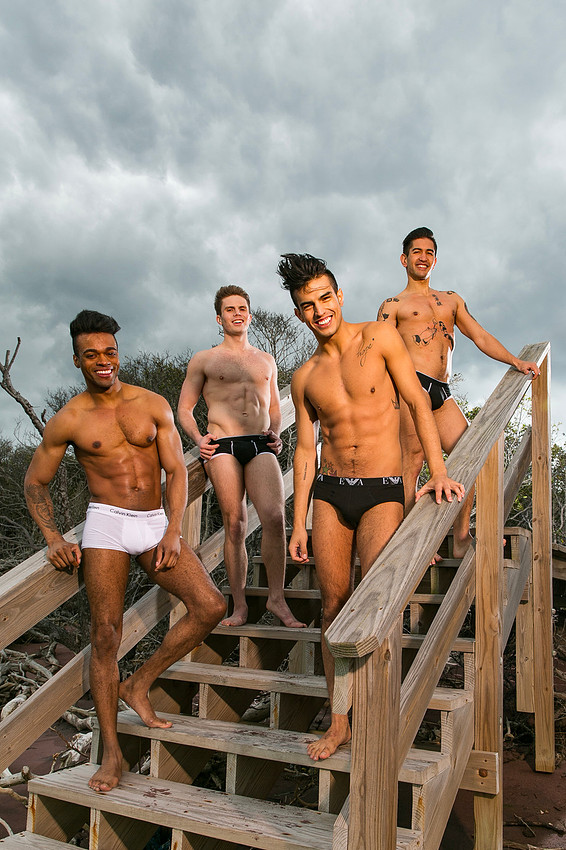
It was supposed to be a warm spring day, a preview of the summer to come. Instead, Fire Island greeted the models with bitter cold.
And once you’re on an island, there’s not much room for Plan B. Sending the models home wasn’t really an option. So the shoot went ahead.
If you were on Fire Island that summer, you probably remember seeing the photograph at the top on the party flyers.
But there’s another photograph—taken just moments before this one. It’s what photographers call a lighting test shot.
Look closely at the models’ faces. You can almost feel the cold. It was so cold that only four of them showed up that day.
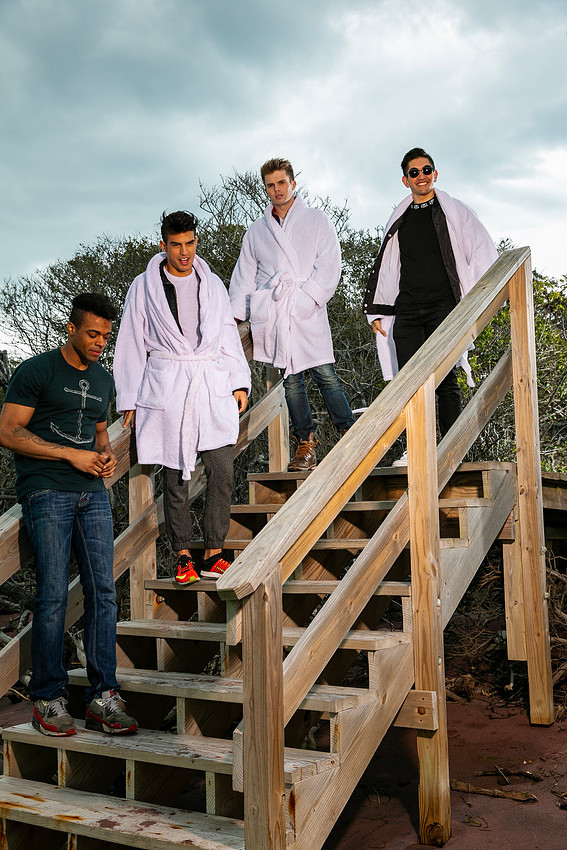
The rest of the crew was bundled up in sweaters and jackets. Meanwhile, these poor guys had to strip down to their underwear and pretend they were basking in the middle of a warm summer day.
The sky, however, wasn’t exactly cooperating.
Look at those clouds.
Still, the models were fantastic. They posed, they smiled, they played along—and somehow, they made the whole thing look effortless. You’d never know they were freezing.
We felt terrible for them.
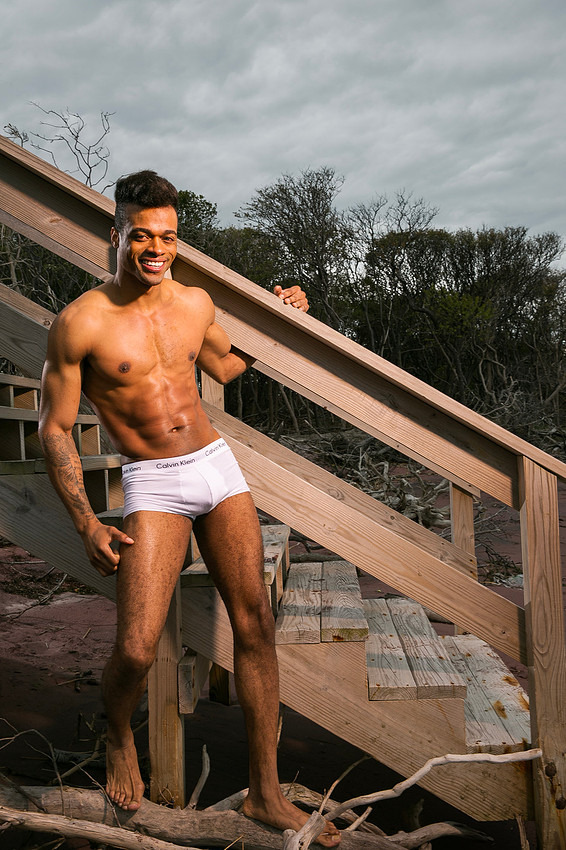
When the shoot was finally over, they headed back to the house, jumped straight into the jacuzzi, and warmed themselves up.
Of course, we took a few more photographs.
After all, there were flyers to make.
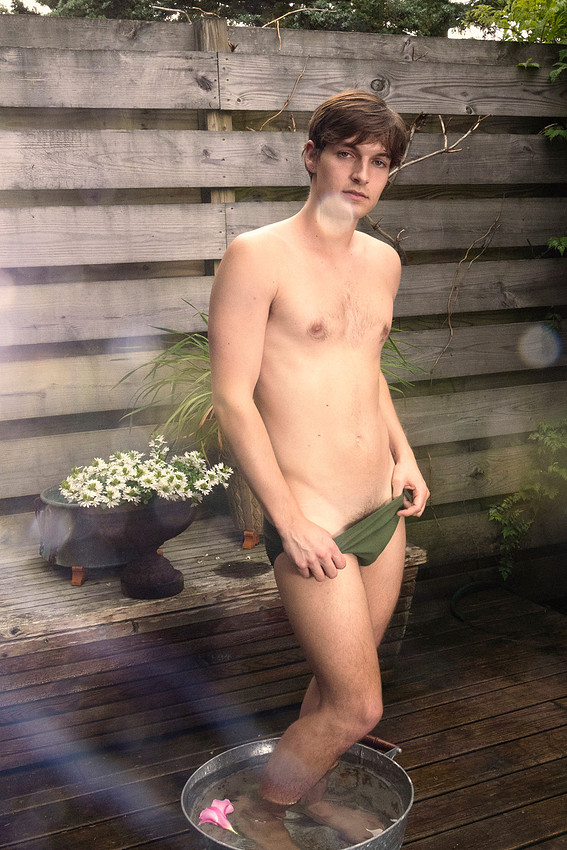
For eighteen summers, Campobello was home.
On the quiet west side of Cherry Grove, close to the path leading toward the Sunken Forest, stands Campobello — the house where koitz spent his summers, mostly on weekends, and photographed many of the people who became part of his world.
It was also here that several interviews for In the Meat Rack, the documentary he directed with trans filmmaker Parker Sargent, were recorded. The house became, in a way, both a home and a backdrop to the life koitz was documenting.
But Campobello was never really a private place.
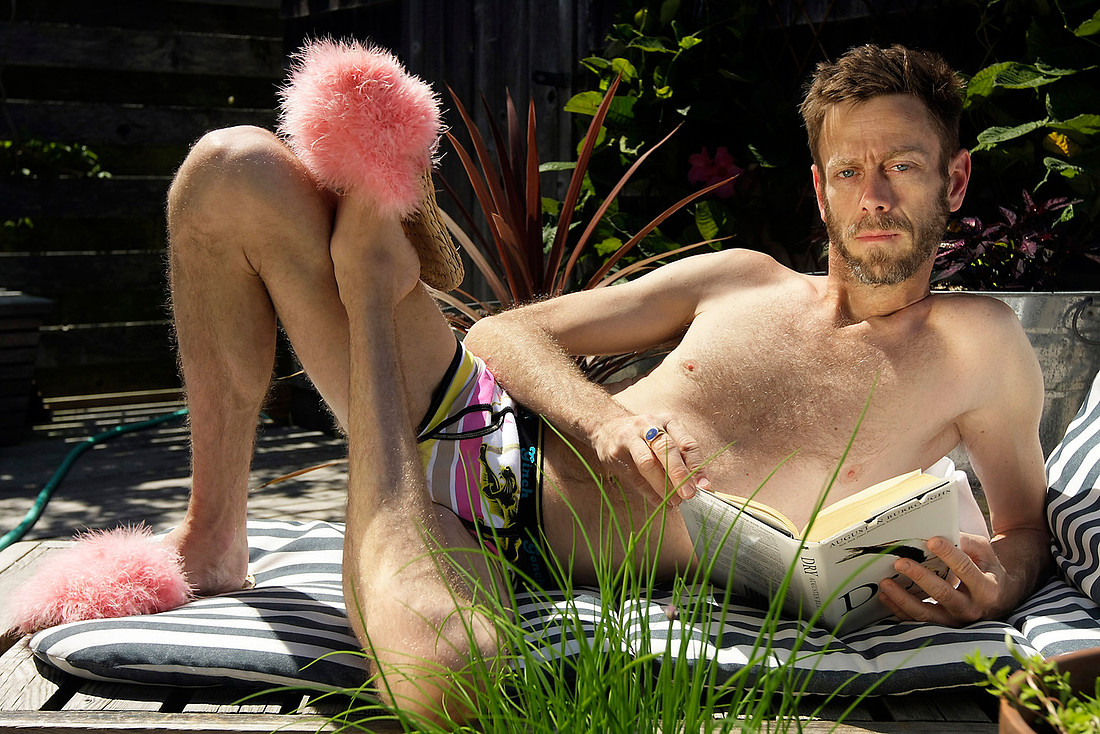
The door was open. Anyone could walk in, almost at any time, and they were welcomed — usually with a glass of pink Prosecco, or perhaps several glasses. It was koitz’s favorite.
There were parties. There were long afternoons and late nights. People came to celebrate birthdays, milestones, friendships — or simply the fact that they were there. That day. That weekend. That summer.
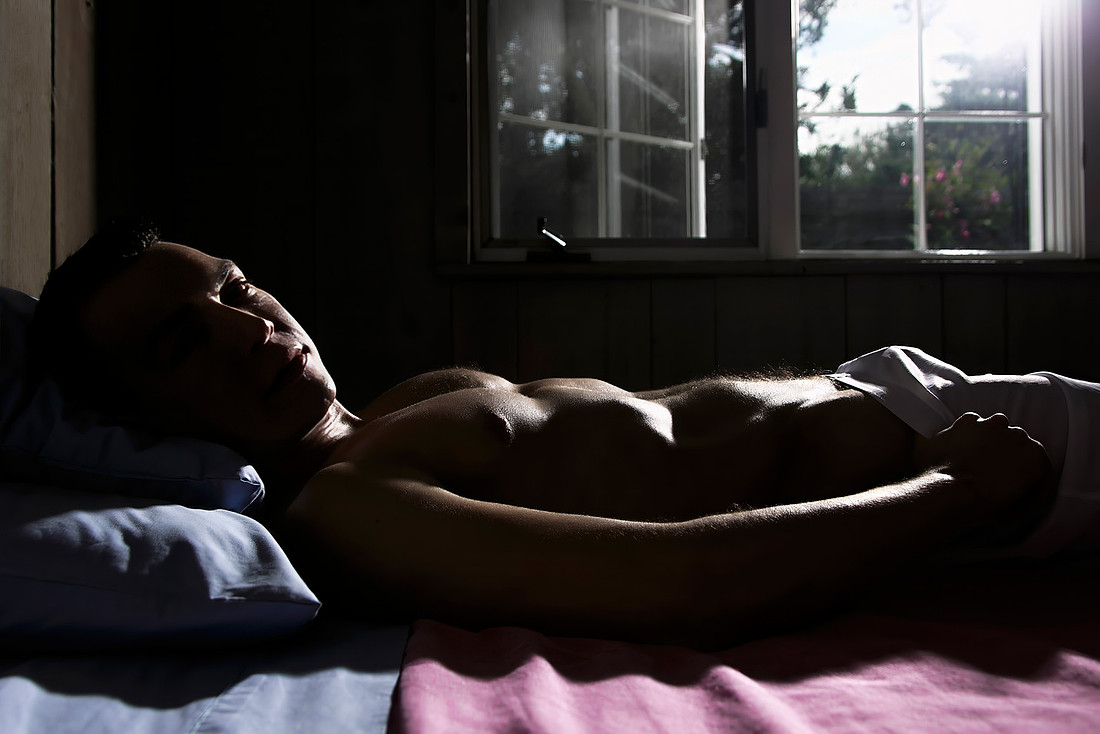
For a while, Campobello seemed to hold all of it: the laughter, the photographs, the stories, the unexpected encounters, the sense that something might happen at any moment.
Some of the photographs that would later appear in koitz’s 2020 coffee-table book, koitz Gay Fire Island, were made here too.
The house is still there.
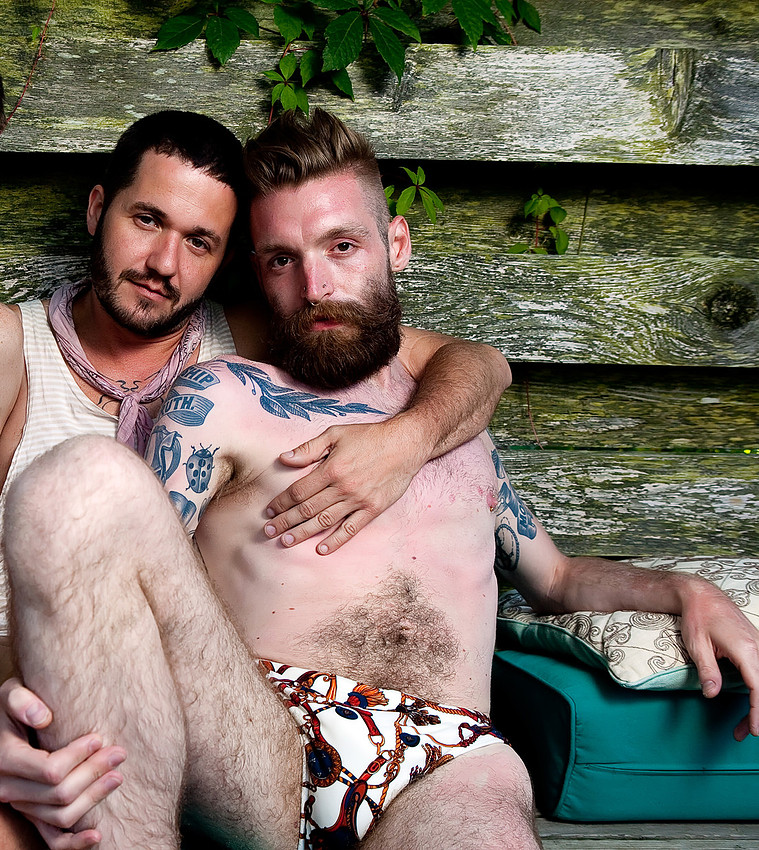
But koitz, his husband, and the friends who filled Campobello with life are no longer in that house.
And perhaps that is what makes those eighteen summers feel even more suspended in time.
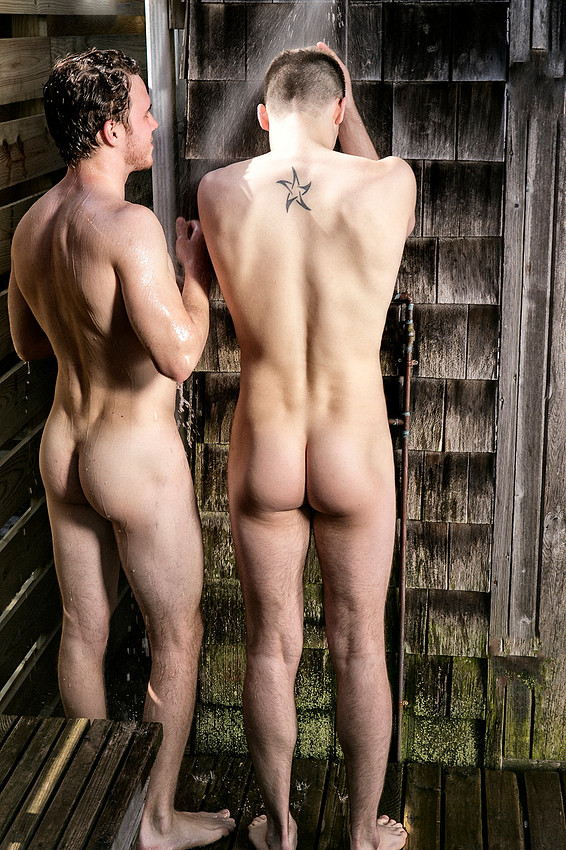
Because Campobello was never just a house. It was a place of welcome. Of friendship. Of celebration. A place where the door was open, the Prosecco was pink, and almost anything could happen.
And for those who were there, it still does.
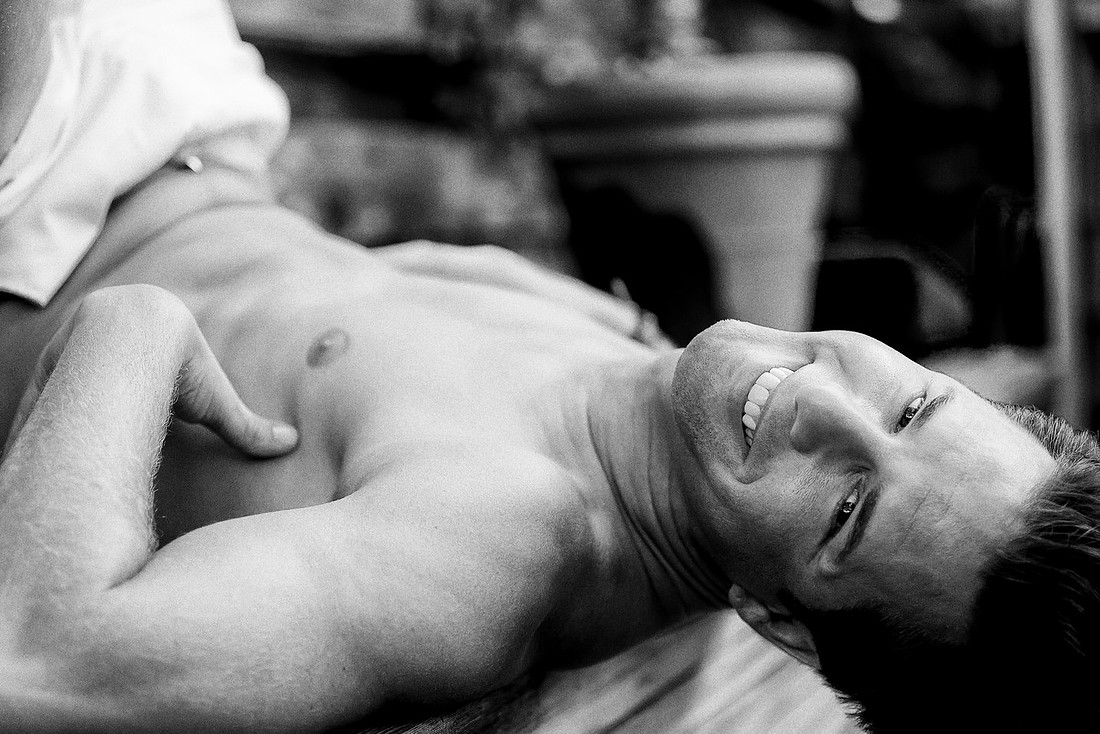
]]>
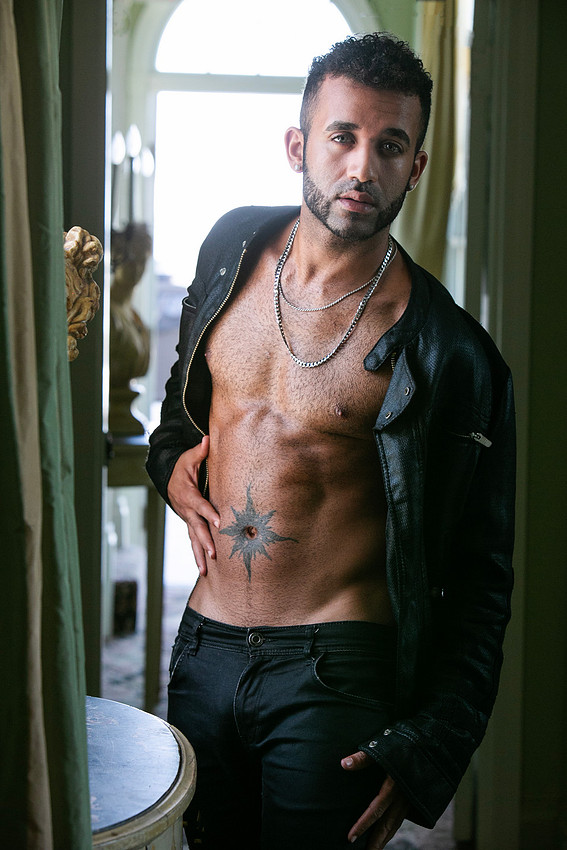
Calvin is the first PHOTO STORY by photographer koitz
It won’t follow a regular schedule. Every now and then, we’ll take a photograph—or a series of photographs—and tell the story behind them.
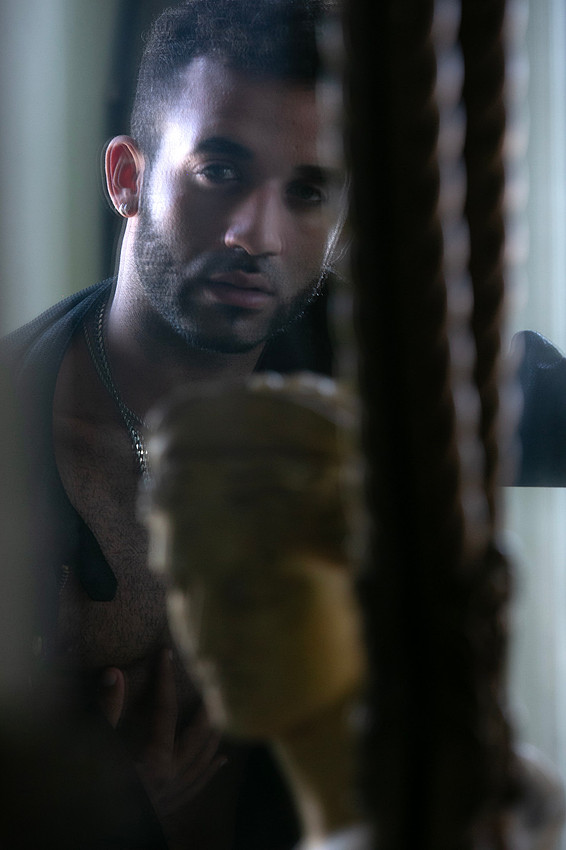
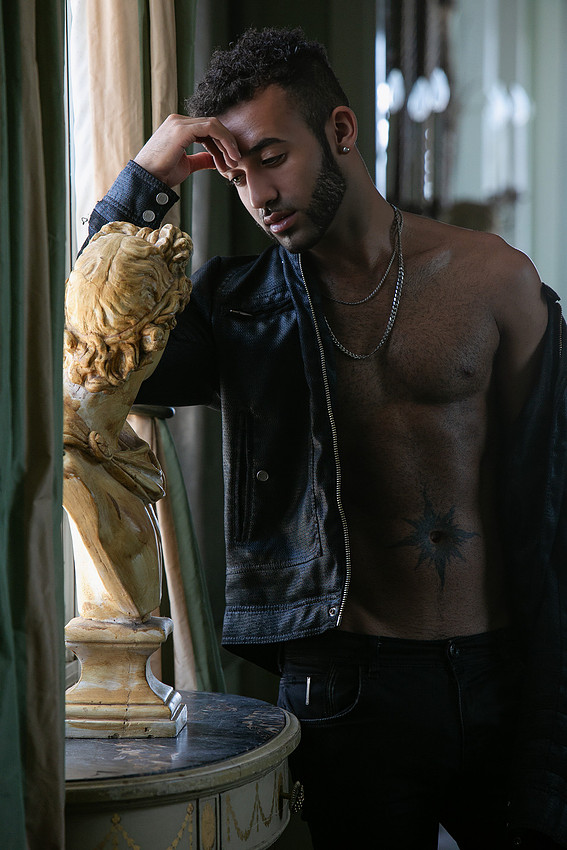
And we’re starting with Calvin.
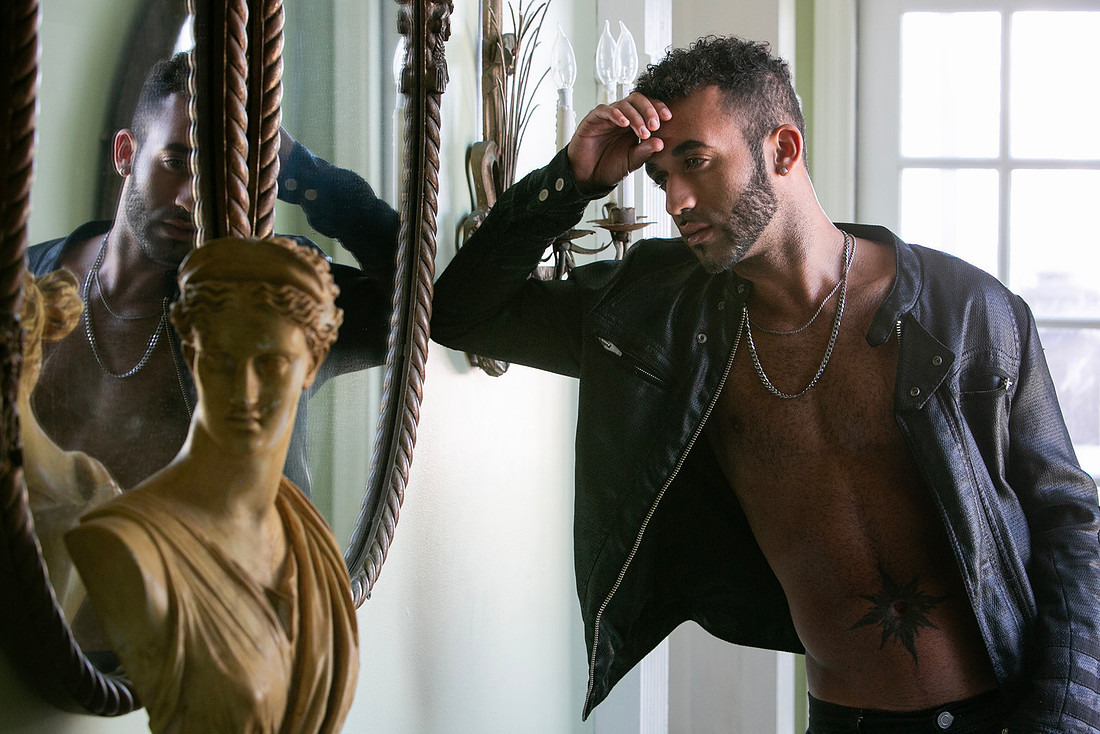
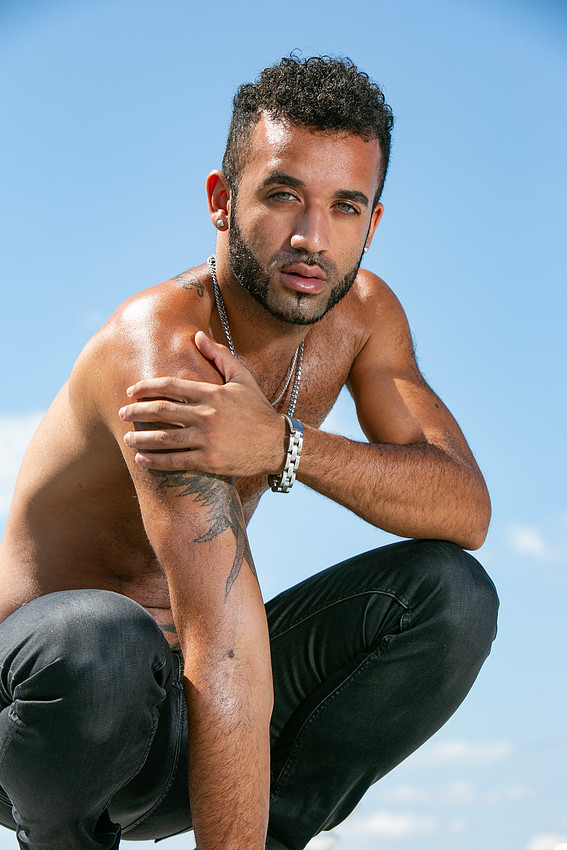
One very hot summer day, Calvin and koitz met at the Belvedere Guest House for Men, on Fire Island, for a photo shoot. The Belvedere is a fabulous place, and over the years, many photographers—including koitz—have used it as a backdrop for photographing beautiful male models.
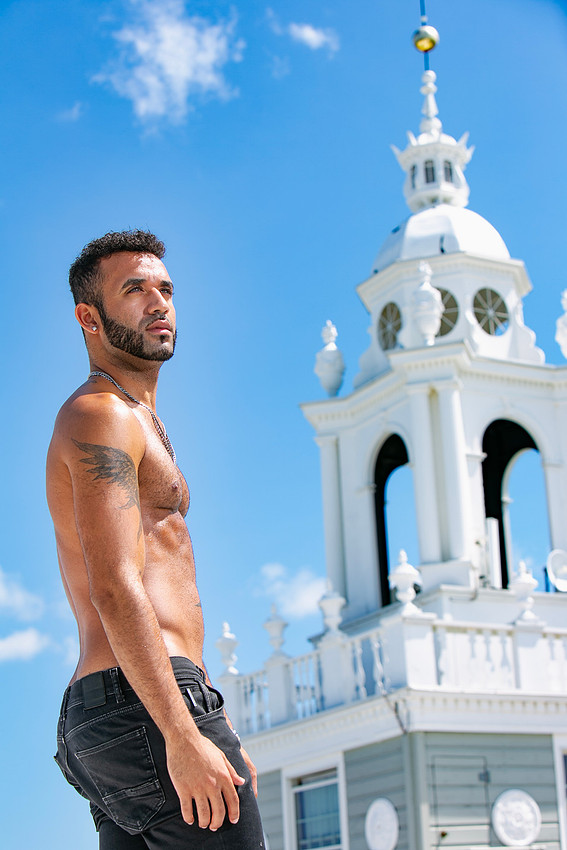
Part Venetian palace, part theatrical fantasy, part intimate guesthouse, it seems almost to belong to another world. Its ornate rooms and extravagant details stand in striking contrast to the simple, laid-back character of the island.
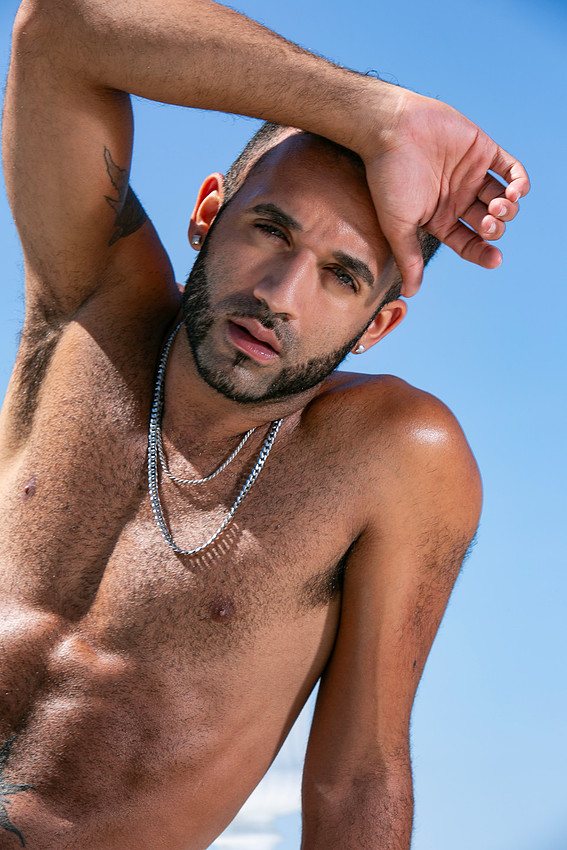
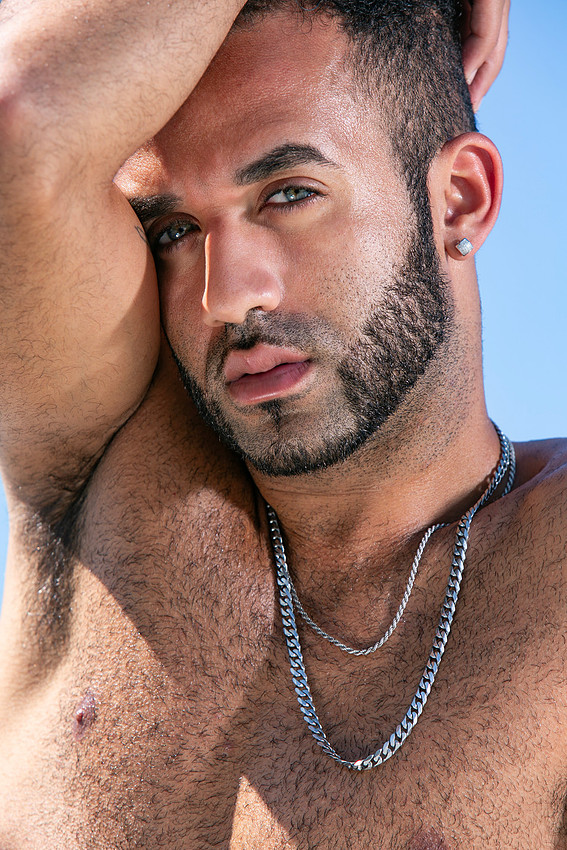
And yet, somehow, that sense of fantasy is exactly what makes the Belvedere feel so unmistakably Cherry Grove.
koitz says that Spartacus Party on Fire Island is one of those rituals worth witnessing at least once.
Every year, as summer begins its slow retreat from Fire Island, Daniel Nardicio and the Belvedere Guest House in Cherry Grove throw open their doors for Spartacus—a celebration that has become one of the island’s most uninhibited queer traditions. Now in its 14th year, Spartacus arrives a little later than usual in 2026, taking place on Saturday, September 19, at the Belvedere.
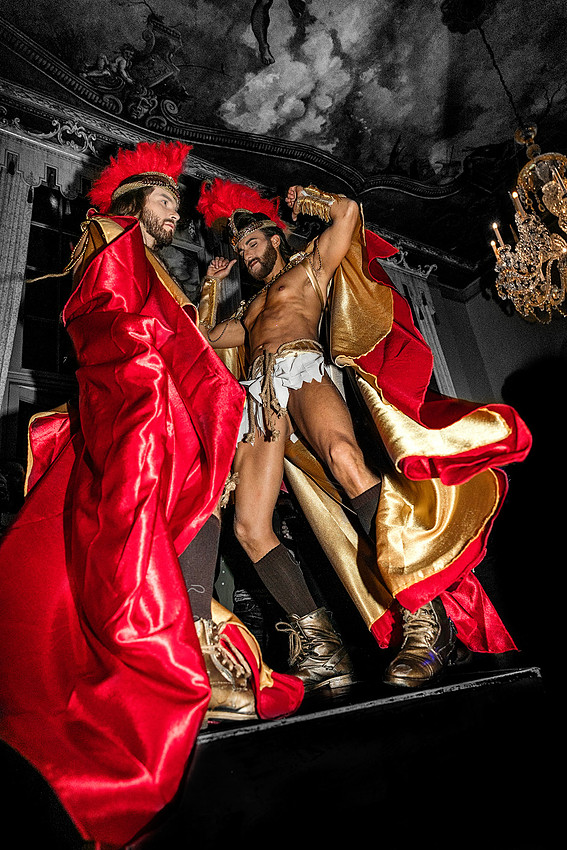
The party wears its excess proudly. Raunchy, campy, body-positive and unapologetically queer, Spartacus is a place where inhibition is left at the door and the body becomes part of the spectacle. Clothing is optional, the atmosphere is deliberately provocative, and the night’s centerpiece is the Mr Nude Belvedere contest, beginning at 10 PM—a gloriously irreverent celebration of nudity, performance and queer freedom.
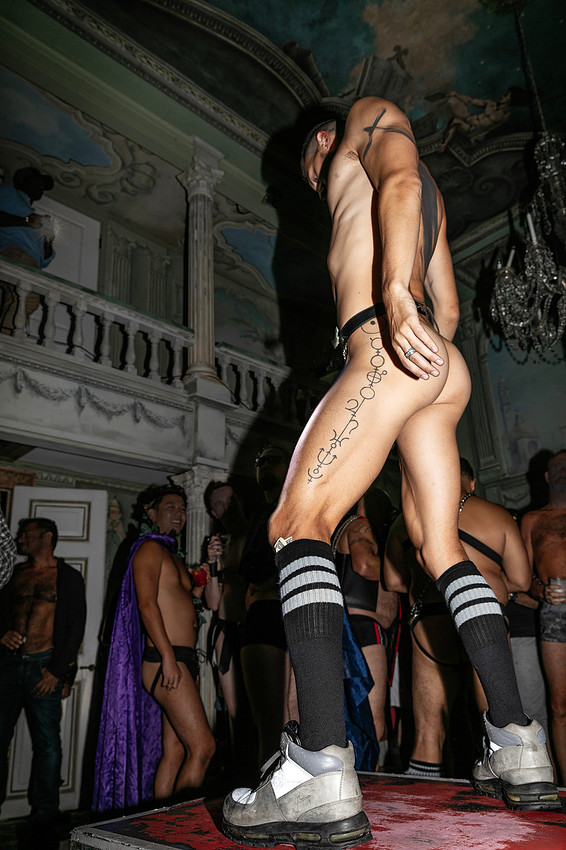
Mr Nude Belvedere
At the heart of Spartacus is the Mr. Nude Belvedere, an outrageous adult male beauty pageant that has become one of the party’s defining spectacles. The organizers cheekily call it “America’s only all nude, all lewd, all dude beauty pageant,” a title that leaves little to the imagination. The winner walks away with $1,000 and the coveted title of Mr. Nude Belvedere.
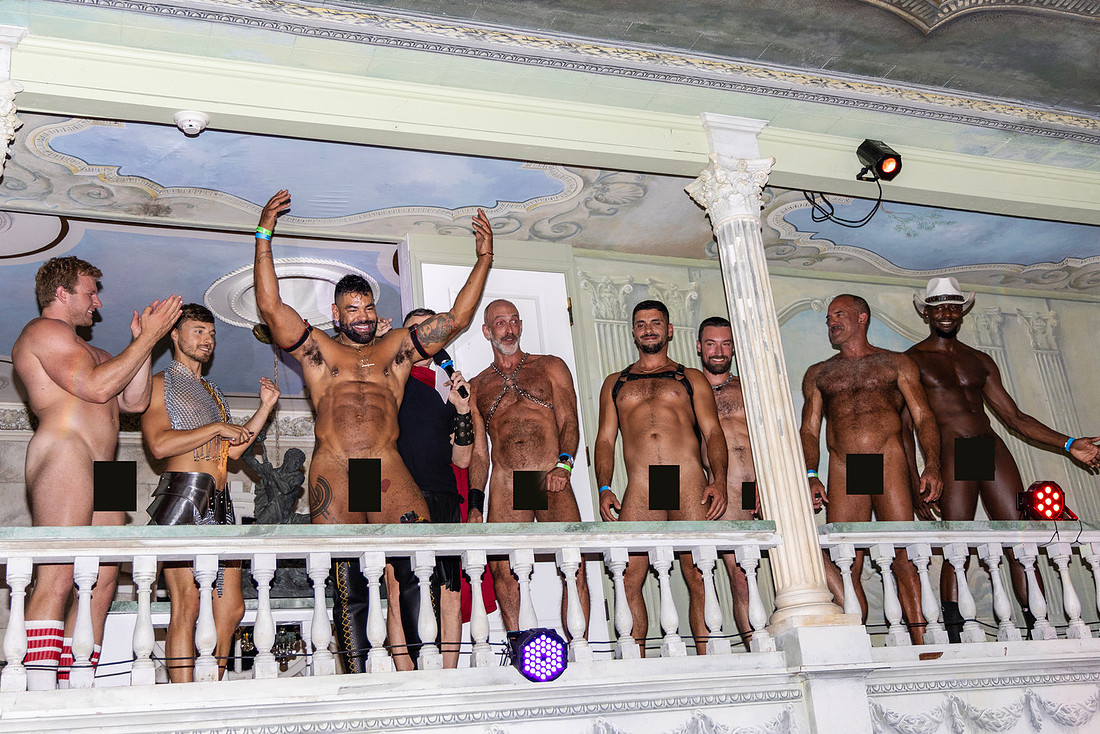
Guiding the proceedings is Daniel Nardicio, whose sharp wit and mischievous sense of humor transform the contest into something far more theatrical than a simple display of flesh. Nudity is only the starting point; personality, humor, confidence, exhibitionism and audience interaction are all part of the performance. The contestants take the stage completely naked, vying for the crowd’s attention as Nardicio orchestrates the evening into a gloriously campy and unabashedly sexual piece of queer theater.
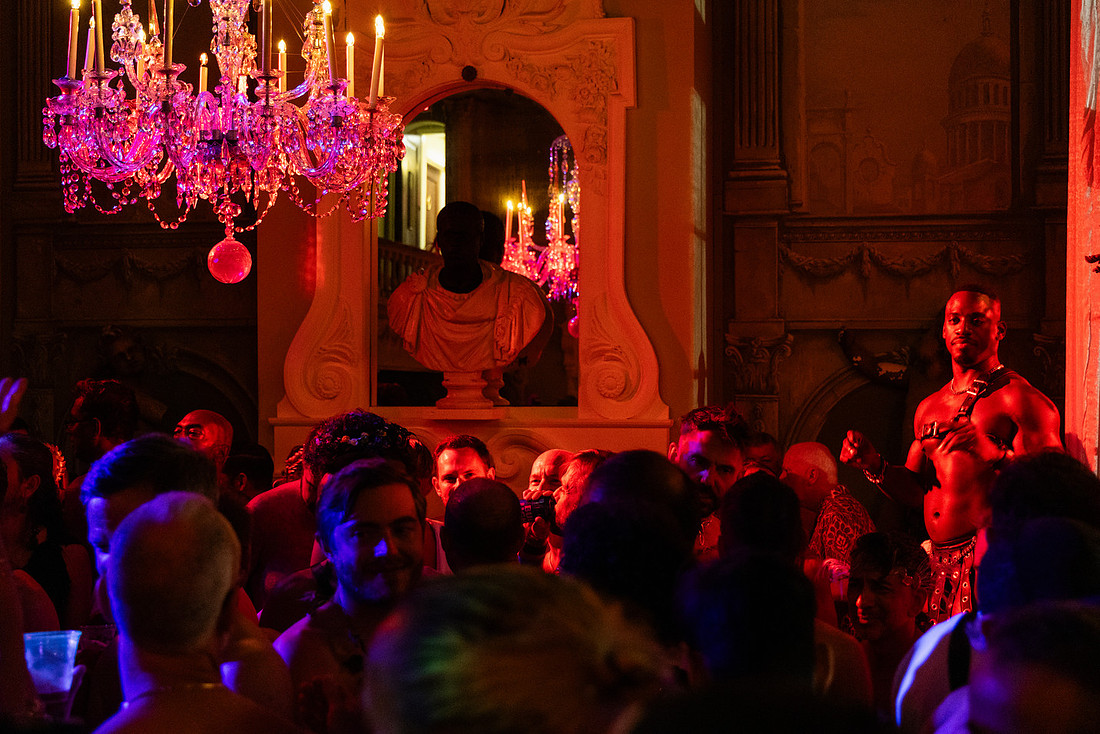
koitz and the Spartacus Party
For years, nightlife photographer koitz has returned to Spartacus with his camera, capturing the party in all its unruly, liberated glory. Most of the posters created for the event’s contests feature his photographs, themselves shot on Fire Island, preserving the particular mythology of the night from one season to the next. One of his most iconic images—a completely naked gorgeous go-go boy appears in his 2020 coffee-table book, koitz Gay Fire Island.
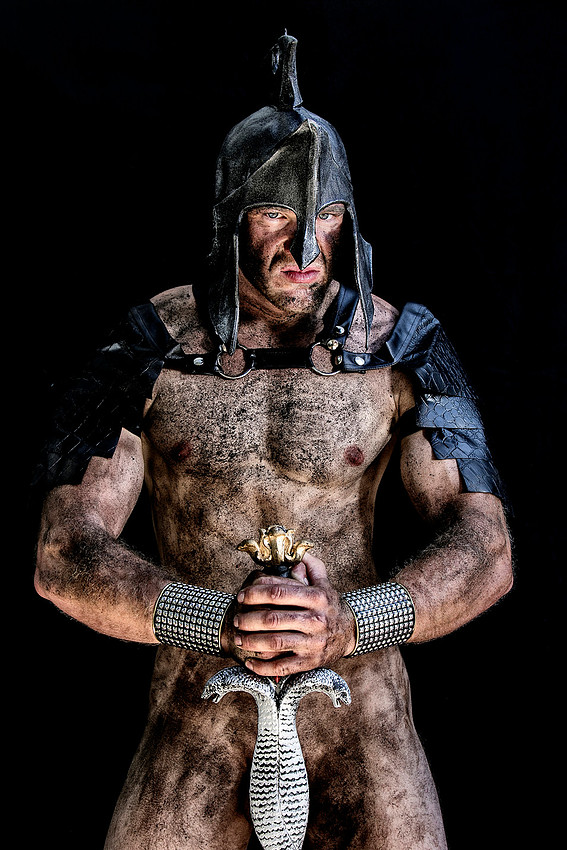
For koitz, Spartacus may be his favorite party of the season. He is drawn to the strange alchemy of it all: the costumes and characters, the uninhibited crowd, the gloriously naked go-go boys, the sense that the usual rules have been temporarily suspended—and, of course, the unapologetic nudity. There is something about the particular freedom of Spartacus that, in his view, sets it apart from anything else in either Cherry Grove or the Pines.
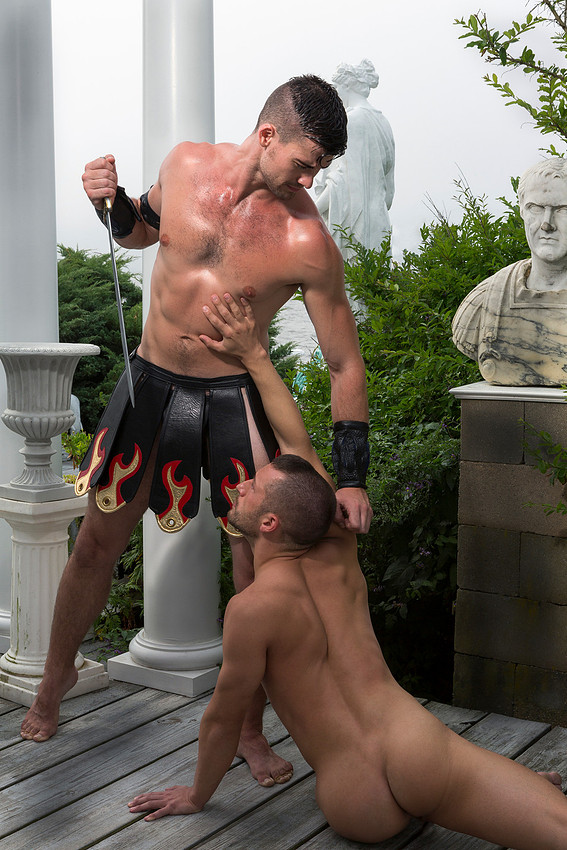
For a queer man who has never experienced it, he says, Spartacus is one of those Fire Island rituals worth witnessing at least once: a night when bodies become costumes, costumes become theater, and the boundary between celebration and spectacle seems to disappear.

The History of the Belvedere Hotel
More than a hotel, the Belvedere is a piece of Fire Island mythology: an extravagant refuge born from tragedy, shaped by theater, and preserved through generations as one of Cherry Grove’s most flamboyant expressions of queer life.
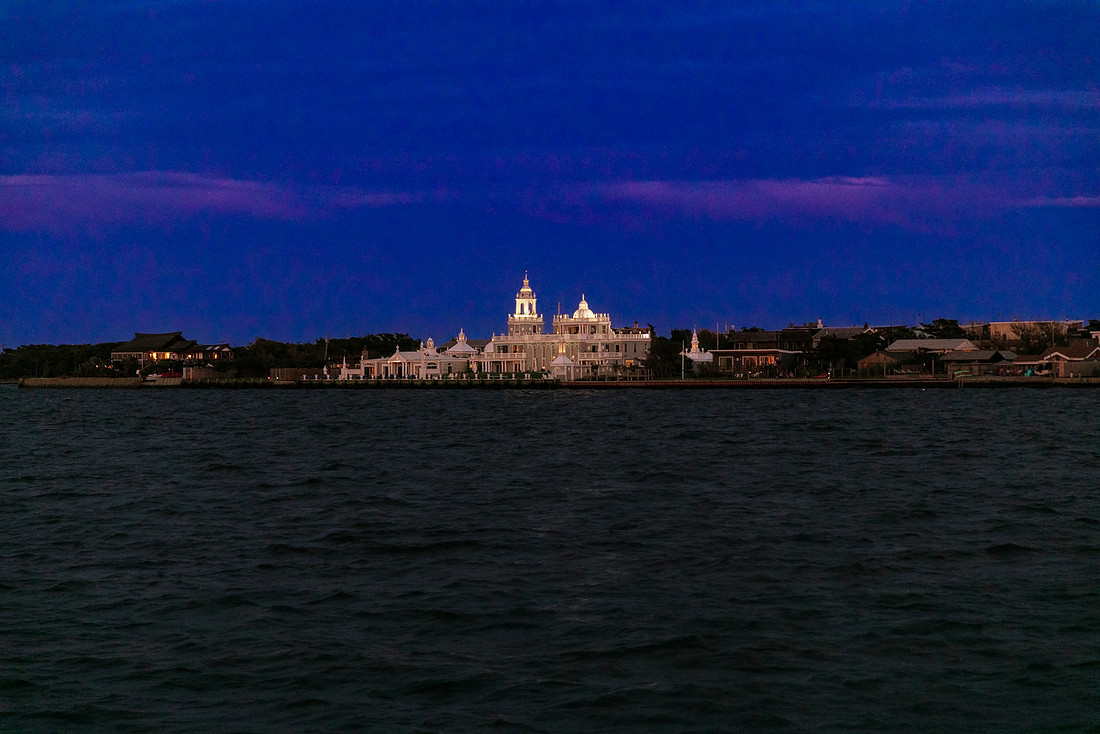
Rising from the pine trees of Cherry Grove like a fever dream from another era, the Belvedere is one of Fire Island’s most distinctive—and historically significant—landmarks. Part Venetian palace, part theatrical fantasy, and part intimate guesthouse, it feels almost impossibly elaborate against the simplicity of the island around it. Yet that theatrical quality is precisely what makes the Belvedere so quintessentially Cherry Grove.
The story begins with John Eberhardt, a scenic artist and set designer who first arrived in Cherry Grove in 1949. With a career rooted in Broadway and television, Eberhardt brought the sensibility of the stage to the island, treating architecture as an opportunity for fantasy and spectacle. Over the years, he would go on to design and build more than 50 houses in Cherry Grove.
The Belvedere, as it exists today, dates to 1957. Eberhardt originally conceived it not as a hotel, but as his own extravagant private residence. He imagined a kind of Venetian-Palladian fantasy, complete with towers, domes, statues, elaborate interiors and trompe-l’œil paintings. It was less a house than a stage set made inhabitable—a world deliberately removed from the ordinary.
Then, in 1957, disaster struck. A devastating fire tore through much of Cherry Grove, destroying the community’s existing hotel and leaving visitors with nowhere to stay. Eberhardt responded by changing his plans. What had been intended as his private home was opened, in part, to guests, and the Belvedere began its unexpected second life as a guesthouse.
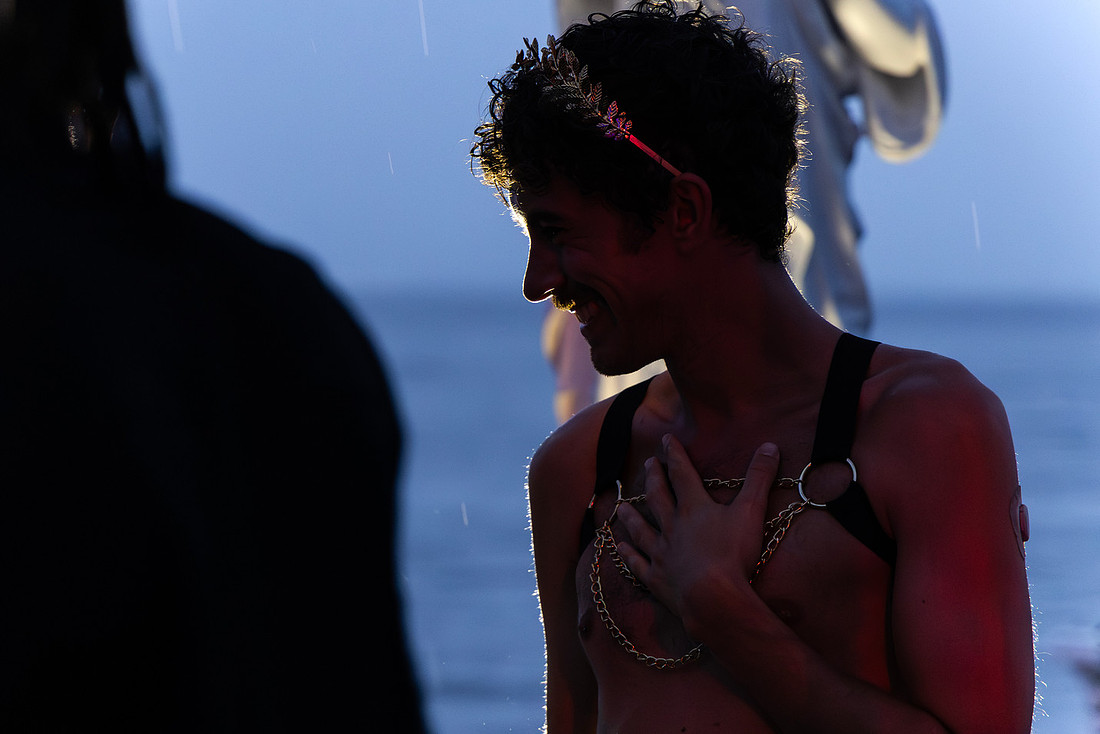
Over the following decades, Eberhardt and his partner, Craig Eberhardt, continued to expand the property, adding wings and rooms until it grew to more than 30. John filled the interiors with the treasures of his imagination: antiques, salvaged architectural fragments, statues, chandeliers and elaborate hand-painted murals. Many of the rooms acquired their own individual themes, turning a stay at the Belvedere into something closer to entering another character’s dream.
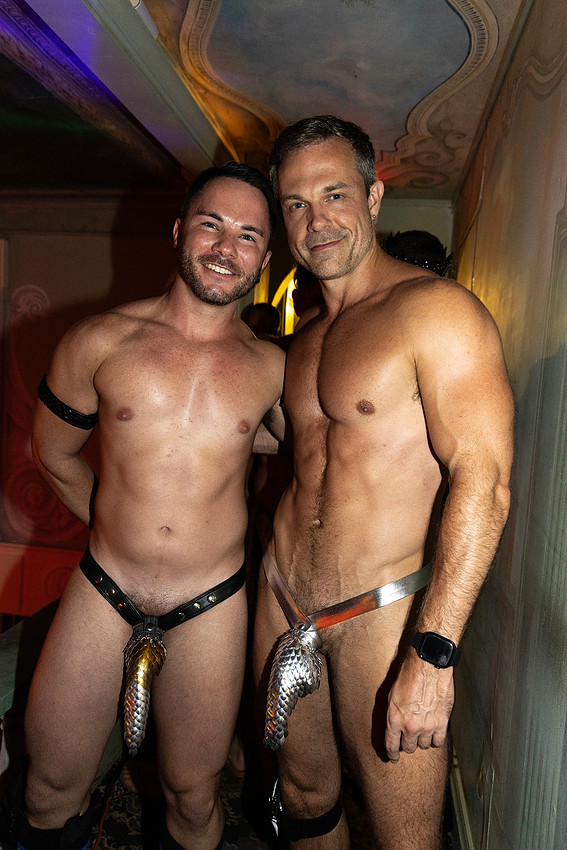
From its earliest days, the Belvedere operated primarily as a guesthouse for men and gradually became much more than a place to sleep. It evolved into an important social and cultural space within Fire Island’s gay community—a place where generations of queer men could gather, flirt, celebrate and simply exist on their own terms. Although its identity has long been closely associated with gay men, the Belvedere also hosts several women’s events throughout the summer.
Today, the property is owned by Julian Dorcelien, who has continued the legacy of the Belvedere and its long relationship with the island’s queer community.
After roughly 68 years of family ownership, the Belvedere was put on the market in 2025 for $10.9 million.
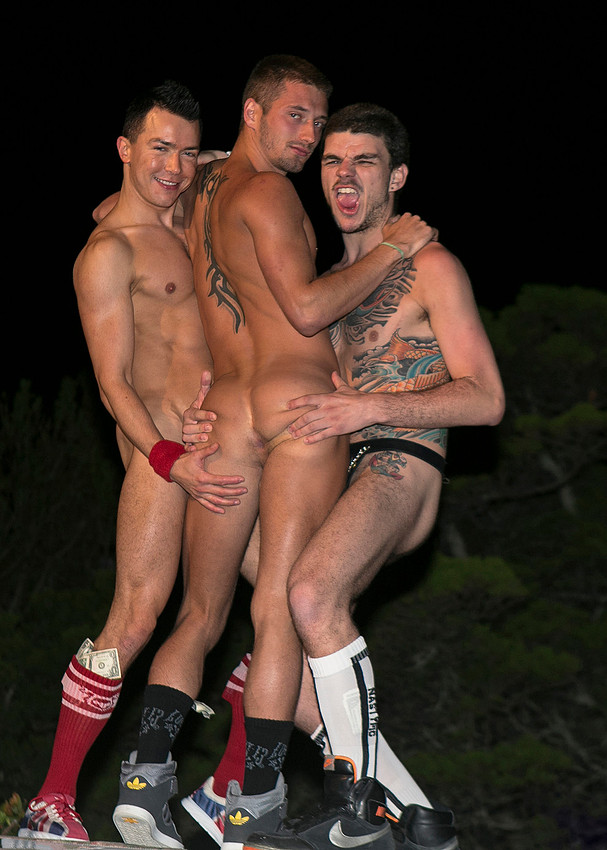
New York's Queer Nightlife as Cultural History
New York has long been a center of LGBTQ+ culture. Its queer nightlife has moved through different neighborhoods, venues, generations, and communities. Some spaces became famous, while others were temporary and disappeared without leaving much of a physical trace.
Photography provides another kind of historical record.
Photographs preserve the visual culture of these spaces: clothing, performances, bodies, gestures, decorations, music, crowds, and personalities. They also preserve something less visible—the feeling of belonging.
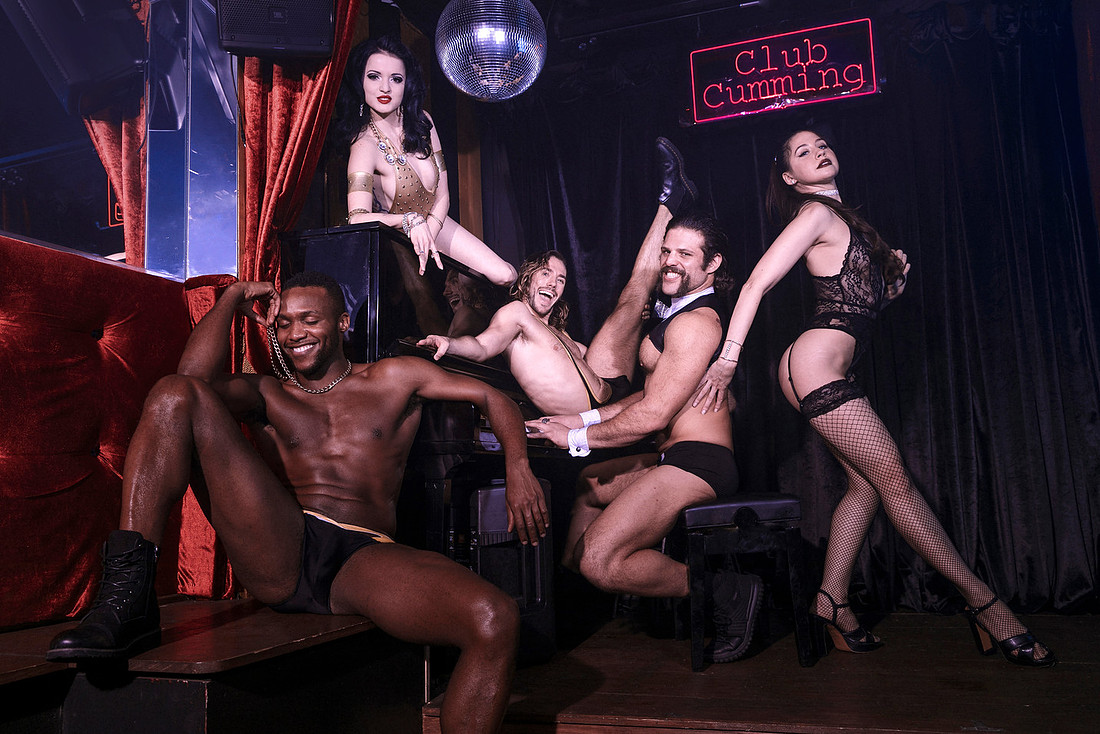
This is what makes New York queer nightlife photography more than a record of parties or entertainment. It becomes a visual history of LGBTQ+ culture and community.
Why Queer Nightlife Spaces Matter
Before considering nightlife as photography, it is important to understand why these spaces mattered.
For LGBTQ+ people, nightlife could provide an opportunity to meet others with similar experiences and find freedom from expectations encountered elsewhere in society. A club could become a place to experiment with identity. A dance floor could become a place of connection. A performance could become an act of self-definition.
A group of friends gathered at the end of the night could become a chosen family.
These experiences are difficult to preserve in written history alone. Photography makes them visible.
The Rise of Queer Photography in New York
Photographers have documented LGBTQ+ life in New York for generations. From photographs of gay bars and gathering places to images of Pride, performers, artists, nightlife, relationships, and community events, photographers have created visual histories from within LGBTQ+ communities.
That first-person perspective is particularly important.
When photographers participate in the communities they document, their images can become records of lived experience rather than observations from outside. The result is often more intimate: photographs that capture not only what a place looked like, but how it felt to be there.
This tradition of LGBTQ+ photography in New York continues today.
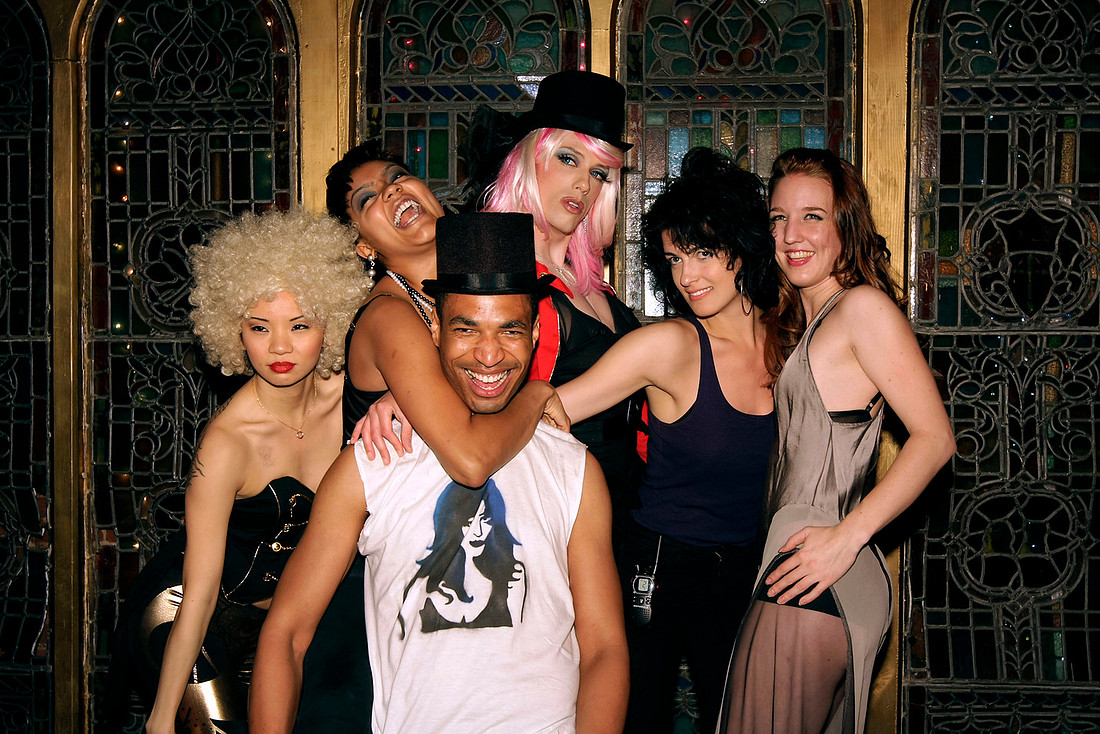
From Underground Spaces to Contemporary Queer Nightlife
New York's queer nightlife has never remained static.
Venues close and open. Neighborhoods change. Music evolves. Fashion changes. New generations create new spaces and new forms of gathering.
Photography allows those changes to be seen over time.
A photographic archive can reveal how performers evolve, how nightlife spaces are transformed, how styles change, and how different generations create their own forms of queer community.
The archive therefore becomes a record not simply of nightlife, but of social and cultural change.
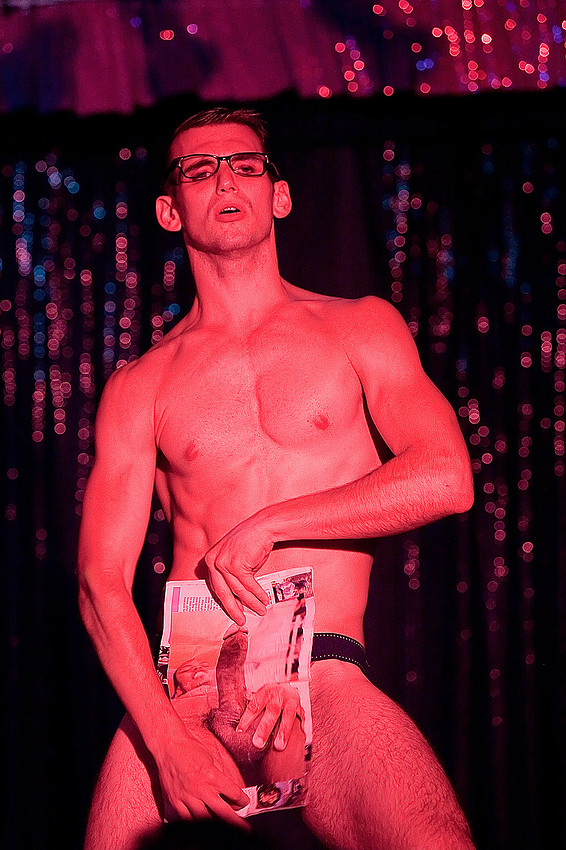
Drag, Performance and the Art of Transformation
Drag and performance are central to the history of queer nightlife.
On stage, performers can transform themselves while challenging conventional ideas about gender, identity, beauty, and sexuality. For a photographer, these moments offer extraordinary visual possibilities.
But photographing performance is not simply about capturing the performer under the spotlight.
The moments before the show can be equally revealing: makeup, costumes, preparation, concentration, nervousness, friendship, and anticipation.
Backstage photographs show the person behind the character. Together, stage and backstage images create a more complete portrait of queer performance culture.
The Dance Floor as a Community Space
The dance floor is one of nightlife's most democratic spaces.
People who might never meet elsewhere can share the same music, movement, and atmosphere. For photographers, however, it is also one of the most challenging environments to document.
The light is constantly changing. People are moving. Moments disappear almost instantly.
The photographer has to anticipate rather than direct.
The strongest images often happen unexpectedly: a gesture, a glance, a laugh, an embrace, or a moment of solitude in the middle of a crowd.
These small moments can become the photographs that communicate what queer nightlife actually feels like.
Photographing Queer New York From Within
For more than three decades, koitz has documented LGBTQ+ life, including queer nightlife in New York City.
His broader photographic archive encompasses nightlife, Pride celebrations, drag performers, artists, portraits, and community events. His approach is rooted in participation rather than distance.
The photographs move between spectacle and intimacy.
A performance can be photographed alongside the people watching it. A major party can exist alongside a quiet portrait. A crowded dance floor can be followed by a photograph of two friends talking outside.
Together, these different perspectives create a richer visual record of queer New York.
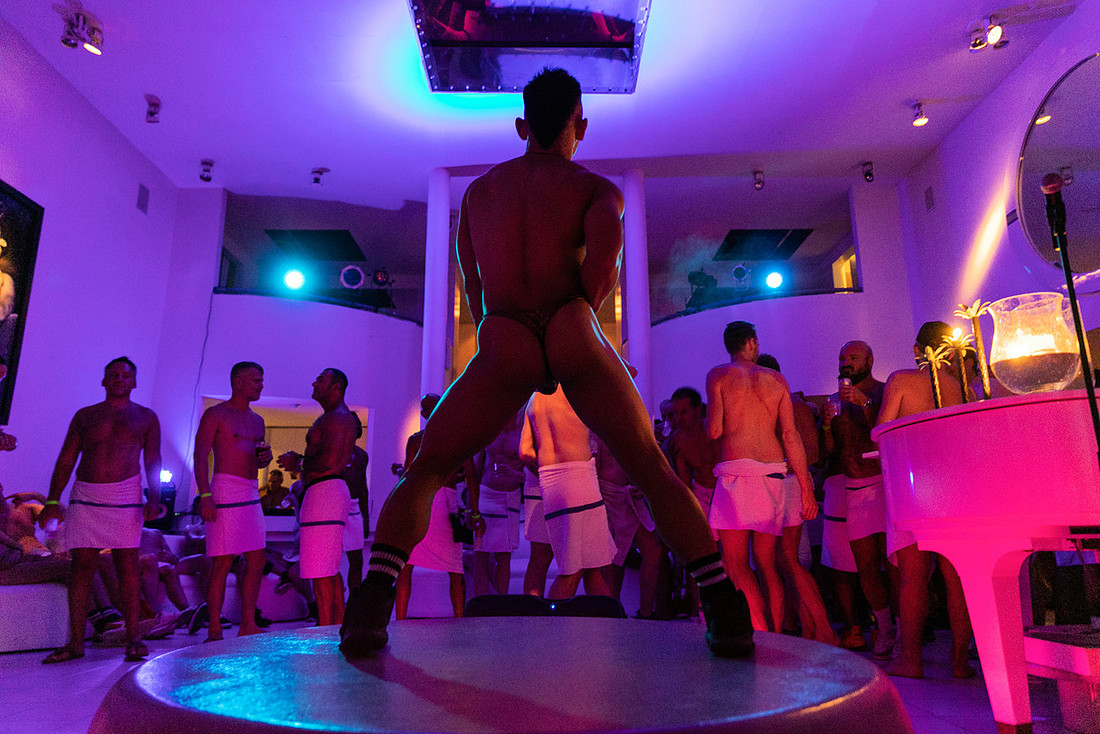
Three Decades of Queer Photography
koitz moved to New York City in 1994 and began developing his visual career there. His photographic archive now spans more than three decades of LGBTQ+ life, including New York and Fire Island.
His Fire Island work provides an important continuation of the New York story.
For two decades, he photographed Cherry Grove and Fire Island Pines, documenting parties, performances, portraits, beaches, friendships, and everyday community life. The resulting photographs became the basis for koitz Gay Fire Island, his 2020 photography book.
The connection between New York and Fire Island is significant. Many of the people, artists, performers, and communities that shape New York's queer cultural landscape also move between the city and the island.
Together, these photographs form part of a larger story about LGBTQ+ life, community, identity, and belonging.
What Happens When the Night Disappears?
Nightlife is temporary.
A club closes.
A party ends.
A performer leaves the stage.
A neighborhood changes.
A generation moves on.
Photography interrupts that disappearance.
The image remains after the music stops.
Years later, a photograph can reveal a person, venue, style, or community that no longer exists in the same form. This is why queer nightlife photography matters as historical documentation.
It preserves not only what people looked like, but how they lived, gathered, celebrated, performed, and found one another.
Photography as LGBTQ+ History
The history of LGBTQ+ communities cannot be separated from the places where those communities gathered.
Nightlife is part of that history.
Photographs of clubs, parties, Pride celebrations, drag performances, portraits, and ordinary nights provide evidence of changing identities and communities. They also challenge the idea that history is made only through major political events.
Sometimes history is a photograph of friends together.
Sometimes it is a performer stepping onto a stage.
Sometimes it is a crowded dance floor at three in the morning.
These moments matter because they document how people actually experienced their lives.
A Living Archive of Queer New York
For koitz, photography is both an artistic practice and a form of preservation.
His work documents people and places while they are alive, active, and changing. The result is an evolving visual archive of queer culture—from New York nightlife to Fire Island's LGBTQ+ communities.
The archive is not intended to suggest that queer nightlife belongs only to the past.
Quite the opposite.
These photographs show a culture that continues to evolve, while preserving the people, places, relationships, performances, and moments that might otherwise disappear.
New York After Dark
The history of queer New York can be found in its nightlife.
It exists in clubs, parties, performances, friendships, music, fashion, drag, dance, intimacy, and community.
New York queer nightlife photography allows those moments to survive beyond the night itself.
For more than three decades, koitz has been photographing that world—creating a visual record of queer New York and the people who have shaped it.
The night disappears.
The photographs remain.
Explore More
- New York Queer Nightlife Photography
- Queer Nightlife Photographer
- Gay Fire Island Photographer
- koitz Gay Fire Island
]]>
Porsche: Brant Kaiwi and a Life on Fire Island
For more than two decades, gay photographer koitz has photographed Brant Kaiwi, known as Porsche, documenting a life deeply connected to the summer communities of Cherry Grove and Fire Island. Since arriving on Fire Island in 2001, Porsche has become much more than a performer on an island stage. She has become part of the culture, history, and mythology of Fire Island itself.
Porsche began performing at the now-defunct Sunsets on the Bay in Cherry Grove in 2001. After the venue closed, she found a new home at the Ice Palace, where she established a summer residency and spent entire seasons performing, becoming a beloved fixture of Fire Island's vibrant summer community.
Over the years, The Ice Palace became more than a stage or workplace. It became a kind of second home—a setting in which friendships, relationships, performances, and community unfolded season after season.
Porsche has also performed extensively in Key West, where she became known as the “Queen of Key West.” Her connection to Key West led to one of the most important professional relationships of her career: Chuck McTague, who became her DJ and production manager. What began in Key West grew into a decades-long creative partnership, with McTague becoming an integral part of Porsche Live and the performances that helped make Porsche a fixture of Fire Island's summer scene.
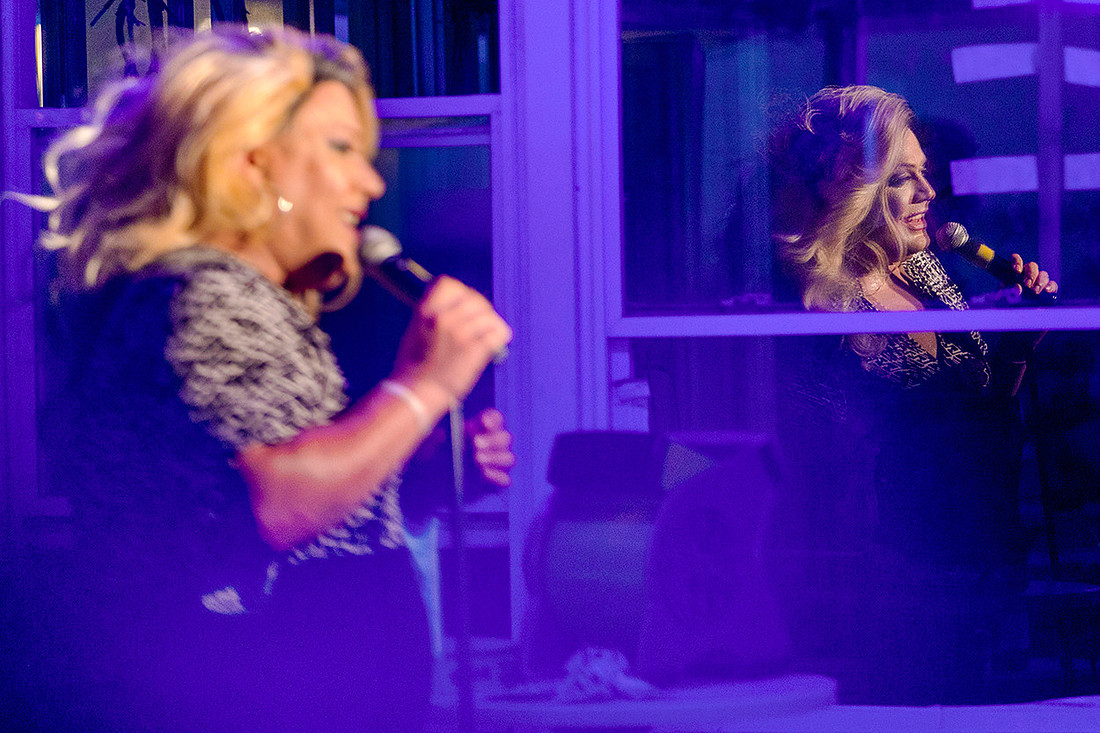
Over the years, koitz has photographed Brant Kaiwi, AKA “Porsche,” on Fire Island, documenting her deep connection to the island’s summer scene. Porsche began performing at the now-defunct Tides in Cherry Grove in 2001. After the venue closed, she found a new home at the Ice Palace, where she established a summer residency and spent entire seasons performing, becoming a beloved fixture of Fire Island’s vibrant community. Porsche has also performed extensively in Key West, and was referred to as the “Queen of Key West.” She currently performs at Cherry’s on the Bay.
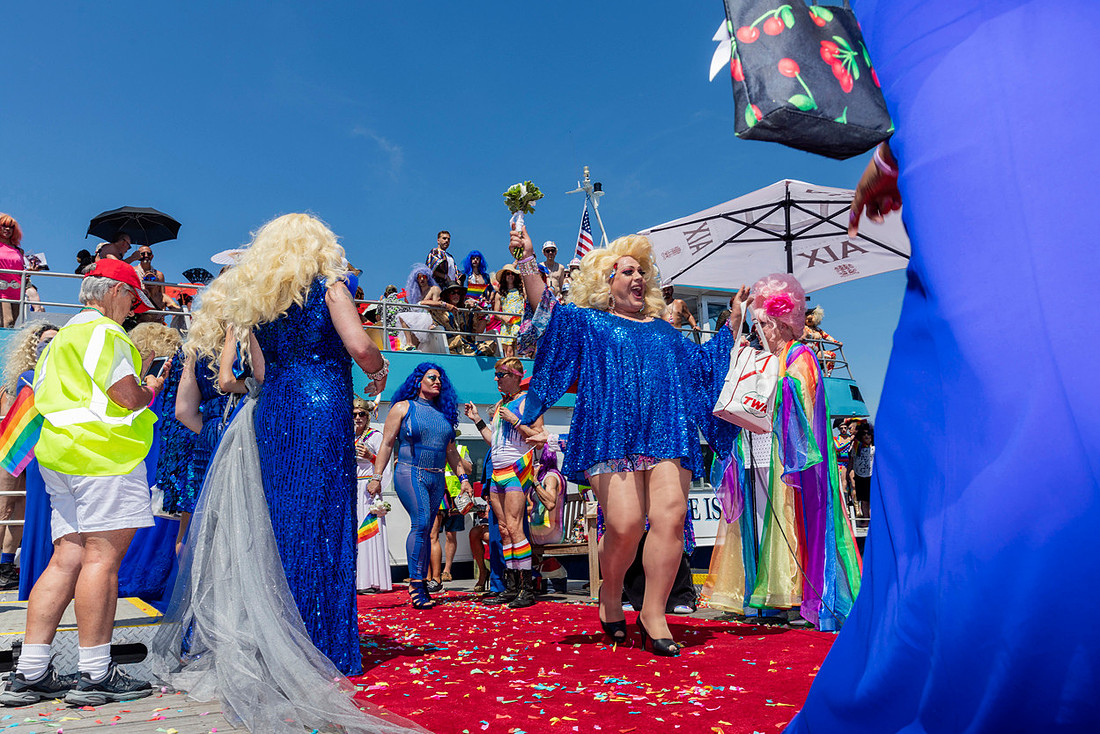
Her connection to Key West also led to one of the most important professional relationships of her career: Chuck McTague, who became her DJ and production manager. What began in Key West grew into a decades-long creative partnership, with McTague becoming an integral part of Porsche Live and the performances that made her a fixture of Fire Island’s summer scene.
Brant is the person; Porsche is the larger-than-life creation. She arrived on Fire Island as a performer and, over the years, became woven into the mythology of the place itself. The Ice Palace was more than a stage or a workplace—it became a kind of second home, a setting in which her friendships, relationships, performances, and community unfolded season after season.
koitz’s photographs offer a glimpse beyond the spectacle. Rather than simply capturing Porsche in performance, he photographed her in the world she helped create—in the fleeting moments between shows, among friends, and within the rhythms of island life. In doing so, he documented more than a drag performer. He captured someone who had become, over time, almost a living emblem of Fire Island’s enduring performance culture.
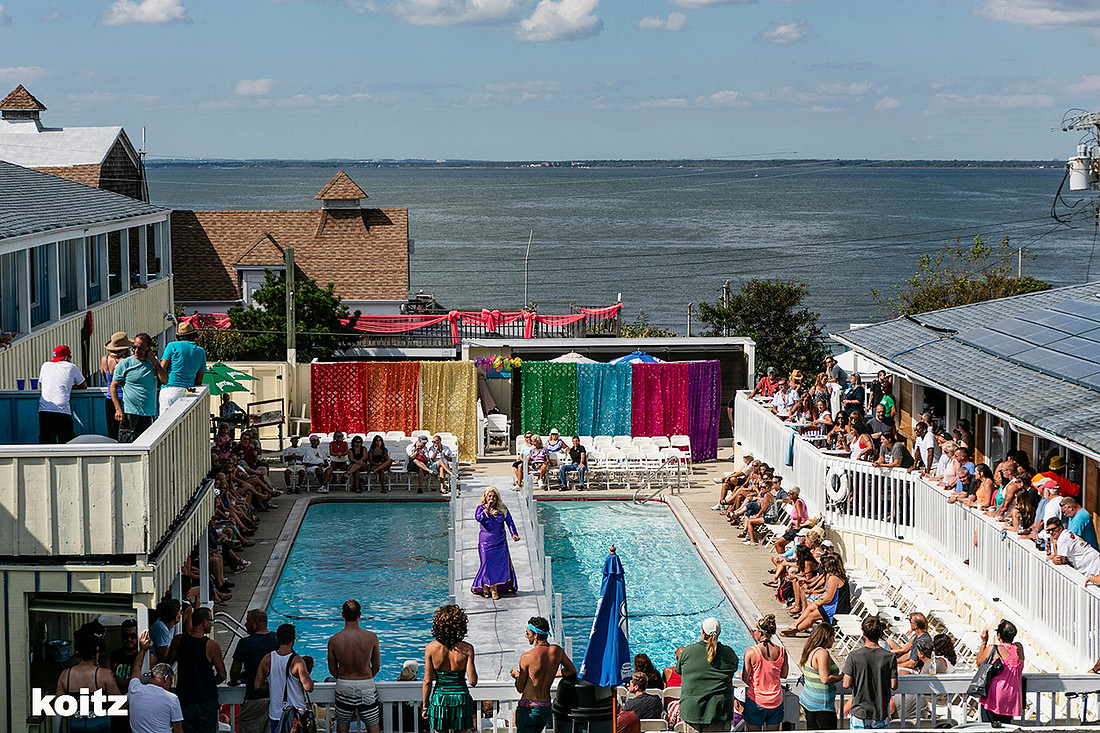
Porsche became part of the institutional fabric of Cherry Grove. She wasn't simply someone who came to the island to perform; she became one of the performers people associated with the Grove itself. For many years, she was the host of the Miss Fire Island pageant alongside Cherry Grove legends such as Ariel Sinclair and Logan Hardcore.
The Girl with a Thousand Voices
For years, Porsche has been known as the “Girl with a Thousand Voices,” a fitting name for a performer whose repertoire seems almost limitless.
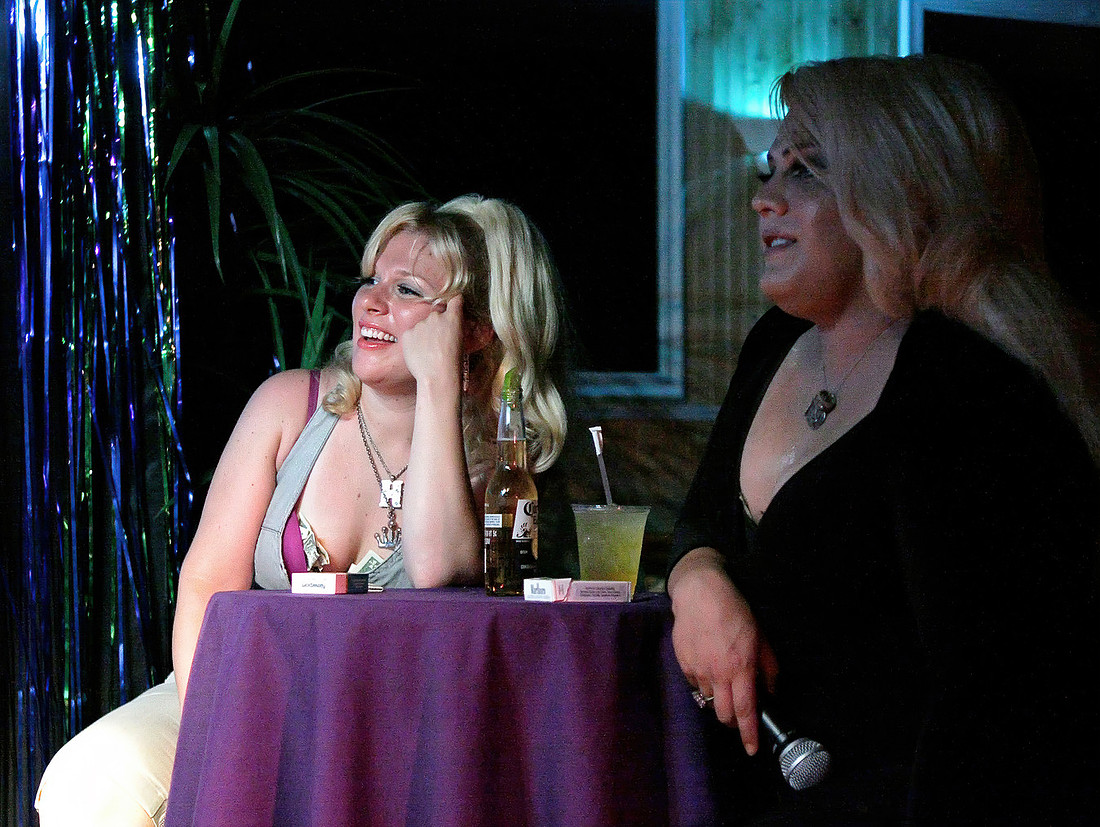
In her own remarkable voice, she has channeled everyone from Janis Joplin, Nina Simone and Judy Garland to Liza Minnelli, Whitney Houston, Dolly Parton, Pink, Billie Holiday and Celine Dion, along with characters such as Karen Walker and Bette Davis. But her impersonations are more than acts of mimicry. Porsche approaches each one as an homage, searching for the distinctive qualities, gestures and spirit that make each voice—and each woman—unique.
Film and Television
Porsche was a regular on The Wanda Sykes Show, Wanda Sykes’s late-night talk show on Fox, which ran from November 2009 to April 2010 for one season. She was not just a guest—she was part of the show's regular cast. She shared sidekick duties with comedian Keith Robinson, appearing as Porsche and serving up commentary and comedy alongside Sykes.
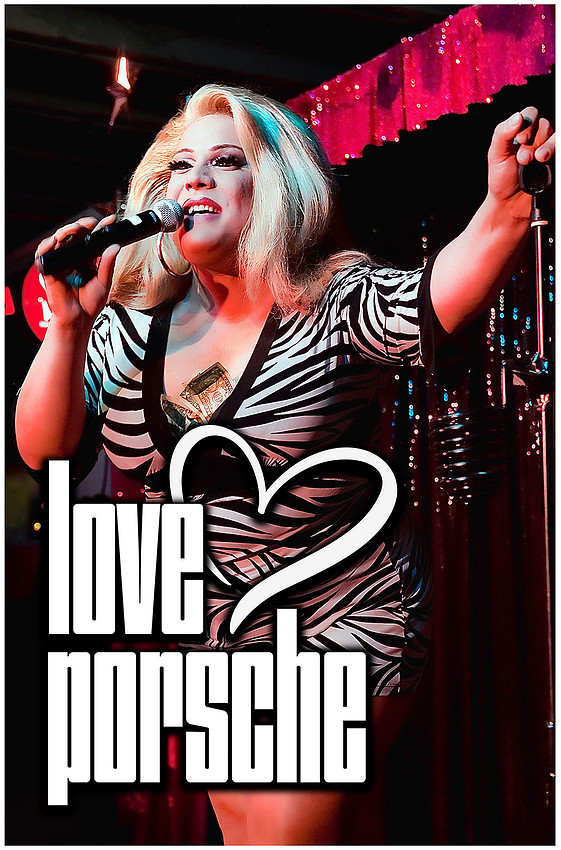
A quarter of a century after she arrived in Cherry Grove, Porsche’s story became the subject of a film shown at the very institution dedicated to preserving the Grove’s history. At the 2026 Cherry Grove Archives Collection Film Festival, the short film Love Porsche was screened as part of the festival’s Saturday evening shorts program.
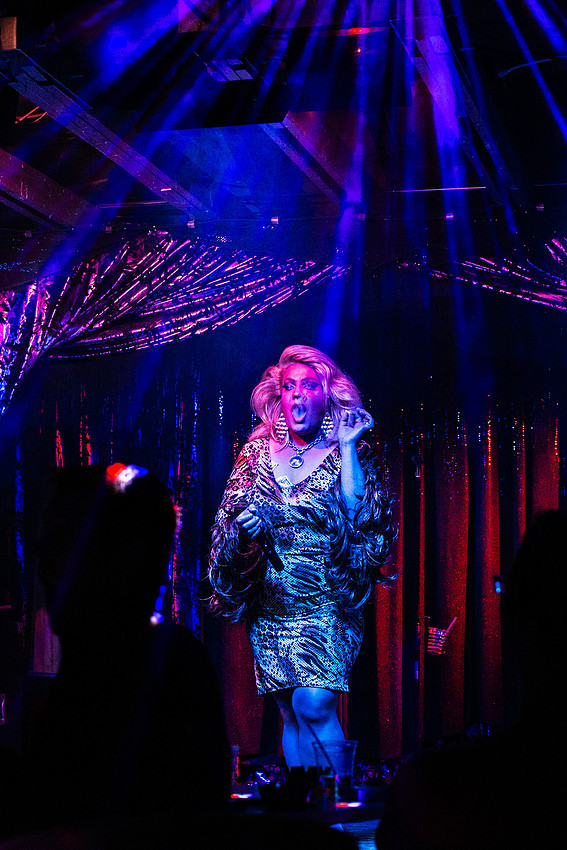
The Fire Island News described it as “a tribute to one of Cherry Grove’s most beloved performers,” tracing Porsche’s 25-year relationship with the community—from her beginnings at a PAWS fundraiser to her long career as a performer and beloved fixture of the island.
Porsche’s Wedding in Cherry Grove
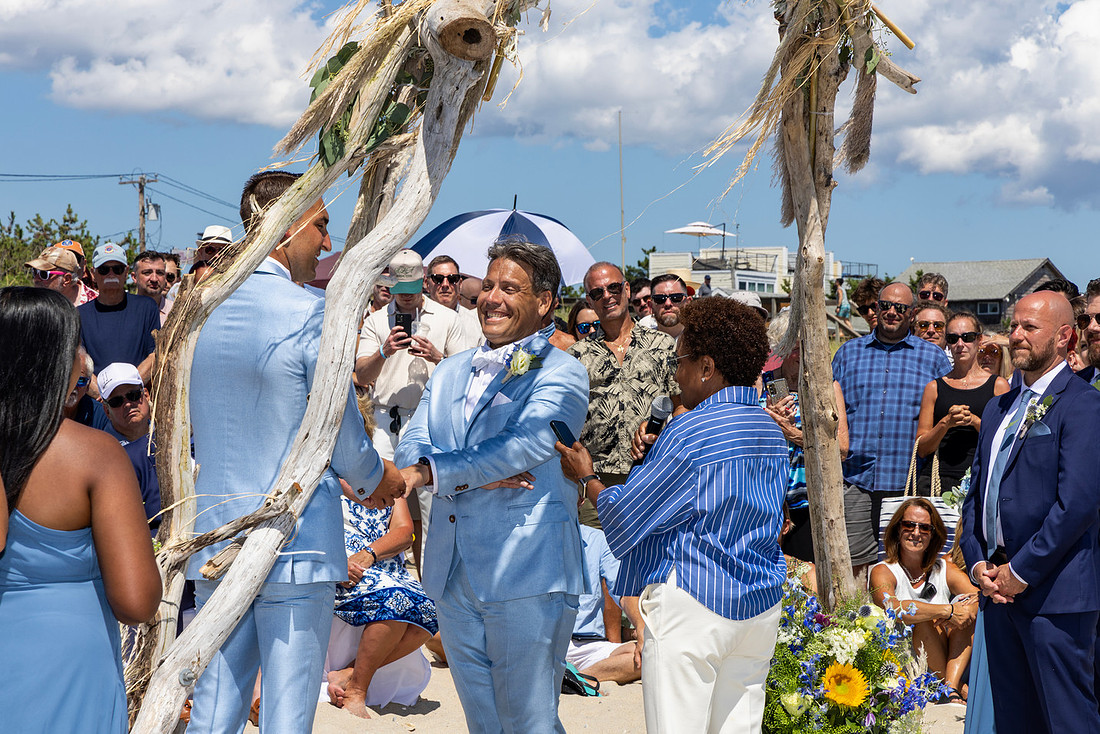
On August 8, Porsche married Kevin Patrick in Maine. A week later, on August 15, they exchanged vows once again, this time on the beach in Cherry Grove, surrounded by the familiar landscape that has been such an important part of Porsche’s life. The Fire Island ceremony was officiated by his friend comedian and actress Wanda Sykes, adding another memorable chapter to Porsche’s long history on the island. In charge of the music throughout the day was Porsche's friend and collaborator Chuck McTague. Once again, koitz was there to capture and immortalize another important chapter in her life.
]]>
Location: The Ice Palace, Cherry Grove, Fire Island
Cherry Grove may be a small beach community on Fire Island, but over the decades it has attracted some of the biggest names in entertainment. Behind its intimate scale and relaxed summer atmosphere is a remarkable cultural history: artists, performers, musicians, actors and LGBTQ+ icons have come to Cherry Grove to perform, celebrate and connect with audiences in an unusually personal setting.
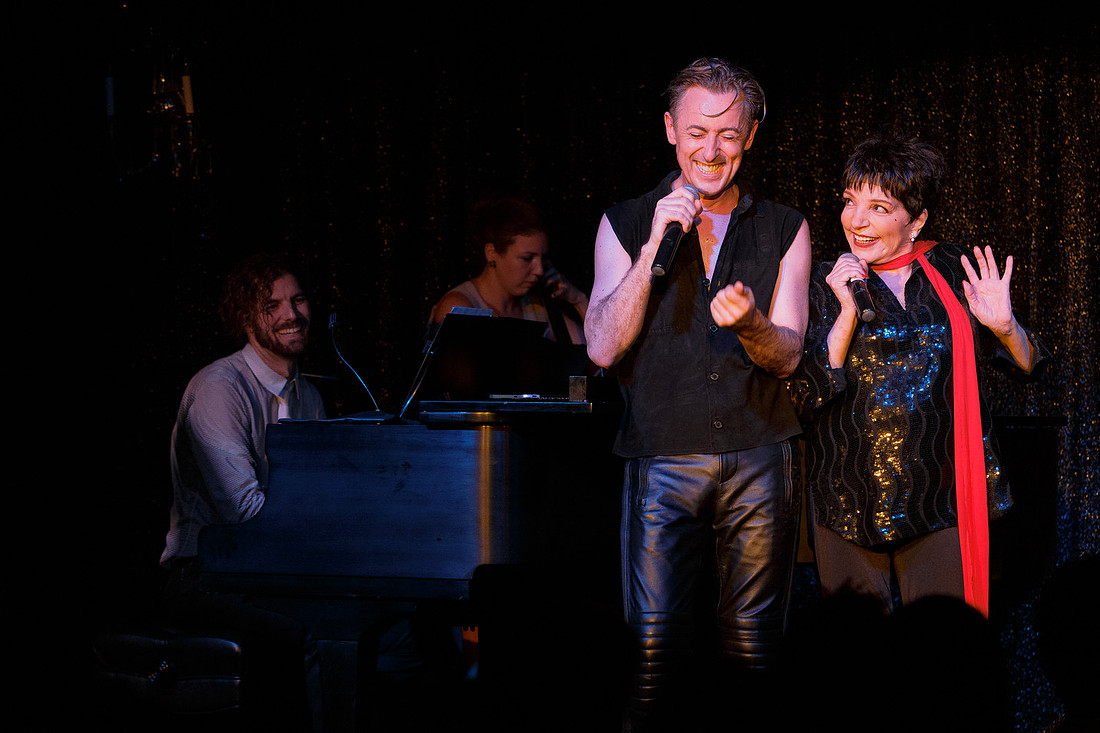
For photographer koitz, these encounters became part of a larger visual archive documenting queer life on Fire Island. His photographs capture not only the celebrities themselves, but also the distinctive atmosphere of Cherry Grove—the intimacy between performers and audiences and the sense that something extraordinary can happen in a very small space.
From Lady Gaga to Liza Minnelli
One of the most memorable moments came in August 2009, when producer and promoter Daniel Nardicio brought a then-emerging Lady Gaga to Cherry Grove for a Friday underwear party. At the time, Gaga was at the beginning of her international career, following the release of her debut album, The Fame, which included the hit single “Just Dance.”
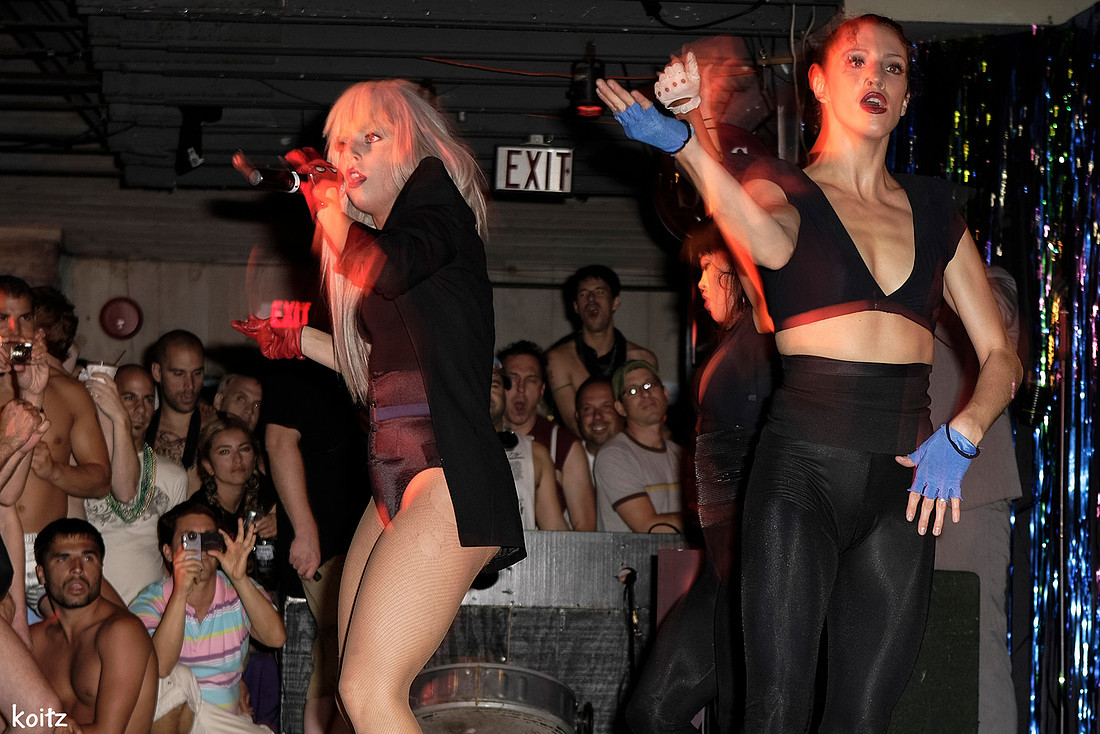
She performed three songs for the Cherry Grove crowd, creating one of those uniquely Fire Island moments in which a rising international star could appear in an intimate, unconventional setting.
For koitz, photographing these events meant preserving moments that would become part of the community's collective memory.
The Icon Series
In the summer of 2012, Daniel Nardicio launched his Icon Series at the Ice Palace in Cherry Grove, bringing legendary performers into the heart of the Fire Island community.
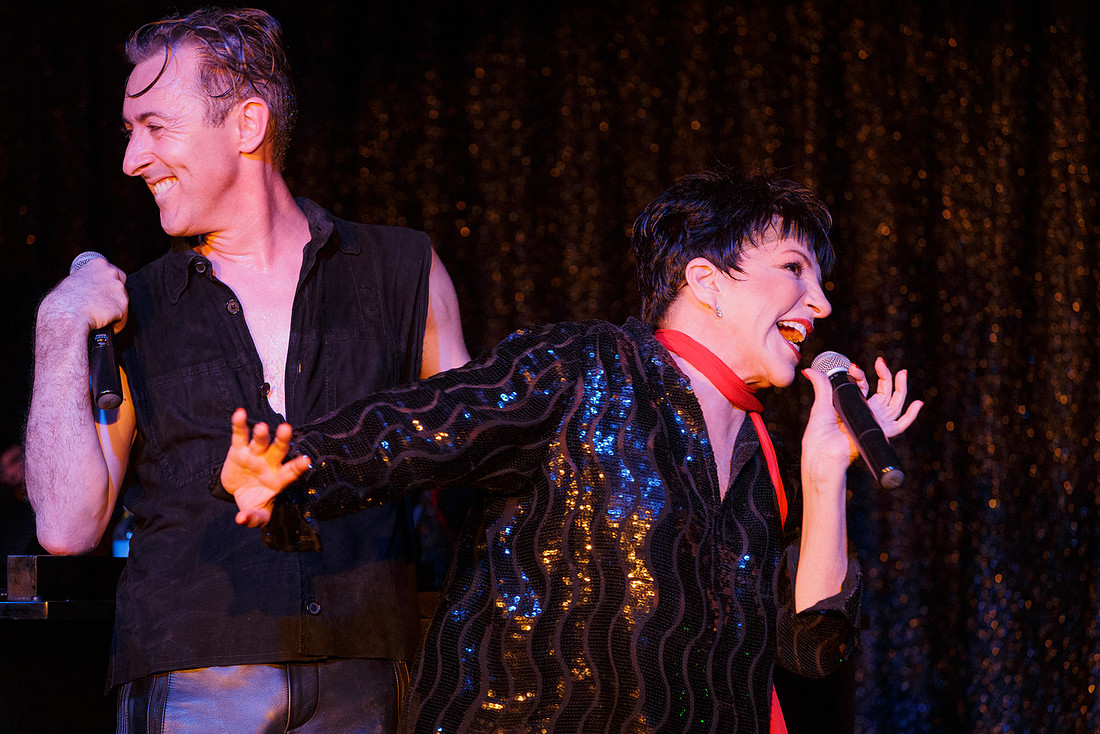
The first Icon Series pairing featured Liza Minnelli and Alan Cumming, two celebrated performers and Tony Award winners who had both famously been associated with Cabaret. Their appearance at the Ice Palace created a remarkable first: the two performers sharing the stage together in Cherry Grove.
The setting was as important as the stars.
The Ice Palace is not a traditional Broadway theater or large concert venue. Its relatively intimate environment creates a direct connection between performer and audience that is characteristic of Fire Island. Here, internationally recognized artists could perform for a queer audience just a few steps away from the beach and the summer homes of Cherry Grove.
An extraordinary roster of performers
Nardicio's Icon Series continued to bring major artists to Fire Island.
Among the performers who appeared over the years were:
- Liza Minnelli
- Alan Cumming
- Chita Rivera
- John Waters
- Margaret Cho
- Patti LuPone
- Justin Vivian Bond
- Peaches
- Bridget Everett
- Sandra Bernhard
- Lea DeLaria
Many of these performers have played an important role in LGBTQ+ culture, theater, music, comedy and performance.
koitz photographed many of these appearances, creating a visual record of a remarkable chapter in Cherry Grove's cultural life.
His photographs capture something that conventional celebrity photography often misses: the relationship between the performer and the community.
These aren't simply photographs of famous people. They are photographs of famous people within a particular queer cultural environment—surrounded by audiences who know the significance of the place and the moment.
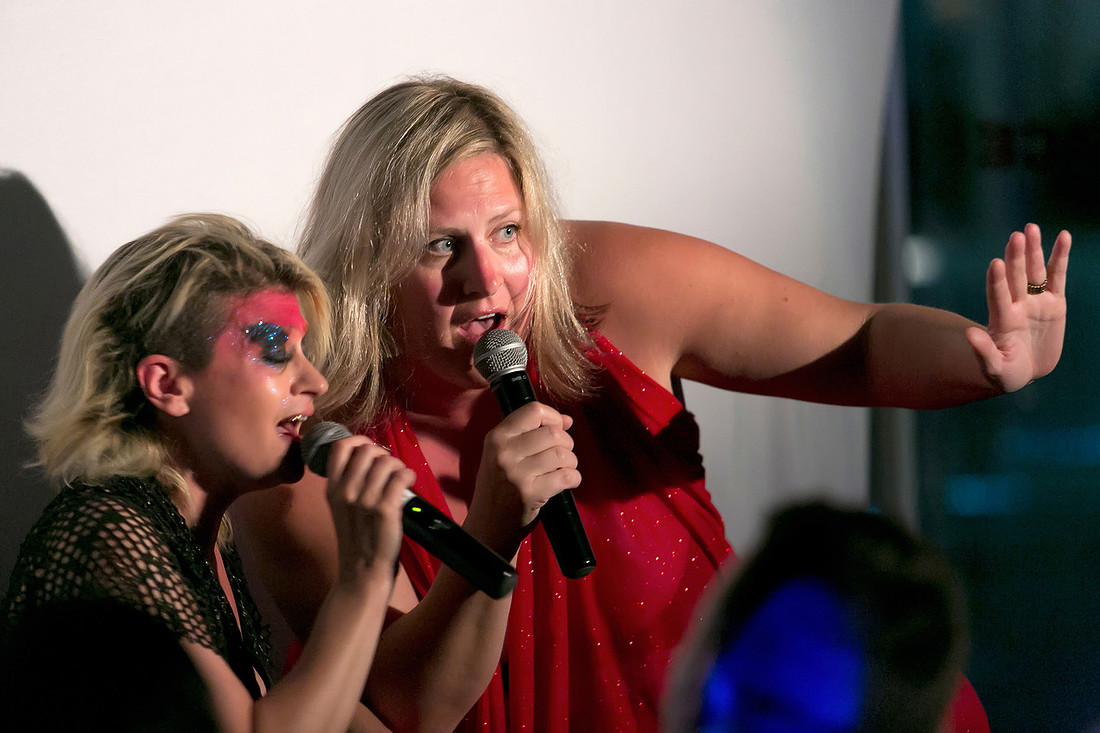
Cherry Grove as a stage
That is what makes Cherry Grove so distinctive.
It is a small community, but its cultural history is enormous. For generations, LGBTQ+ visitors have traveled to Fire Island to find freedom, friendship, self-expression and community. The arrival of major performers and cultural figures became part of that tradition.
The Ice Palace, in particular, has played an important role in this story. Its stage has provided a space where established stars and emerging performers could meet an audience in an environment very different from a conventional theater or concert hall.
For the audience, seeing a major celebrity in Cherry Grove could become a lifelong memory.
For koitz, those moments became part of an archive.
Listen to the stories behind the photographs
The Cherry Grove Archives Collection exhibition offers another dimension to koitz's photographs. Through audio recordings, visitors can hear stories connected to the photographs and the people and events depicted in them.
Listen to koitz's audio accompanying the photographs below, including the image featuring Lady Gaga and the other celebrities.
Listen to the koitz exhibit audio at Cherry Grove Archives
The audio component is particularly important because it transforms the photographs from isolated images into pieces of oral and visual history.
A visual archive of queer celebrity culture
koitz's photographs of the Icon Series belong to a much larger body of work documenting Fire Island's LGBTQ+ communities. His archive includes Cherry Grove and Fire Island Pines, parties and performances, beaches and landscapes, intimate portraits and the everyday experiences of the people who have made the island an important destination for queer culture.
The celebrity photographs are therefore more than a collection of famous faces.
They document a moment when popular culture and queer community intersected in one of America's most historically significant LGBTQ+ destinations.
And that is perhaps what makes the images so compelling today: they preserve not only who was there, but what it felt like to be there.
]]>
For two decades, I've photographed the people, places, and traditions that have made Fire Island Pines one of the world's most iconic LGBTQ+ communities. What began as a personal passion has grown into an extensive visual archive documenting the history, culture, and evolution of the Pines through thousands of photographs.
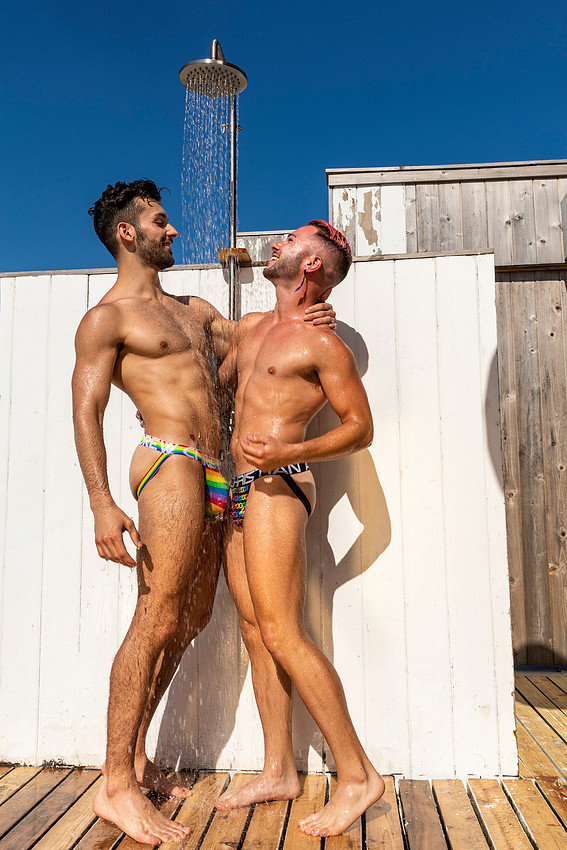
From sun-drenched beaches and legendary pool parties to quiet boardwalks at sunrise, Pride celebrations, drag performances, artists, activists, and everyday moments of friendship and love, my camera has witnessed generations of people who have helped shape the unique spirit of Fire Island.
This collection is more than a series of photographs—it's a visual history of a community that has long been a place of freedom, creativity, resilience, and belonging for LGBTQ+ people from around the world. Many of the places, traditions, and faces captured here have changed over the years, making these images an important record of Fire Island's living history.
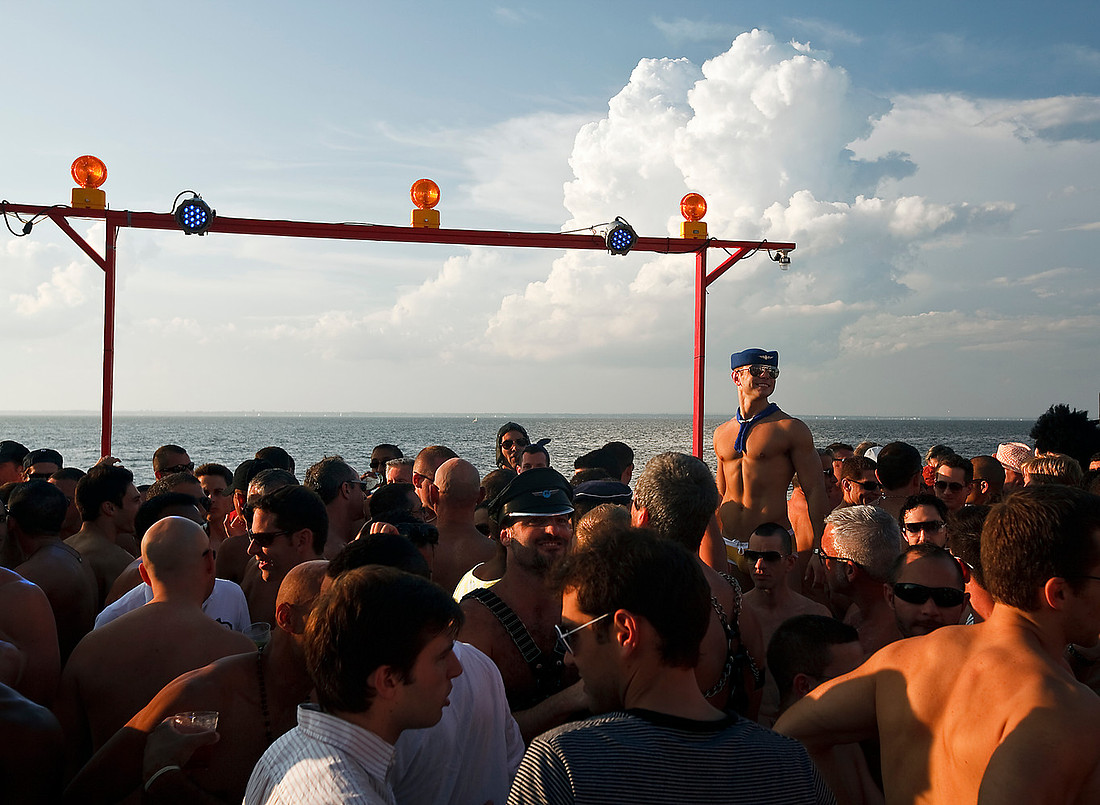
As both a photographer and participant in the community, I've had the privilege of documenting not only major events but also the intimate moments that often define a place: conversations on the boardwalk, sunsets shared with friends, celebrations that lasted until dawn, and the quiet beauty of life between the parties.
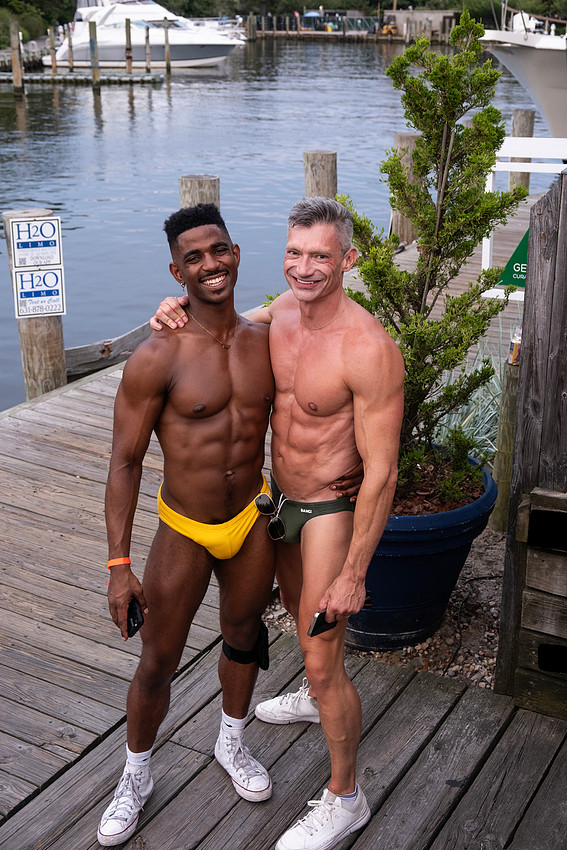
Whether you're discovering Fire Island Pines for the first time or returning to revisit cherished memories, I hope these photographs offer a deeper appreciation of the people and stories that have made this extraordinary community a lasting symbol of LGBTQ+ history and culture.
Photography preserves moments. Together, these photographs preserve a legacy.
]]>
Portraits by koitz documenting queer performance, identity, and LGBTQ+ life on Fire Island
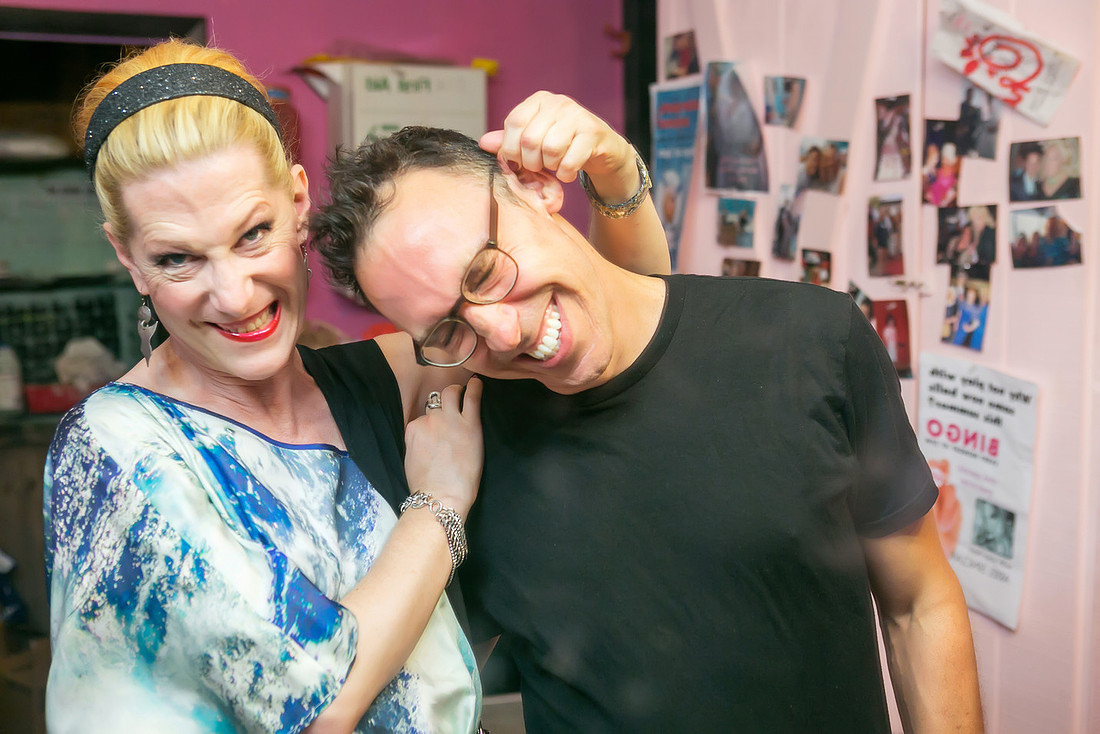
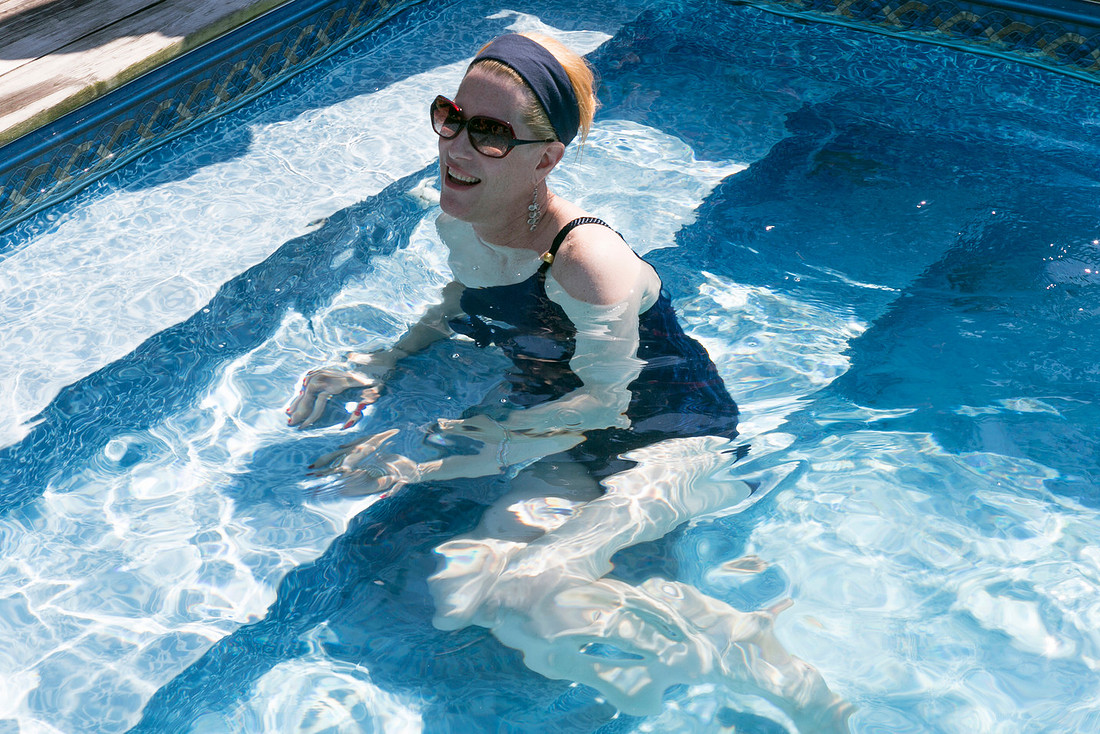
Justin Vivian Bond photographed by queer photographer koitz in Cherry Grove, Fire Island, New York, in a portrait that brings together performance, identity, queer culture, and the history of one of America's most distinctive LGBTQ+ communities.
For koitz, photographing people in Cherry Grove is about more than making portraits. It is also a way of documenting the people, places, personalities, and moments that have shaped queer life on Fire Island over generations.
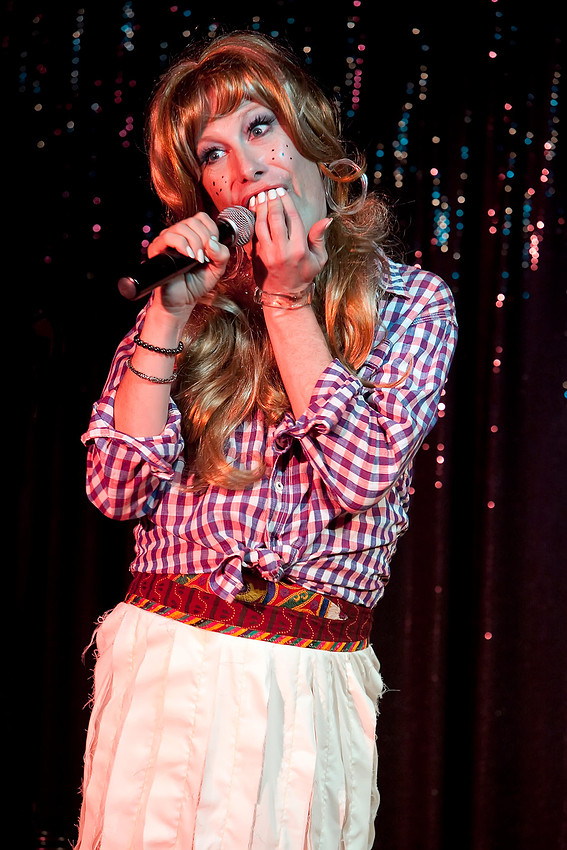
Justin Vivian Bond and the Art of Performance
Justin Vivian Bond is an acclaimed American performer, singer, actor, and writer whose career has crossed cabaret, theater, music, film, and performance art.
Bond is particularly known for the character Kiki DuRane, created with Kenny Mellman in the legendary performance duo Kiki and Herb. Their work has become an important part of contemporary queer performance culture, combining music, humor, theatricality, and an often fearless approach to gender and identity.
Photographing Bond in Cherry Grove brings together two powerful aspects of queer culture: performance and place.
The portrait captures an individual artist while also placing that artist within a community with its own long history of LGBTQ+ creativity and self-expression.
Cherry Grove, Fire Island
Cherry Grove is a historic LGBTQ+ community on Fire Island, New York. For decades, it has been a gathering place for LGBTQ+ people, artists, performers, and creatives seeking community and a space for self-expression.
The island's distinctive combination of relative isolation, natural beauty, summer culture, and queer community has helped make Cherry Grove an important part of LGBTQ+ history in the United States.
For a photographer such as koitz, the location is an essential part of the portrait.
The setting carries its own meaning. A photograph made in Cherry Grove is connected to the people who have lived there, visited there, performed there, and helped create its unique cultural identity.
koitz and Queer Photography
Basque-American photographer koitz, based in New York City since 1994, has spent more than two decades photographing LGBTQIA+ life in New York and on Fire Island.
His photographic practice moves between documentary photography, portraiture, and fine art. He has photographed artists, writers, performers, and members of the LGBTQ+ community, creating an evolving visual record of queer life.
His work is particularly connected to Fire Island, where photography becomes both personal portraiture and cultural documentation.
The photographs preserve faces and personalities, but they also preserve a sense of place.
Portrait as Cultural Record
A portrait can tell us something about an individual, but it can also tell us something about the time and place in which that photograph was made.
In Justin Vivian Bond in Cherry Grove, Fire Island, the individual and the community become part of the same visual story.
Bond's history as a performer and their connection to queer performance culture resonate with the history of Cherry Grove itself—a place where artists and LGBTQ+ communities have long created their own spaces for expression, celebration, and belonging.
The photograph therefore operates on several levels: as a portrait, as a document of queer culture, and as part of a larger photographic archive of Fire Island.
Photographing Queer Life on Fire Island
koitz’s Fire Island photographs are part of an ongoing project documenting LGBTQ+ life through the people and places that define it.
Rather than treating queer culture as something separate from everyday life, his photographs show it through portraits, gatherings, landscapes, performances, friendships, and individual moments.
This approach gives the work both a personal and historical dimension.
Each photograph becomes a small record of a larger story.
About koitz
koitz is a queer photographer who has lived and worked in New York City since 1994. His work explores identity, portraiture, performance, queer culture, and LGBTQIA+ life through documentary and fine-art photography.
For more than two decades, he has documented LGBTQIA+ communities in New York City and on Fire Island. His first monograph, koitz Gay Fire Island (2020), was recognized by curator Elizabeth Avedon as one of the year's best photography books.
His work has been exhibited internationally, including at the University of Southern California in Los Angeles and the Cherry Grove Community House on Fire Island. Together with filmmaker Parker Sargent, koitz co-directed the award-winning documentary In the Meat Rack (2023).
koitz lives and works in Brooklyn, New York.
Photographs Information
Subject: Justin Vivian Bond
Location: Cherry Grove, Fire Island, New York
Photographer: koitz
Genre: Queer portrait photography / fine art photography / documentary photography
Subject matter: LGBTQ+ culture, performance, identity, Fire Island
Explore the photographs: Justin Vivian Bond in Cherry Grove, Fire Island →
Photography by koitz
]]>
koitz is a queer photographer whose work explores LGBTQ+ life through portraiture, sexuality, fashion, intimacy, identity, and place. Across three photography books — koitz Gay Fire Island, Pretty Gay I, and Pretty Gay II: Mitch in Wonderland — his photographs create an intimate visual record of queer people, communities, and the environments that have shaped their lives.
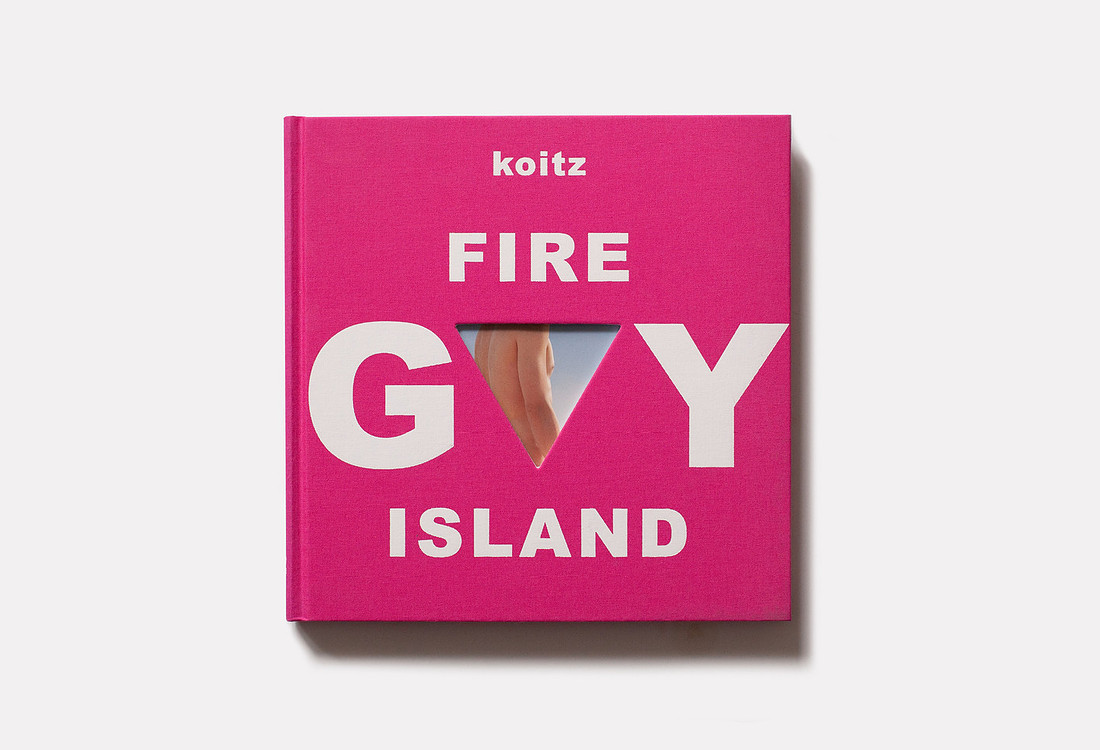
From the legendary LGBTQ+ destination of Fire Island to New York City and Southern California, koitz’s photography combines portraiture with a personal and contemporary approach to queer life.
For those discovering his work through queer photography, gay photography, LGBTQ+ art, Fire Island photography, or contemporary portrait photography, these three books offer an introduction to the distinctive photographic world of koitz.
koitz Gay Fire Island — Queer Photography and LGBTQ+ Life
Fire Island has played an important role in LGBTQ+ culture for generations. In koitz Gay Fire Island, koitz turns his camera toward the people, places, atmosphere, and distinctive queer culture of the island.
As a queer photographer, Fire Island and its LGBTQ+ community are central to koitz’s photographic vision. His photographs capture more than the familiar image of Fire Island as a summer destination. They reveal a lived-in queer environment shaped by friendship, sexuality, fashion, nightlife, intimacy, self-expression, and community.
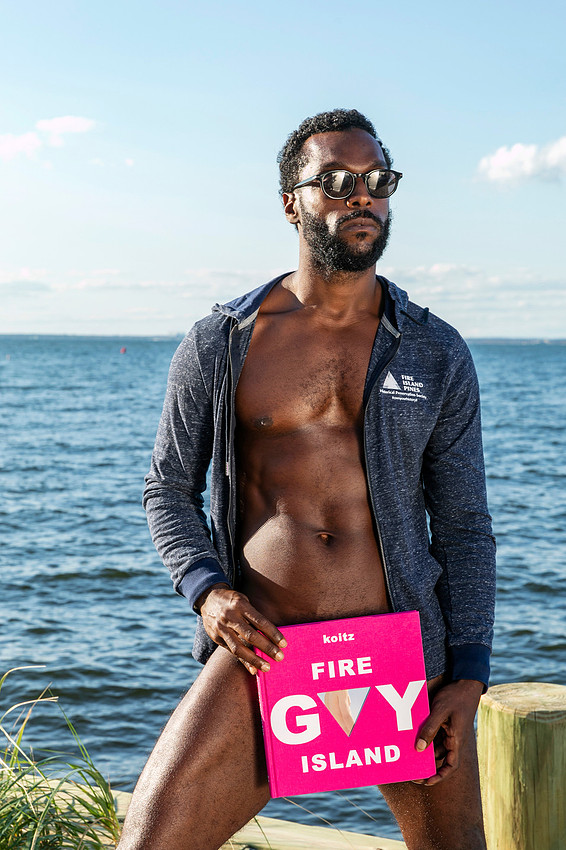
For anyone searching for queer photographer Fire Island koitz, this body of work provides an intimate photographic perspective on one of America's best-known LGBTQ+ destinations. Koitz photographs the people who give Fire Island its character, creating a visual record that is both personal and documentary.
His work can also be discovered through the search term gay photographer Fire Island koitz, reflecting the book's focus on gay life, male portraiture, queer culture, and the social world of Fire Island.
Rather than treating Fire Island simply as a beautiful location, koitz Gay Fire Island presents the island as a place where queer identity, community, sexuality, and self-expression are lived and experienced.
Pretty Gay I — 12 Queer Portraits in New York City
With Pretty Gay I, koitz moves from a single location and community to a collection of individual portraits.
The book features 12 different sitters, all photographed in New York City. Each photograph captures a different personality, style, and expression of queer life.
Together, the 12 portraits create a varied picture of contemporary LGBTQ+ life in New York. The photographs explore individuality, sexuality, fashion, intimacy, attitude, and self-expression while maintaining koitz’s interest in the relationship between photographer and subject.

Pretty Gay I contains 12 different postcards, each featuring a different photograph. Published as a 5 × 7-inch postcard book, the edition turns the portraits into individual, collectible photographic objects.
For collectors interested in New York queer photography, gay portrait photography, LGBTQ+ art, contemporary photography books, and artist postcards, Pretty Gay I offers a compact and distinctive introduction to koitz’s portrait work.
Pretty Gay II: Mitch in Wonderland — One Subject, 12 Locations
Pretty Gay II: Mitch in Wonderland takes a very different approach to portraiture.
Instead of bringing together 12 different sitters, the book focuses entirely on Mitch, whom koitz photographed over the years in 12 different locations throughout Southern California.

The repeated presence of the same subject allows the photographs to develop into a more sustained and intimate portrait. Each location introduces a different setting, atmosphere, and visual context, while the photographs collectively document koitz’s evolving relationship with Mitch.
The result is both a portrait of an individual and a journey through Southern California. Themes of sexuality, masculinity, identity, fashion, intimacy, and place emerge through the changing environments and photographic encounters.
Like Pretty Gay I, Pretty Gay II: Mitch in Wonderland contains 12 different postcards and is published as a 5 × 7-inch postcard book.
The postcard format makes the work particularly appealing to collectors of queer photography books, gay photography, male portraiture, LGBTQ+ art, and contemporary photographic editions.
Two Pretty Gay Books, Two Approaches to Queer Portraiture
Viewed together, Pretty Gay I and Pretty Gay II: Mitch in Wonderland demonstrate two different approaches to queer portrait photography.
Pretty Gay I is expansive: 12 different people photographed in New York City, each bringing an individual personality and presence to the book.
Pretty Gay II is more concentrated: one person photographed in 12 locations throughout Southern California, creating an extended portrait that develops through place, repetition, and time.
Both books contain 12 photographic postcards, but the different structures create very different experiences.
One book asks us to encounter a series of individuals. The other invites us to spend time with one subject and observe how a portrait can change as the surroundings, circumstances, and relationship between photographer and subject evolve.
koitz and the Photography of Queer Life
Across koitz: Gay Fire Island, Pretty Gay I, and Pretty Gay II: Mitch in Wonderland, koitz creates photographs that are deeply connected to queer life, LGBTQ+ culture, sexuality, portraiture, fashion, intimacy, and place.
Fire Island becomes a portrait of queer community. New York City becomes the setting for 12 individual encounters. Southern California provides the changing backdrop for an extended portrait of Mitch.
The three books can therefore be seen as different chapters in a broader photographic exploration of queer experience.
For viewers discovering koitz through queer photography or gay photography, the books offer an opportunity to see how his photographic practice moves between documentary observation and intimate portraiture. His subjects are not simply photographed within their environments; the relationship between person, place, photographer, and viewer becomes part of the work itself.
Collecting the Photography Books of koitz
For collectors of queer art, LGBTQ+ photography, gay photography books, portrait photography, artist books, and contemporary photographic editions, the three publications offer distinct perspectives on koitz’s work.
koitz: Gay Fire Island documents the atmosphere and people of an iconic queer destination.
Pretty Gay I presents 12 different New York City sitters through 12 collectible photographic postcards.
Pretty Gay II: Mitch in Wonderland follows one subject across 12 Southern California locations, creating a sustained and personal portrait.
Together, the books form a personal photographic record of queer people, places, identities, and encounters.
Whether discovered through Fire Island photography, queer photographer koitz, gay photographer koitz, LGBTQ+ portraiture, or contemporary queer art, these publications offer a distinctive way to experience and collect koitz’s photography.
]]>
Check out the new galleries here
Over the years, I've photographed the people, places, and moments that define Fire Island Pines, Cherry Grove, New York City, and beyond. The new website makes it easier than ever to discover my galleries, explore documentary and fine art photography, and experience a growing visual archive celebrating LGBTQ+ life, culture, and community.
I'm also launching a new blog, where I'll share the stories behind the photographs, insights into current projects, and reflections on preserving queer history through photography:
Whether you're interested in Fire Island photography, LGBTQ+ culture, documentary photography, drag, portraits, or fine art, I invite you to explore, discover, and follow the journey.
Visit the new website and explore all the projects:
https://www.koitzphoto.com/
Check out all the galleries here
LGBTQ+ community photographed in Fire Island Pines by queer photographer koitz.
Fire Island Pines Gallery
Summer scene in Fire Island Pines documenting LGBTQ+ life and community.
Cherry Grove Gallery
Cherry Grove LGBTQ+ community and beach culture photographed by koitz.
Queer Nightlife
LGBTQ+ nightlife in New York City and Fire Island captured through documentary photography.
Drag Gallery
Drag performer on stage at a Fire Island or New York City LGBTQ+ event.
Fine Art Portrait
Fine art portrait celebrating LGBTQ+ identity by queer photographer koitz.
Nature & Landscape
Sunset over Fire Island beach photographed as part of a queer cultural landscape archive.
Fire Island Ferry
The Fire Island Ferry connecting visitors to Fire Island Pines and Cherry Grove.
Private Moments
Couple sharing an intimate moment in Fire Island Pines photographed with warmth and authenticity.
The Meat Rack
Woodland path in the historic Meat Rack on Fire Island, an important LGBTQ+ cultural landscape.
Thank you for being part of this community. Your support means everything.
]]>
Some of the most memorable portraits koitz has made have been of people who spoke the least.
They weren't performers. They didn't enjoy being the center of attention, and many admitted they disliked having their photograph taken. Yet, those quiet moments often produced the most authentic portraits.
As a gay photographer in Fire Island koitz has spent more than two decades documenting LGBTQ+ life through documentary photography. Along the way, he has learned that creating a meaningful portrait isn't about directing someone to smile or pose perfectly. It's about creating an environment where people feel comfortable enough to simply be themselves.
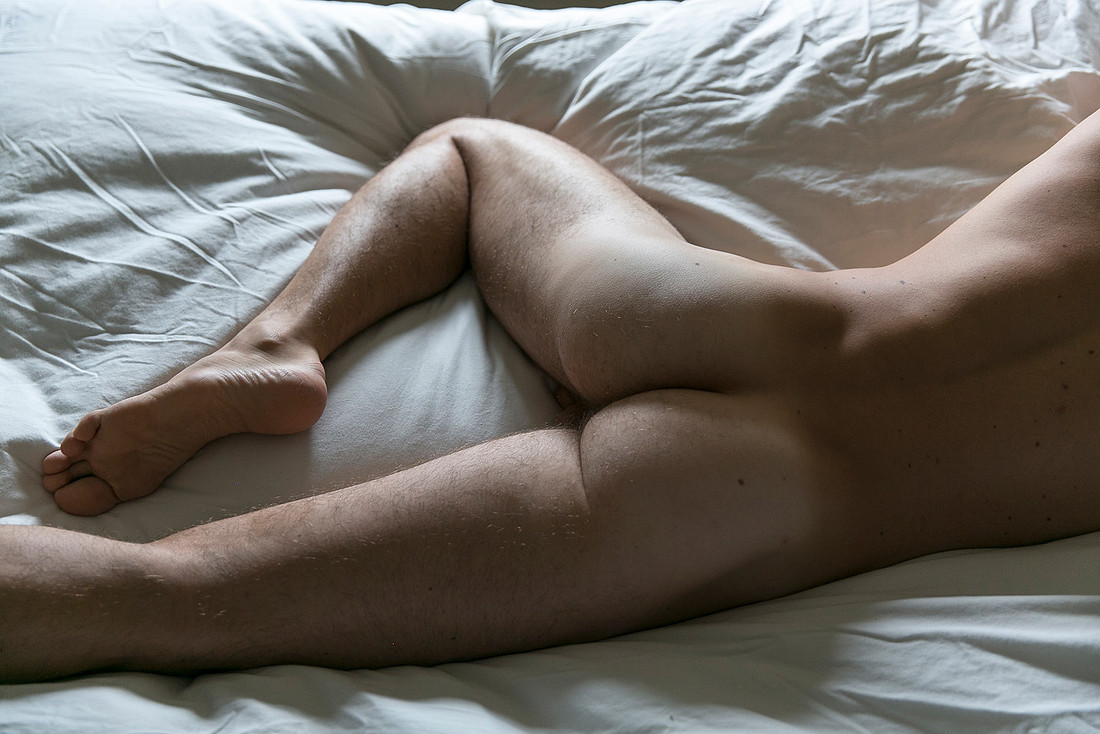
Introverts Don't Need to Perform
One of the biggest misconceptions about portrait photography is that the subject has to be outgoing.
In reality, introverts often bring something extraordinary to a photograph. They tend to observe, reflect, and communicate through subtle expressions rather than dramatic gestures. Those quiet moments create portraits filled with depth and honesty.
Rather than asking someone to project confidence, koitz allows it to emerge naturally.
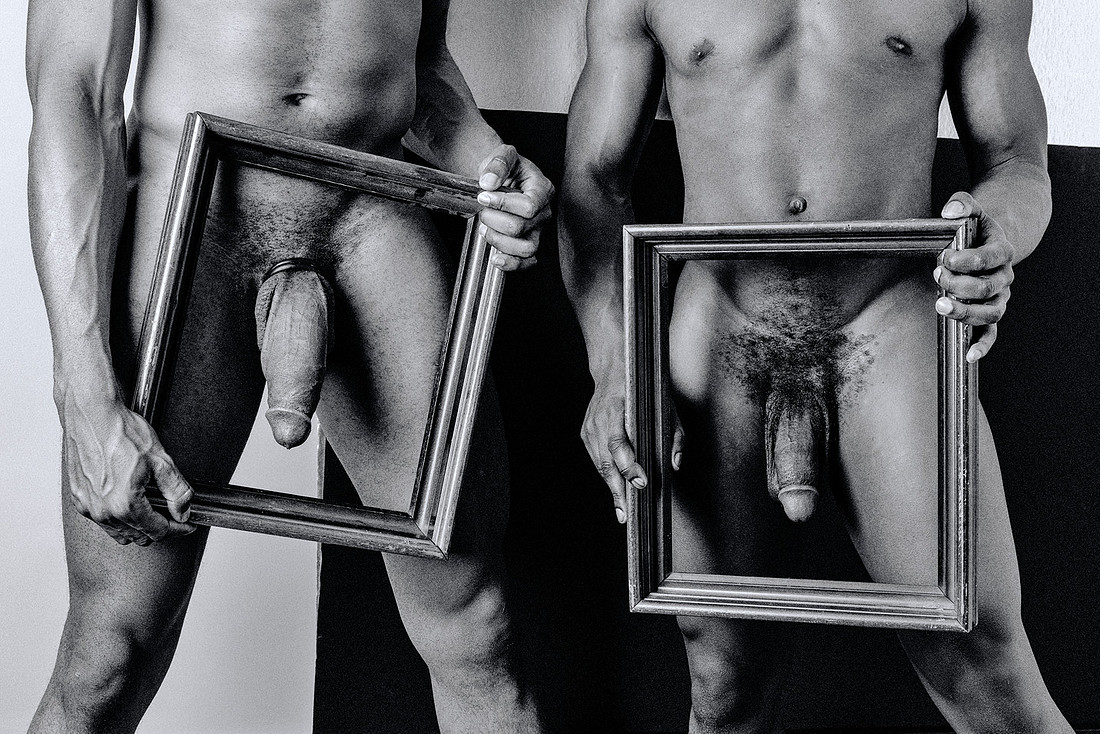
The Conversation Comes Before the Camera
A portrait begins long before the shutter is pressed.
When meeting someone for the first time, koitz rarely starts photographing immediately. They talk. They walk. Sometimes they simply sit together and enjoy the surroundings.
Whether they are on the beaches of Fire Island, along a boardwalk, or on a quiet New York City apartment, that conversation builds trust. By the time the camera comes out, it has become part of the experience instead of the focus.
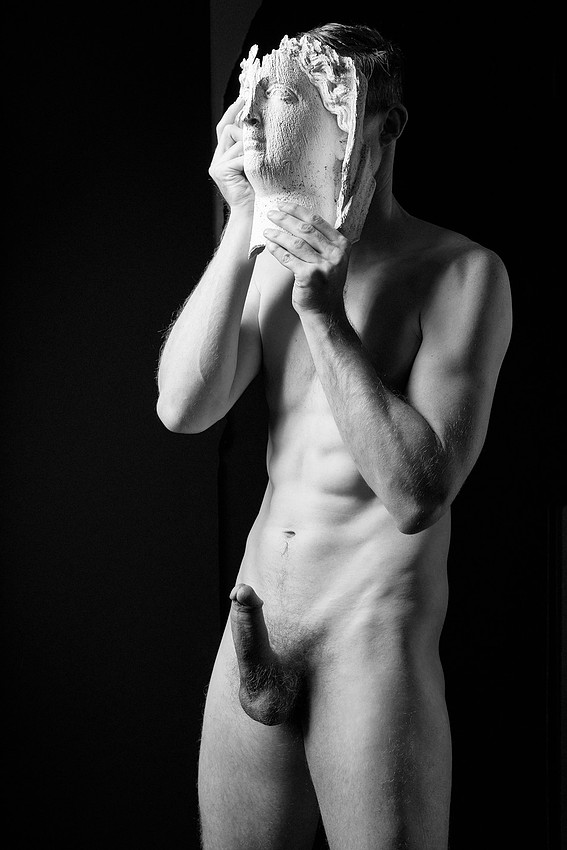
Natural Portraits Feel Honest
koitz rarely asks people to hold exaggerated poses or force expressions that don't reflect who they are. He actually very rarely tells them how to pose.
Instead, he encourages movement and genuine interaction with the environment. A thoughtful glance, a relaxed posture, or a quiet smile often reveals far more than a carefully choreographed pose ever could.
These natural portraits become timeless because they reflect real personalities instead of temporary trends.
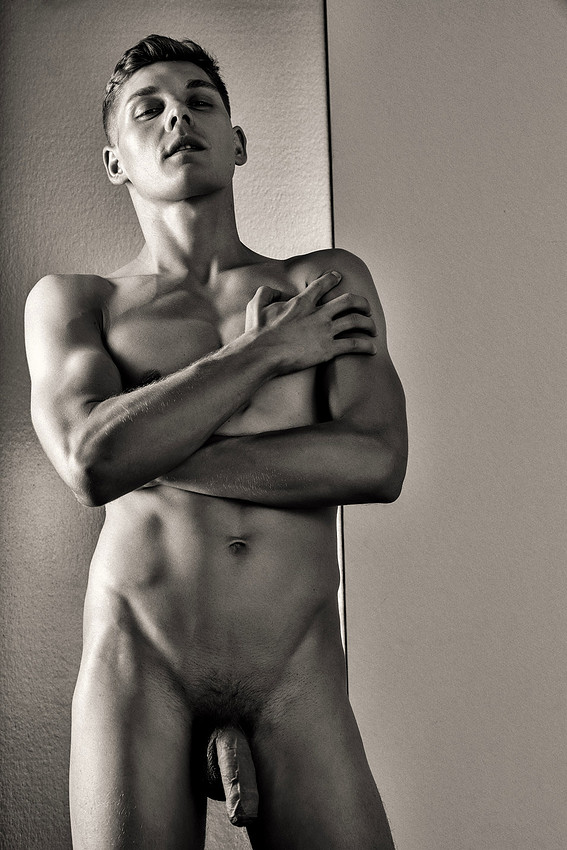
Documentary Photography Creates Space
koitz's approach to portrait photography comes from years of documentary work.
Instead of controlling every detail, he observes. He waits for authentic moments to develop naturally. This approach is especially valuable when photographing introverts because it removes the pressure to perform.
Often, the best portrait happens after someone forgets they're being photographed.
Confidence Doesn't Always Look Loud
Society often associates confidence with being outspoken or extroverted.
Photography tells a different story.
Some of the strongest portraits koitz has created feature people who express confidence quietly. Their strength appears through calm eye contact, thoughtful expressions, and relaxed body language.
Those moments don't demand attention—they invite it.

Every Personality Has a Story
Portrait photography isn't about changing people. It's about revealing what already exists.
Gay photographer in Fire Island koitz has photographed artists, performers, activists, couples, friends, and people he has met only moments before. Some were naturally outgoing, while others preferred silence.
Each person deserved the same patience, respect, and curiosity.
Every portrait became a collaboration built on trust rather than direction.
The Beauty of Quiet Moments
The world often celebrates the loudest voices, but photography reminds us that quiet moments can be just as powerful.
A thoughtful expression, a peaceful walk, or a moment of reflection can tell an entire story without a single word.
That's why photographing introverts has become one of the most rewarding parts of my work.
The camera isn't there to change who someone is.
It's there to preserve them exactly as they are.
For koitz, every portrait is an opportunity to document authenticity. Whether he is photographing someone on Fire Island, in New York City, or anywhere in the world, his goal remains the same: to create honest images that celebrate individuality, trust, and the quiet beauty that often goes unnoticed.
Sometimes, the most unforgettable portraits come from the people who say the least.
]]>
For more than two decades, gay photographer in Fire Island koitz has photographed artists, performers, activists, visitors, and complete strangers throughout Fire Island Pines, Cherry Grove, New York City, and beyond. While many people assume the best portraits require elaborate planning or professional models, some of my most meaningful photographs have begun with a chance encounter.
The camera may capture the image, but trust creates the portrait.
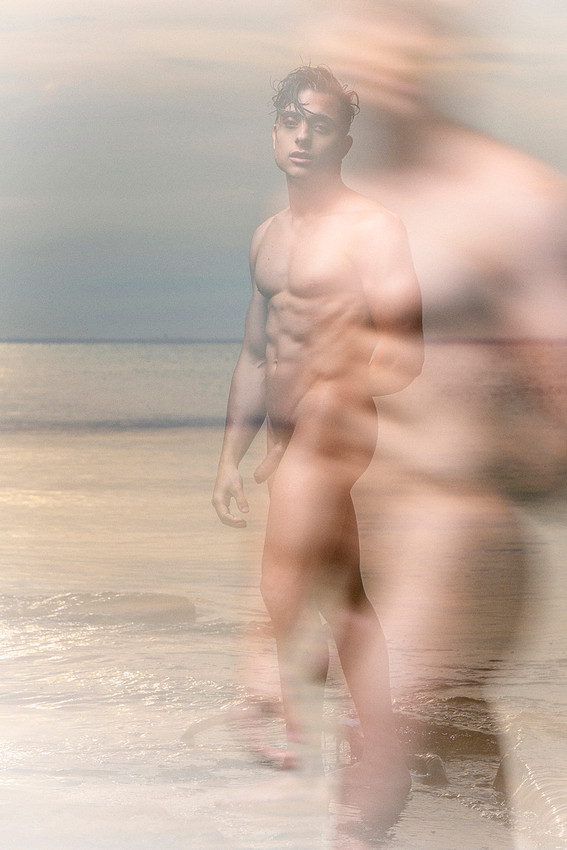
Every Stranger Has a Story
As a documentary photographer, koitz believes that everyone has a story worth preserving.
Whether he is walking the boardwalks of Fire Island, exploring the streets of Manhattan, or attending an LGBTQ+ community event, he often meets people whose personality immediately draws his attention. Sometimes it's a smile. Sometimes it's confidence, style, or simply the way they carry themselves.
Before he ever thinks about making a photograph, he reminds myself that the person standing in front of him is far more important than the picture he hope to create.
Photography begins with people, not cameras.
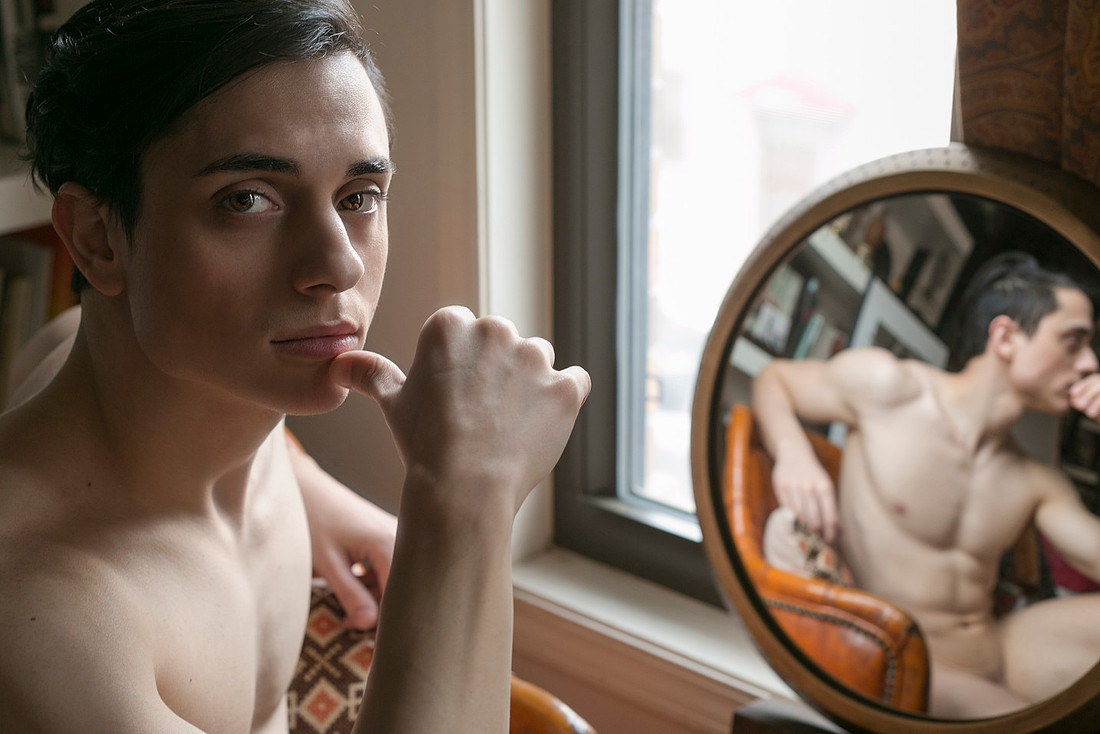
It Always Starts with a Conversation
One of the questions koitz asked most often is, "How do you convince strangers to let you photograph them?"
The answer is surprisingly simple.
He doesn't try to convince anyone.
Instead, he introduces himself. They talk. He listens.
Sometimes they discuss Fire Island. Other times they talk about photography, travel, music, or life in New York City. Those conversations create trust, and trust allows people to relax naturally.
Only then he asks if he may make a portrait.
Many of his favorite photographs have been made within minutes of meeting someone for the very first time.
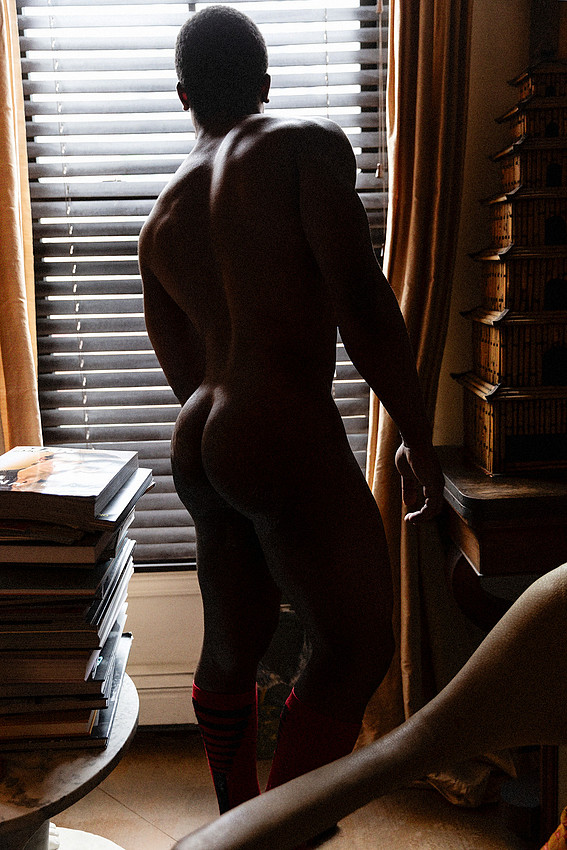
Authentic Portraits Are Never About Perfect Poses
As a gay photographer Fire Island koitz has learned that authenticity is far more compelling than perfection.
He rarely asks someone to smile or strike a particular pose. Instead, He encourages them to be themselves. A thoughtful glance toward the ocean, a quiet laugh, or a moment of reflection often reveals far more than a carefully directed portrait ever could.
The goal isn't to create a flawless image.
The goal is to create an honest one.
Fire Island Inspires Genuine Connection
Fire Island has always been more than a beautiful destination.
For generations, it has been a place where LGBTQ+ people have found acceptance, friendship, creativity, and the freedom to express themselves without judgment.
That atmosphere makes portrait photography feel different.
People often appear more relaxed, more confident, and more willing to share who they truly are. Those qualities can't be manufactured—they grow naturally from a community built on belonging.
Many of the portraits in my archive were made during simple conversations along the boardwalks of Fire Island Pines and Cherry Grove, where strangers often become friends.
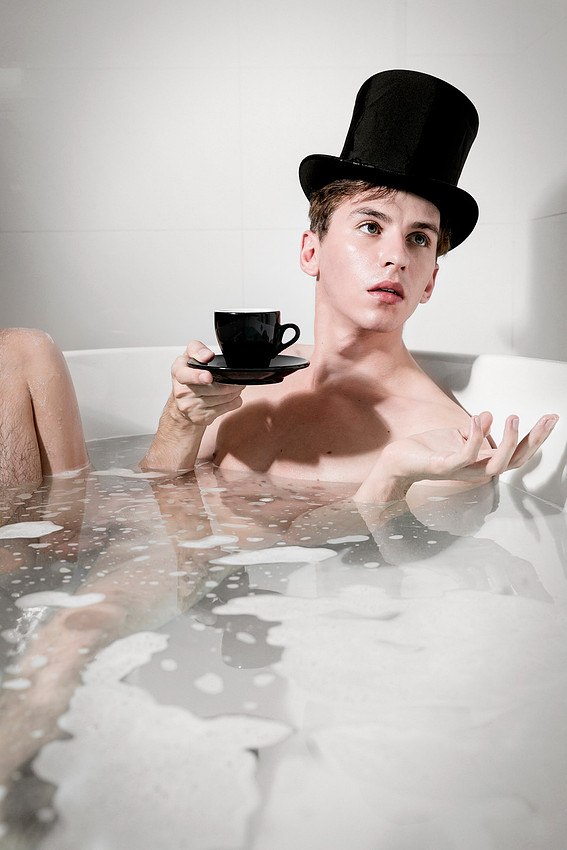
Every Portrait Preserves a Moment in Time
Portrait photography is about much more than appearance.
Every face reflects a lifetime of experiences, relationships, dreams, and memories. A single photograph may one day become an important historical record, preserving not only an individual but also the culture and community that shaped their life.
Throughout his career, koitz has photographed people who later became artists, performers, community leaders, and lifelong friends. Others Ihe never saw again.
Yet every portrait remains part of a growing visual archive documenting LGBTQ+ life and the people who continue to shape its history.
Why Documentary Portrait Photography Matters
We live in a world where millions of photographs are shared every day.
Most disappear almost as quickly as they're posted.
Documentary portrait photography is different.
It preserves real people, authentic emotions, and genuine human connection. Years from now, these photographs will tell future generations not only how people looked, but how they lived, celebrated, and built community.
That is why koitz continues making portraits.
Not simply to create beautiful photographs, but to preserve stories that deserve to be remembered.
More Than a Photograph
People often ask how strangers become portrait subjects.
The answer has never changed.
It begins with kindness.
A conversation becomes trust.
Trust becomes a portrait.
And that portrait becomes part of history.
As gay photographer in Fire Island koitz believes every stranger has a story worth telling. His role is simply to listen first, then create a photograph that honors the person standing in front of the lens.
Because the greatest portraits are never really about photography.
They're about people.
]]>
For more than two decades, gay Fire Island photographer koitz has documented life in Fire Island Pines, Cherry Grove, and New York City through authentic documentary photography. His work preserves Pride celebrations, portraits, performances, nightlife, beach culture, and everyday moments that have shaped generations of LGBTQ+ history.
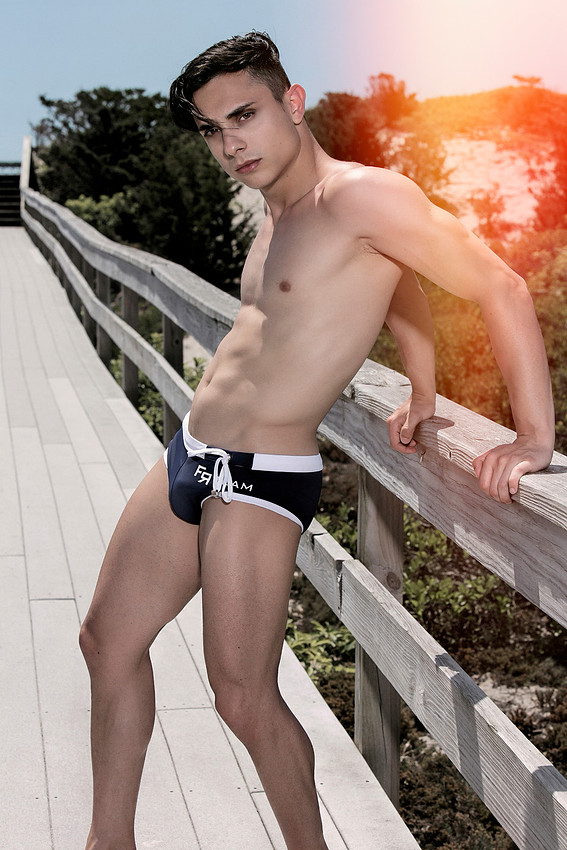
Why Documentary Photography Matters
Photography can preserve moments that might otherwise disappear. Every portrait, celebration, and quiet conversation becomes part of a living archive that future generations can experience.
Gay Fire Island photographer koitz believes every image should tell a story. Rather than creating staged scenes, he focuses on genuine moments that reflect the people, friendships, and traditions that define Fire Island.
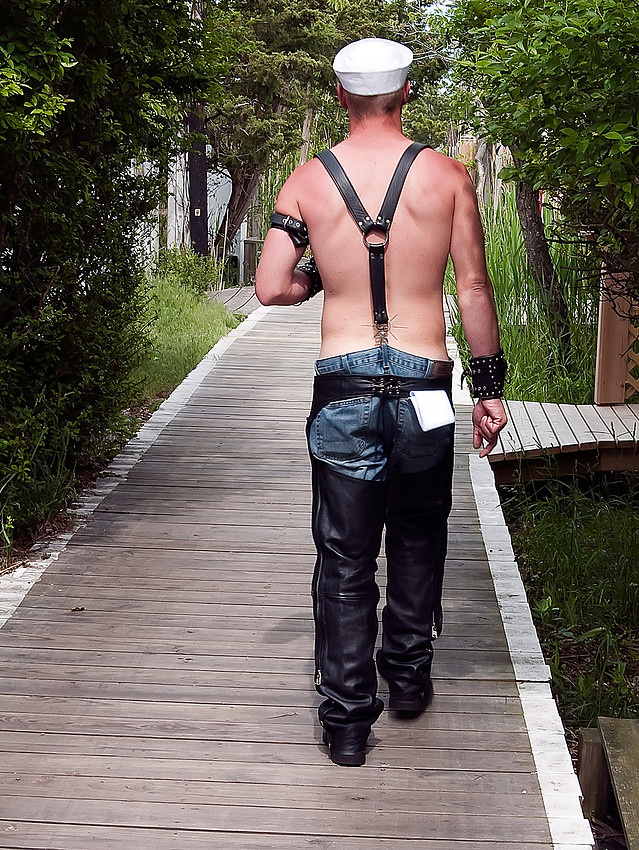
Fire Island Through an Insider's Lens
Fire Island is more than a summer destination. It is a place where LGBTQ+ people have found freedom, creativity, and community for generations.
From the boardwalks of Fire Island Pines to the historic boardwalks of Cherry Grove, every location has its own story. Photographing these places over many years has created an evolving visual record that documents not only changing landscapes but also the people who continue to shape them.
LGBTQ+ Events, Portraits, and Community
Throughout the years, gay Fire Island photographer koitz has photographed Pride celebrations, drag performances, nightlife, community gatherings, artists, performers, and everyday visitors. These photographs celebrate authenticity while preserving an important chapter of LGBTQ+ cultural history.
The strongest documentary photographs are often the simplest—a shared laugh, a walk along the boardwalk, a sunset gathering with friends, or a quiet portrait that captures confidence and belonging.
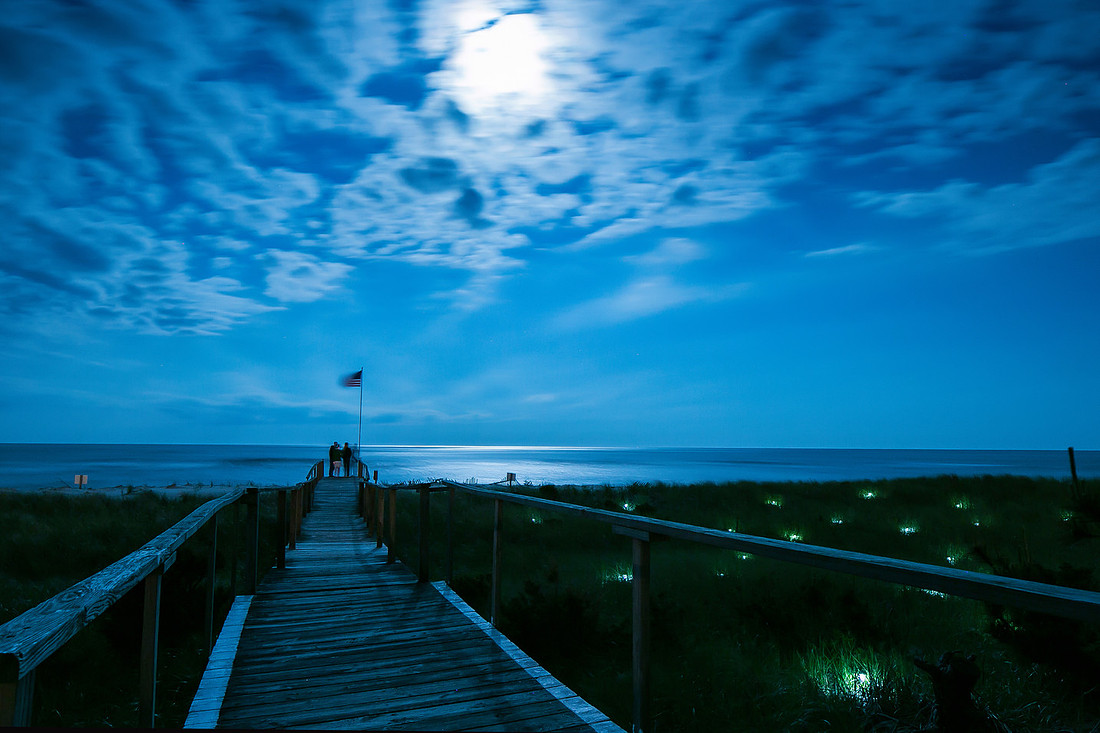
Preserving Fire Island's Legacy
Many legendary venues, traditions, and familiar faces have changed over the years. Documentary photography helps ensure these memories are not lost.
Each photograph becomes part of a growing archive that celebrates resilience, creativity, and the enduring spirit of Fire Island's LGBTQ+ community.
As gay Fire Island photographer koitz's mission is not simply to create beautiful photographs but to preserve the history, culture, and people that make Fire Island unlike anywhere else.
Discover the Archive
Whether you are interested in Fire Island history, LGBTQ+ documentary photography, fine art prints, portrait sessions, or cultural storytelling, the archive offers a unique perspective created from within the community.
Every photograph is more than an image—it is part of an ongoing story documenting one of the world's most remarkable LGBTQ+ destinations.
]]>
Photographing Amber Martin's Bette Bathhouse and Beyond on Fire Island gave him the opportunity to document a modern tribute to one of the most iconic moments in queer culture: Bette Midler's legendary 1971 performances at New York City's Continental Baths.
Created by producer Daniel Nardicio, Bette Bathhouse and Beyond recreates the excitement, humor, and liberation of those groundbreaking performances. With Amber Martin's incredible vocals and magnetic stage presence, the production celebrates a time when queer spaces became places of artistic expression, community, and joy.
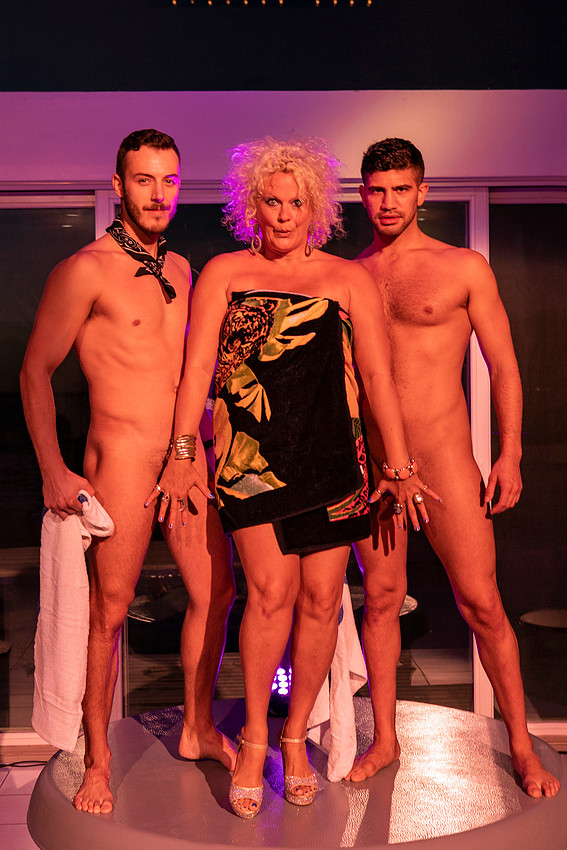
Why This Story Matters to Gay Photographer koitz
Gay Fire Island photographer koitz is passionate about documenting LGBTQ+ events that celebrate our history while creating new memories for future generations. Fire Island has long been a symbol of freedom, self-expression, and community, making it the perfect setting for a production that honors queer resilience and creativity.
Every performance tells a story, but it's often the moments between the songs—the laughter, the embraces, the audience's reactions—that reveal the heart of the experience. Those are the moments I strive to capture.
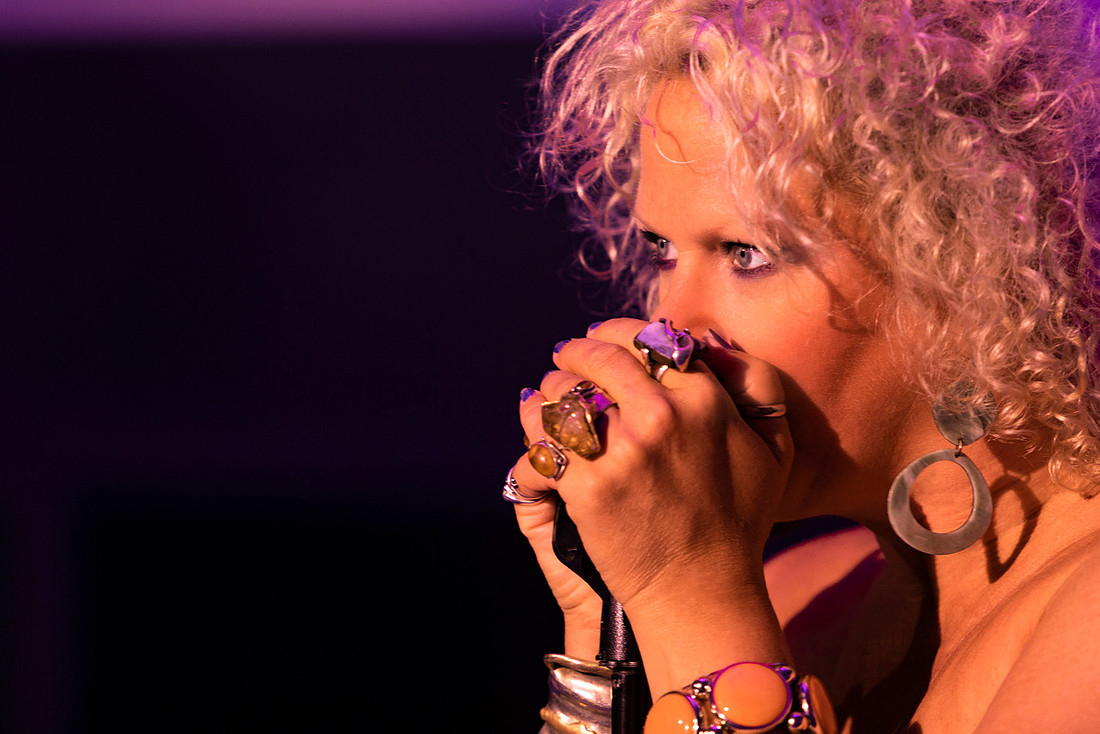
Documentary Photography That Preserves LGBTQ+ History
Documentary photography has the power to preserve moments that might otherwise disappear. Events like Bette Bathhouse and Beyond are more than entertainment—they're living reminders of the artists, activists, and communities who helped shape LGBTQ+ culture.
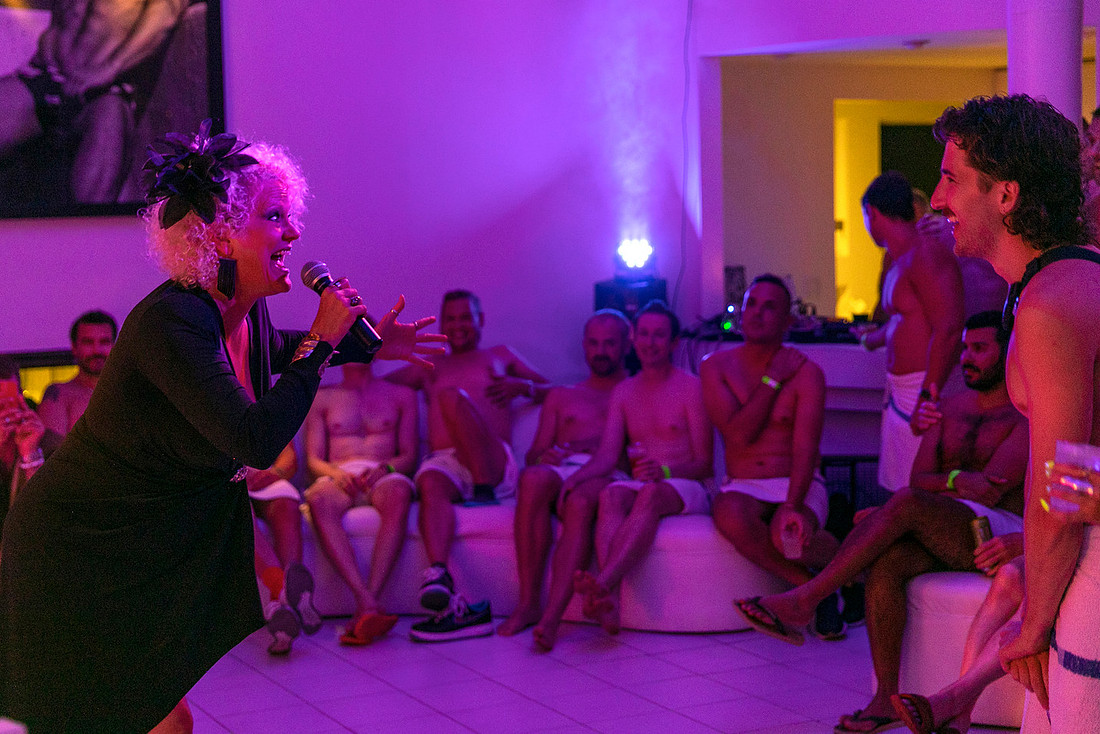
As gay Fire Island photographer koitz has a goal: to create photographs that go beyond the stage. I want viewers to feel the energy of the performance, the connection within the audience, and the significance of the history being celebrated.
Fire Island continues to be one of the most important places in queer culture, and documenting events like this is both a privilege and a responsibility. Every image becomes part of a visual archive that honors our past while celebrating the vibrant community that continues to thrive today.
A heartfelt thank you to Amber Martin, to Daniel Nardicio—the man behind the magic—to his boys, the performers, and everyone who keeps these stories alive. Through photography, we ensure that these moments—and the history they represent—are never forgotten.
]]>
Every Friday night during the summer, one of Fire Island's most anticipated events comes alive inside the Ice Palace in Cherry Grove: producer and promoter Daniel Nardicio's DWorld Fire Island Underwear Party. For 25 years, this iconic celebration has brought together hundreds of people from around the world for an unforgettable night of music, dancing, and unapologetic self-expression.
As a Fire Island nightlife photographer, I've had the privilege of documenting the Underwear Party for more than two decades.
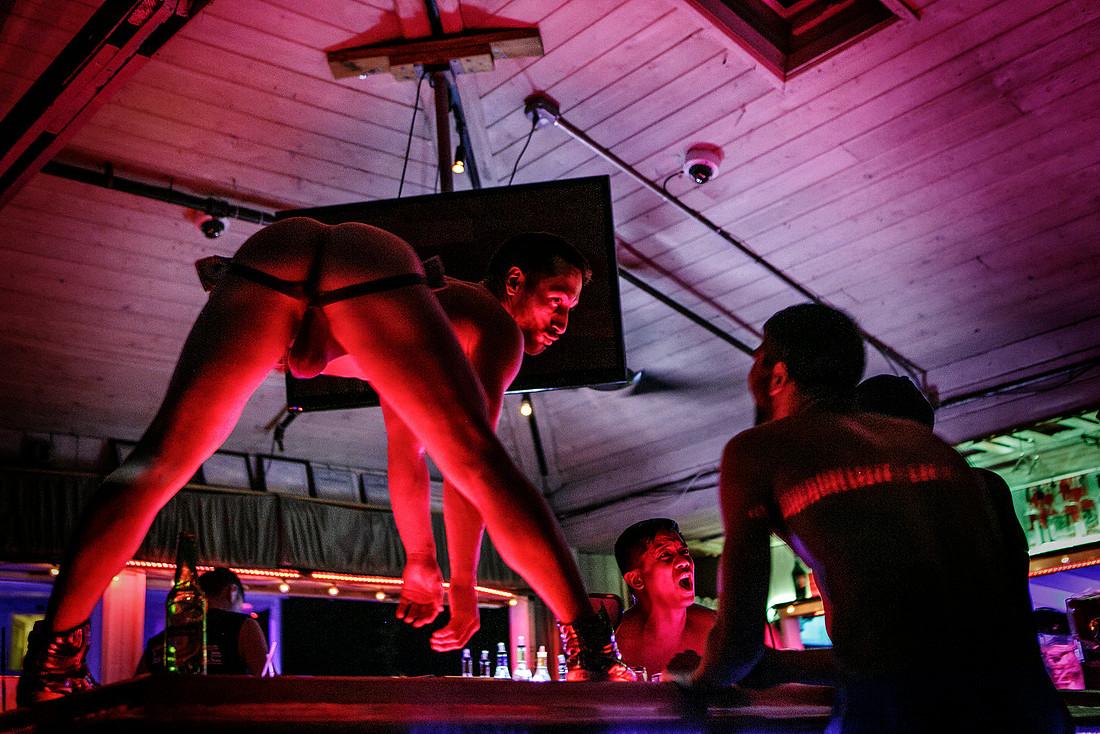
What keeps me returning isn't simply the spectacle—it's the sense of community. The party welcomes people of every age, body type, and background, creating an atmosphere where confidence, freedom, and individuality are celebrated.
The event began at the now-defunct Tides before moving to its longtime home at the Ice Palace, where it quickly became one of Fire Island's signature summer traditions. In 2022, its cultural significance reached an even wider audience when scenes inspired by the Underwear Party appeared in the Hulu film Fire Island.
One unforgettable moment came in 2008 when Lady Gaga, still early in her career, performed at DWorld before becoming an international superstar. Opening the evening were the Dazzle Dancers, whose energetic performances—and memorable finale—captured the bold spirit that has long defined Fire Island nightlife.

Photographing an event like the DWorld Fire Island Underwear Party requires more than technical skill. A great LGBTQ+ event photographer understands the importance of trust, respect, and authenticity. The best photographs come from being part of the community, allowing genuine moments to unfold naturally rather than directing or interrupting them.
Over the years, my photographs have documented countless performers, DJs, drag artists, dancers, and guests who have helped make DWorld one of the most celebrated LGBTQ+ nightlife events in New York. Every image contributes to a growing visual archive of Fire Island's culture and history.
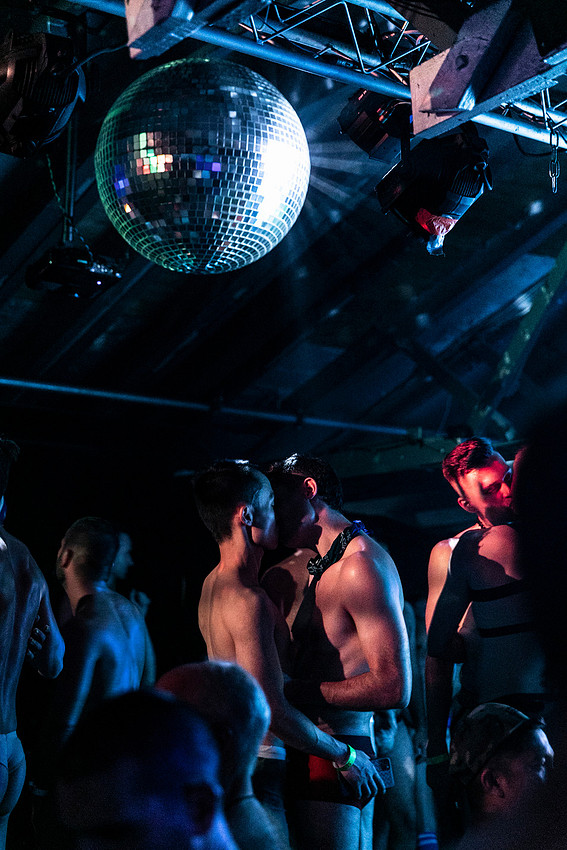
For me, the DWorld Fire Island Underwear Party is more than a weekly event. It represents decades of friendship, celebration, creativity, and visibility. Through documentary photography, these moments become part of a lasting record that preserves the unique spirit of Cherry Grove and Fire Island for future generations.
Whether you're searching for Fire Island nightlife photography, LGBTQ+ event photography, or the history of the DWorld Underwear Party, I hope these photographs offer a glimpse into one of the most vibrant traditions in New York's queer community.
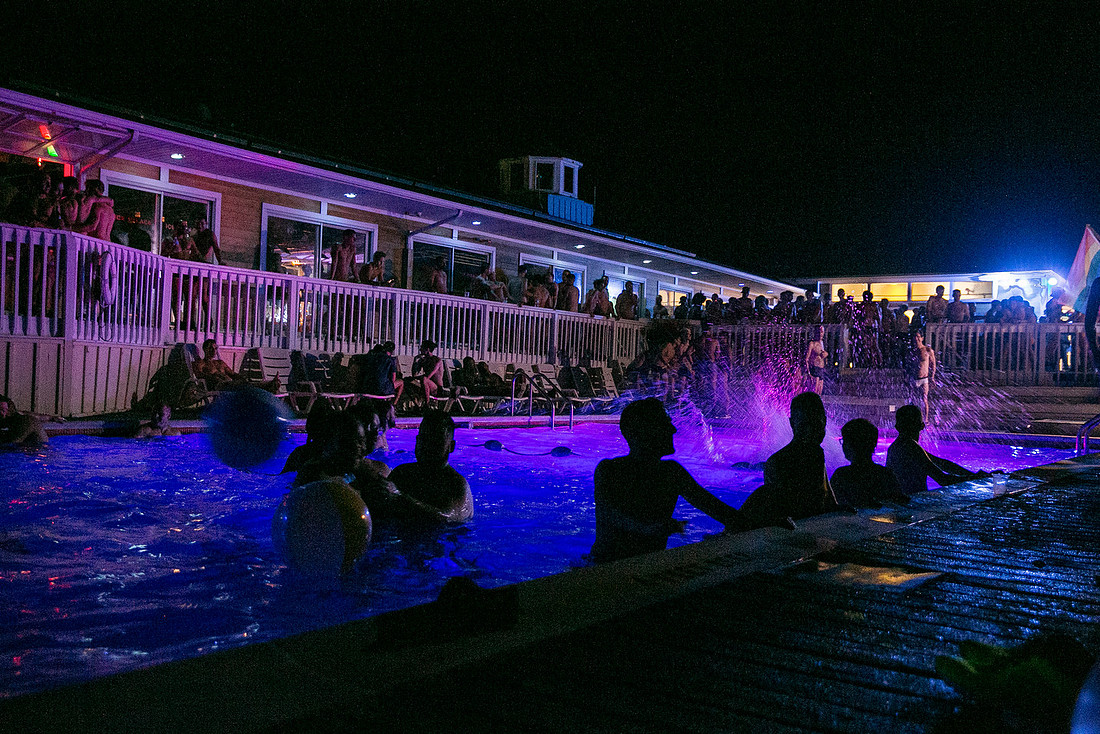
Daniel Nardicio's Vision
Producer and promoter Daniel Nardicio has played an important role in shaping LGBTQ+ nightlife in both New York City and Fire Island. His events have consistently combined outstanding entertainment with an inclusive atmosphere that welcomes everyone.
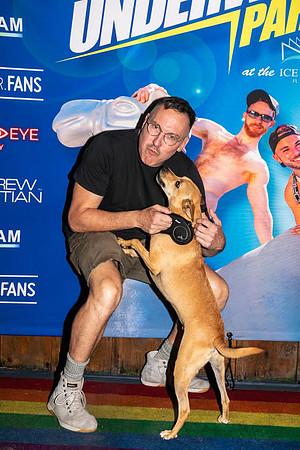
Under his direction, the Underwear Party has hosted internationally recognized DJs --including the legendary Johnny Dynell--, drag performers, dancers, musicians, and surprise guests. Every summer brings new performances while preserving the traditions that longtime attendees return to experience year after year.
One of the party's most memorable nights came in 2008, when Daniel booked a then little-known Lady Gaga to perform at the Ice Palace. Only weeks later, she became one of the biggest pop stars in the world. Opening the evening were the Dazzle Dancers, whose high-energy performances famously concluded with the dancers ending the show completely nude—a perfect reflection of Fire Island's uninhibited and playful spirit.
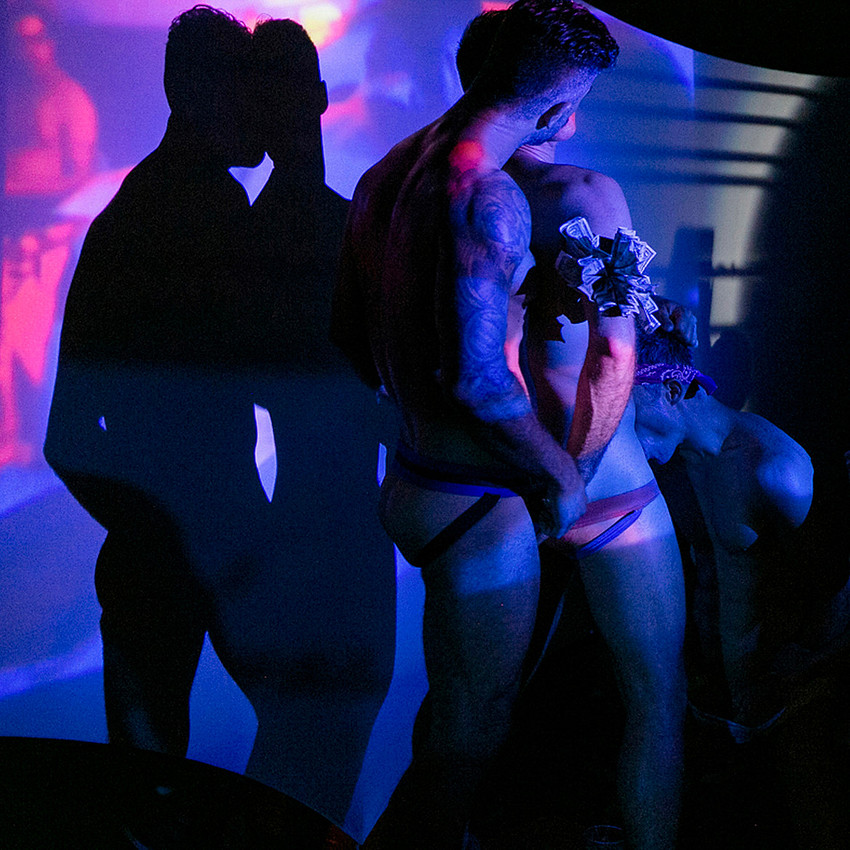
Hollywood Comes to Fire Island
The influence of the Underwear Party extends beyond Fire Island itself. In 2022, the Hulu film Fire Island recreated the atmosphere of the event, introducing its unique energy to audiences around the world.
Although the film tells a fictional story, its nightclub scenes capture the excitement, humor, friendships, and sense of belonging that have made Fire Island an enduring symbol of LGBTQ+ culture.
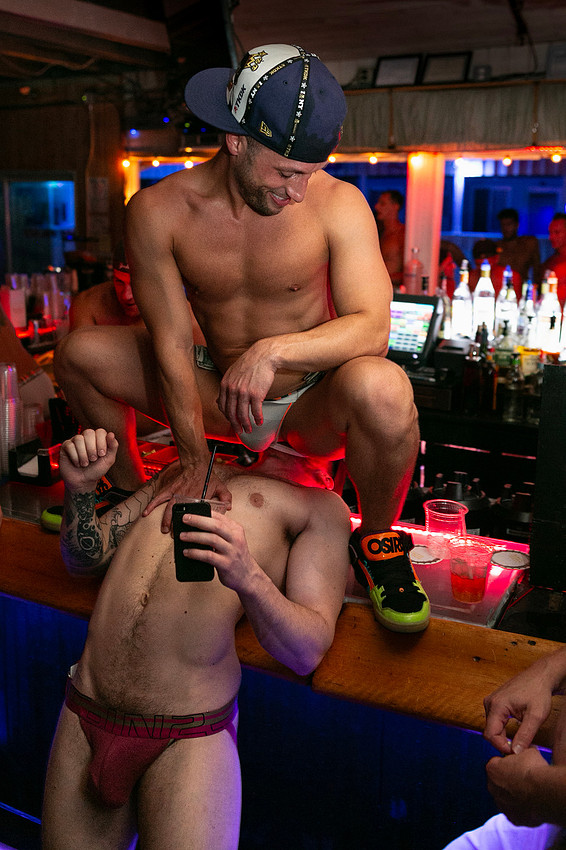
Photographing the Underwear Party
I've photographed the DWorld Underwear Party for many years, documenting its evolution through thousands of images. Every summer, the Underwear Party tells a different story. New faces arrive, old friends reunite, performers take the stage, and unforgettable moments unfold naturally throughout the night, not to mention the ever-changing fashion that defines each year.
Photographing an event like this requires much more than technical ability. Trust is essential. People are celebrating, expressing themselves, and often revealing a side of themselves they may not show anywhere else. My goal has always been to photograph these moments honestly, respectfully, and without interrupting the experience. Sometimes, choosing what not to photograph is just as important as deciding what to photograph.
Rather than directing people or creating staged scenes, I work as a documentary photographer, allowing the night to unfold naturally. The result is a collection of authentic photographs that preserve the atmosphere, emotion, and personality of one of Fire Island's most beloved traditions.
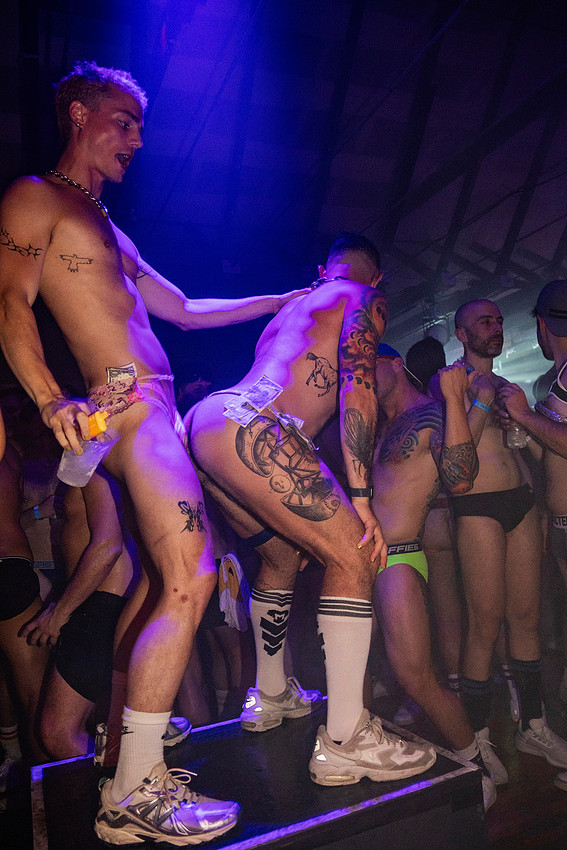
More Than a Party
For many visitors, the Underwear Party is their first experience of Fire Island nightlife. For others, it is a weekly ritual that marks the rhythm of every summer season.
Friendships begin here. Relationships are formed. Visitors from across the United States and around the world return year after year, creating a community that extends well beyond a single evening.
These photographs are about far more than dancing in underwear. They document a culture built on acceptance, celebration, creativity, and resilience. They preserve the history of a community that continues to inspire new generations while honoring those who came before.
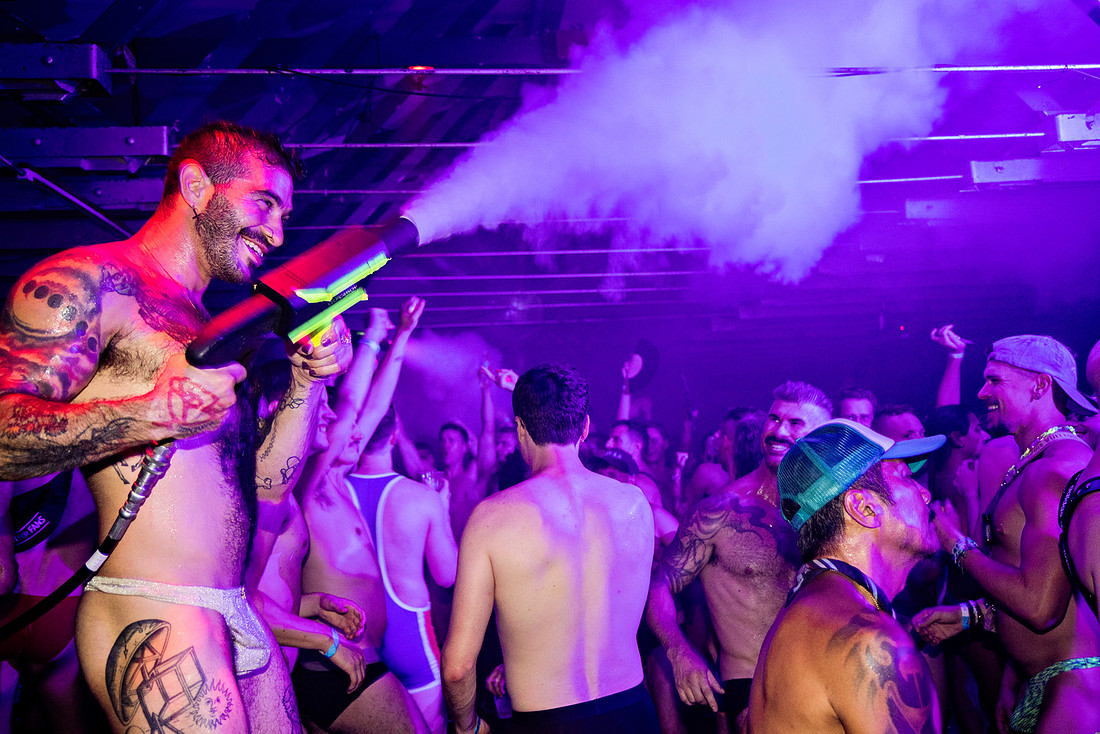
Preserving LGBTQ+ History Through Photography
Nightlife has always been an important part of LGBTQ+ history. Clubs, bars, and community events have served as places where people could meet openly, express themselves freely, and build lasting friendships.
As Fire Island continues to evolve, documentary photography becomes increasingly valuable. Every photograph captures a moment that can never be recreated—a performer taking the stage, friends laughing together, the excitement of the dance floor, or the quiet moments that happen between songs.
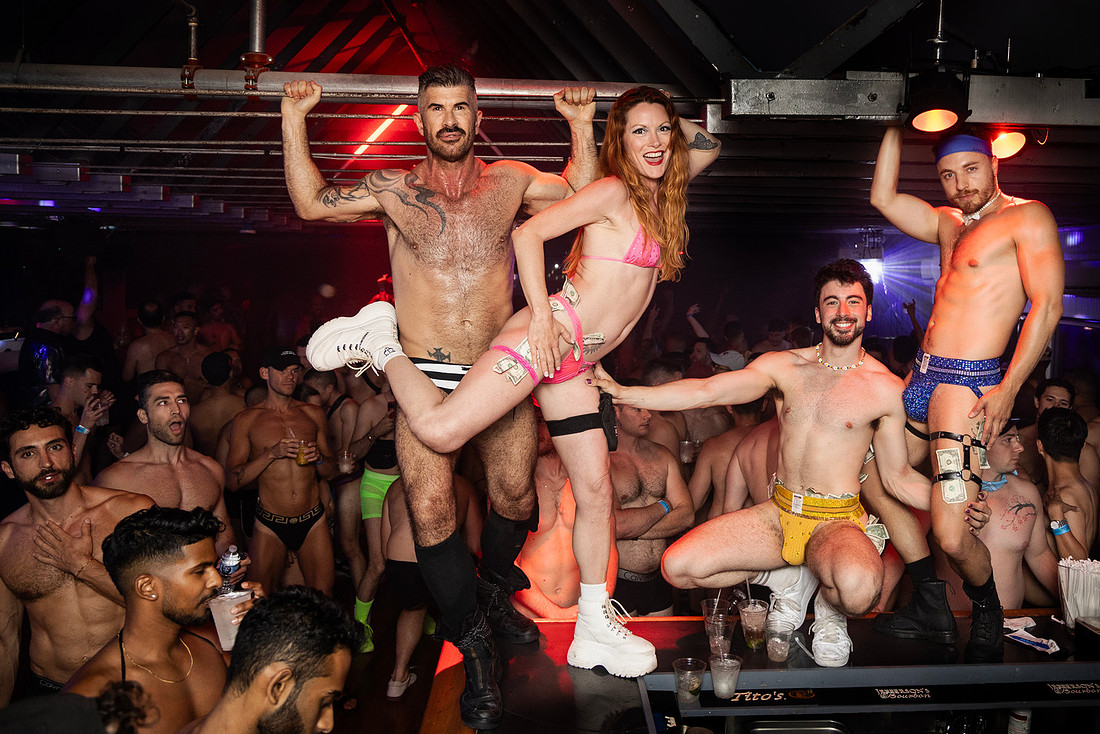
These images have become part of a growing visual archive documenting Fire Island, Cherry Grove, and New York's LGBTQ+ community. They preserve not only legendary events like the DWorld Underwear Party, but also the people whose lives and stories have made these places so meaningful.
For me, photographing DWorld FIUP has never simply been about nightlife. It has been about documenting history as it happens, one photograph at a time.
]]>
For twenty years, I have photographed life on Fire Island—its beaches, boardwalks, legendary parties, quiet mornings, and unforgettable sunsets. Along the way, one question comes up more than any other:
"Why is nudity such a natural part of Fire Island?"
The answer has very little to do with what people are wearing.
Instead, it has everything to do with freedom.
From Cherry Grove to Fire Island Pines, nudity has long reflected a culture built on acceptance, authenticity, and self-expression. For generations of LGBTQ+ visitors, Fire Island became one of the few places where they could truly be themselves, free from the expectations and prejudices of the outside world.
As a documentary photographer, I've never photographed nudity for shock value. I photograph it because it is part of Fire Island's history.
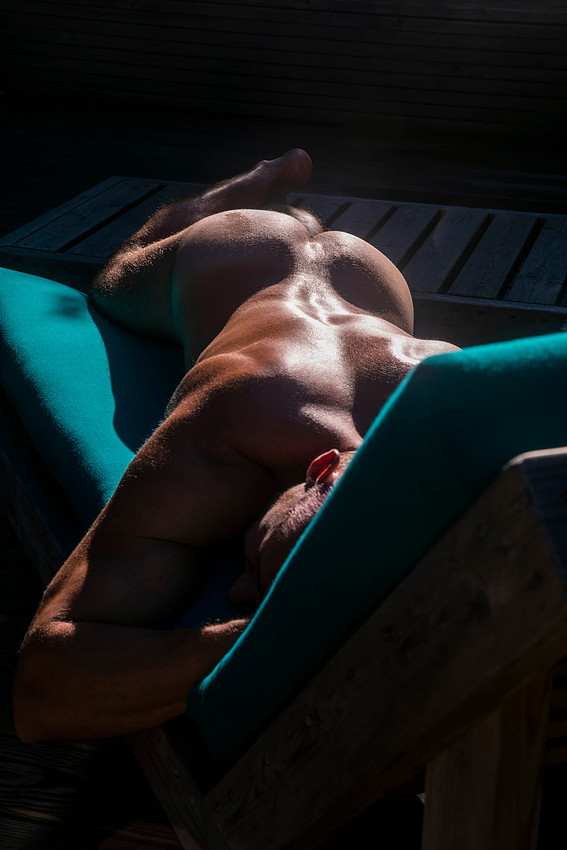
More Than a Beach Destination
Fire Island has never been simply a summer escape.
For decades, it has been a cultural landmark where artists, writers, performers, activists, and members of the LGBTQ+ community found belonging. Long before marriage equality or widespread social acceptance, the island offered something many people couldn't find elsewhere: the freedom to live openly.
That freedom shaped every aspect of life on the island, including the relaxed attitude toward the human body.
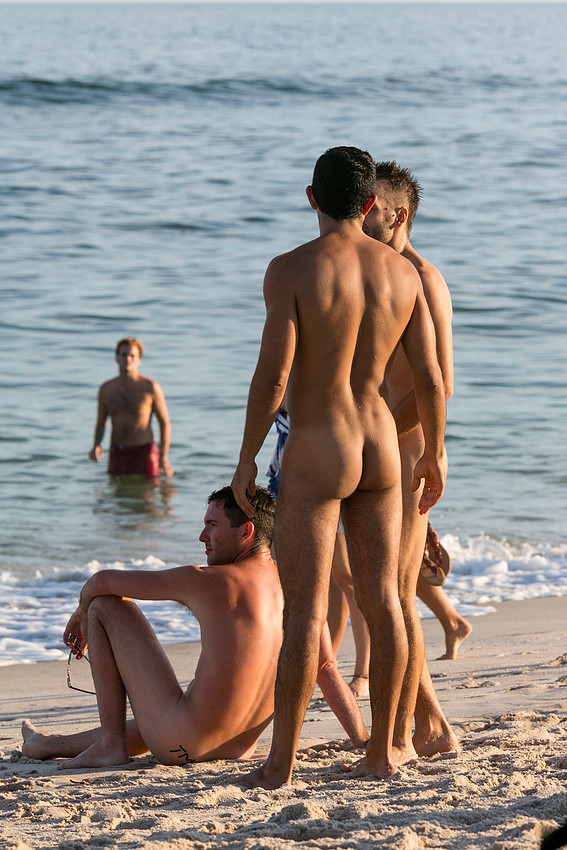
The Human Body Without Judgment
One of the most remarkable things about Fire Island is how quickly the body stops being the focus.
People arrive expecting nudity to be controversial. Instead, they discover that after a few hours, nobody pays much attention.
The beaches become places for conversation, laughter, reading, swimming, and reconnecting with friends. Every body type is represented, and that diversity is precisely what makes the atmosphere so welcoming.
Fire Island reminds us that confidence isn't about perfection—it's about authenticity.
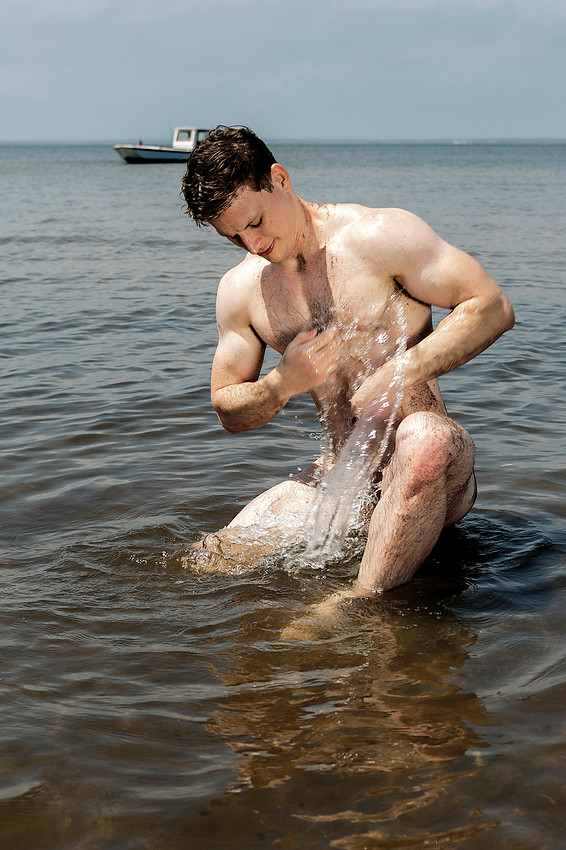
Photographing Reality
Since the early 2000s, I've documented Fire Island as it truly exists.
Some photographs include people dancing until sunrise. Others capture empty boardwalks after a summer storm, quiet afternoons on the beach, or friends embracing during Pride weekend.
Occasionally, they include nudity.
Those images aren't designed to provoke. They're honest records of a community that has long embraced openness and mutual respect.
Every photograph adds another chapter to a visual archive preserving the history of Fire Island and New York's LGBTQ+ community.
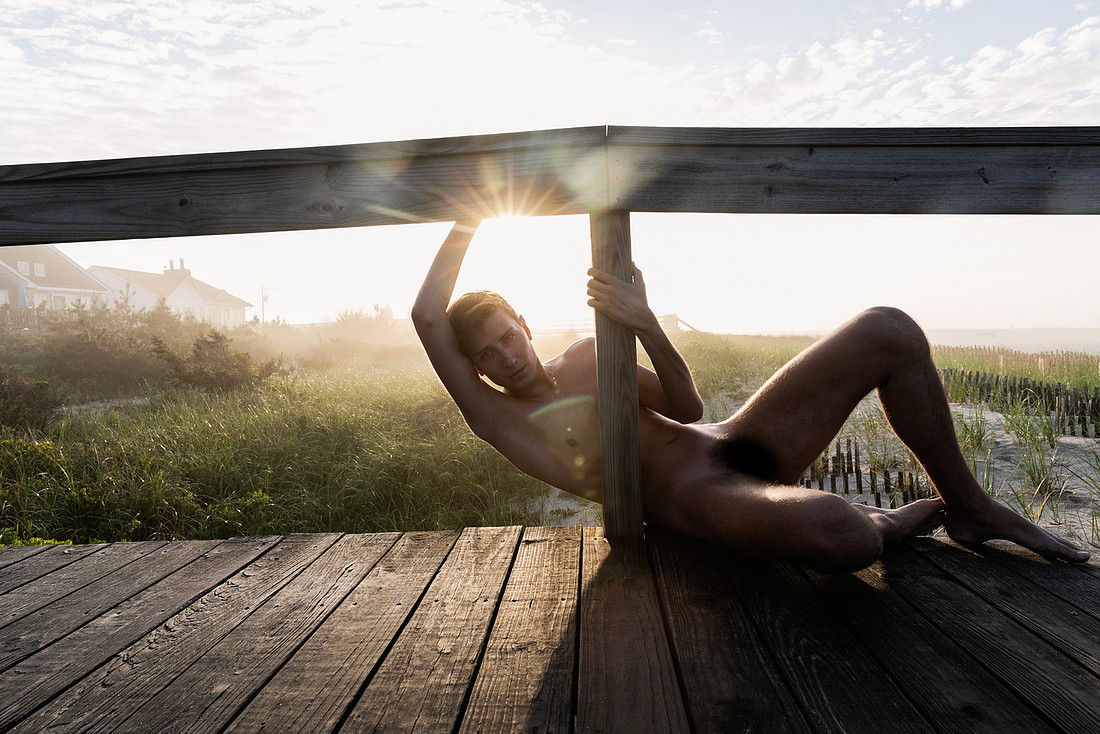
A Living Archive
Many of the places that defined Fire Island have changed over the years.
Nightclubs have closed. Businesses have disappeared. Familiar faces are remembered through photographs.
That's why documentary photography matters.
Every image preserves not only people but also traditions, architecture, friendships, celebrations, and everyday moments that future generations may never experience firsthand.
My goal has always been to create more than beautiful photographs.
I want to preserve the history of a remarkable community.
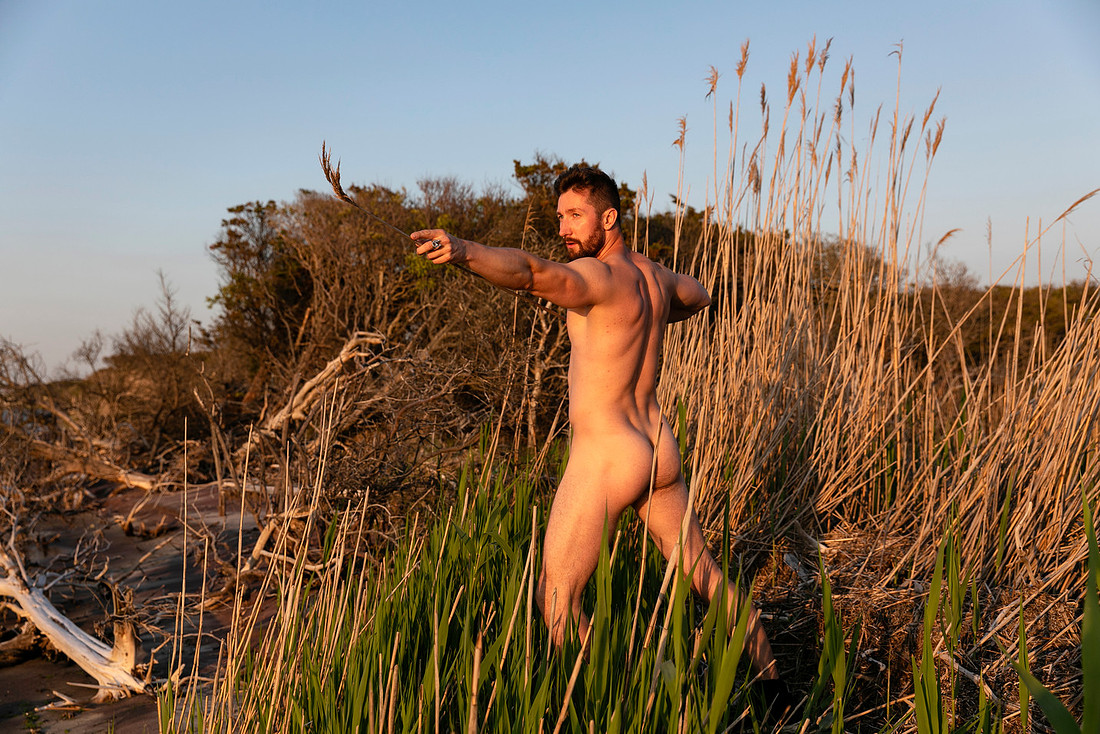
Why These Photographs Matter Today
At a time when millions of images are uploaded every day, documentary photography has become more valuable than ever.
Unlike snapshots designed for social media, documentary photographs preserve context. They tell stories. They become historical evidence.
For more than twenty-five years, I've been fortunate to document Fire Island from within its community, creating a visual record that reflects not only its famous nightlife and beaches but also its humanity.
The story of nudity on Fire Island isn't about nudity at all.
It's about belonging.
It's about acceptance.
It's about finding a place where people can finally feel comfortable in their own skin.
And that story deserves to be preserved.
]]>
Photographed by acclaimed queer photographer koitz, this image captures the spirit of the 2011 Pines Party, themed "Once Upon a Pines Party." Three revelers pose in imaginative fairy-tale-inspired costumes, reflecting the creativity, freedom, and community that have defined one of Fire Island's most celebrated LGBTQ+ events for decades.
Every summer, thousands travel to Fire Island Pines for what has become one of the world's most famous LGBTQ+ beach parties. Known for spectacular costume themes, internationally renowned DJs, live performances, and sunrise celebrations on the sand, the Pines Party is far more than a weekend of music—it is a tradition that celebrates community while giving back.
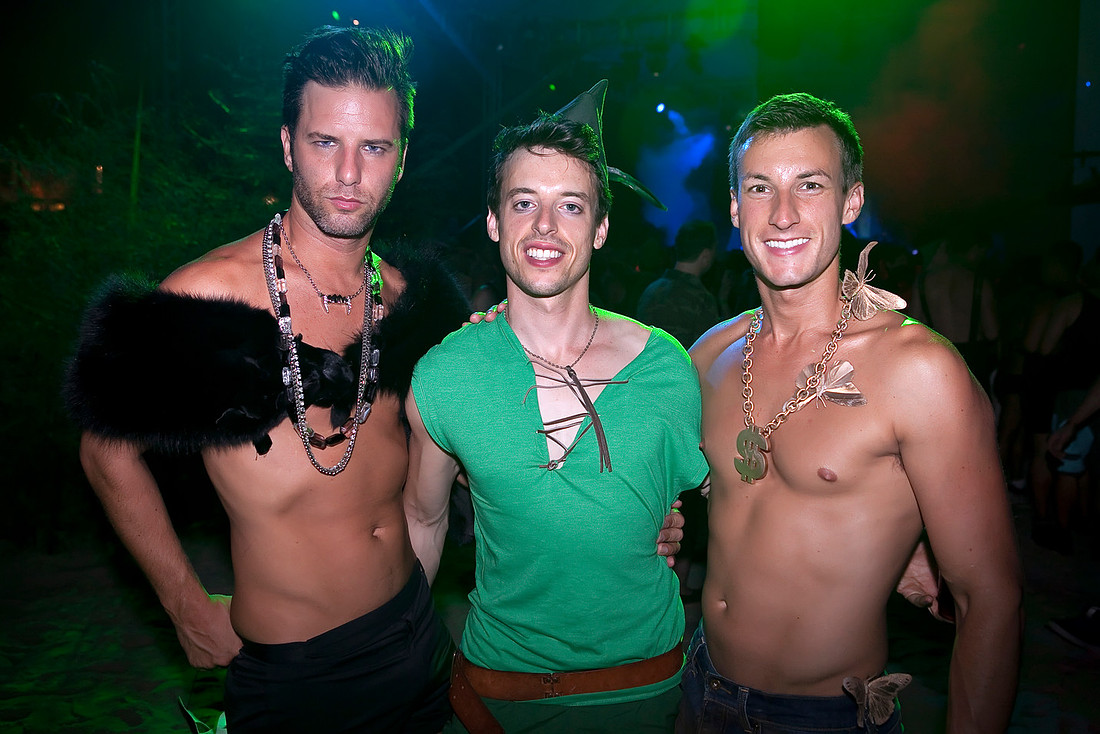
More Than a Beach Party
Since its founding, the Pines Party has combined entertainment with philanthropy. Now in its 27th year, the event has raised more than $4.8 million for organizations that support the LGBTQ+ community and preserve Fire Island Pines.
Beneficiaries include:
- Stonewall Community Foundation, one of the nation's leading LGBTQ+ public foundations.
- The Pines Foundation, which supports the Fire Island Pines community.
- The Fire Island Pines Seashore Defense Fund, established by the Fire Island Pines Property Owners Association (FIPPOA) to help protect the community during emergencies.
This unique combination of celebration and charitable giving has made the Pines Party one of the most important fundraising events in LGBTQ+ culture.
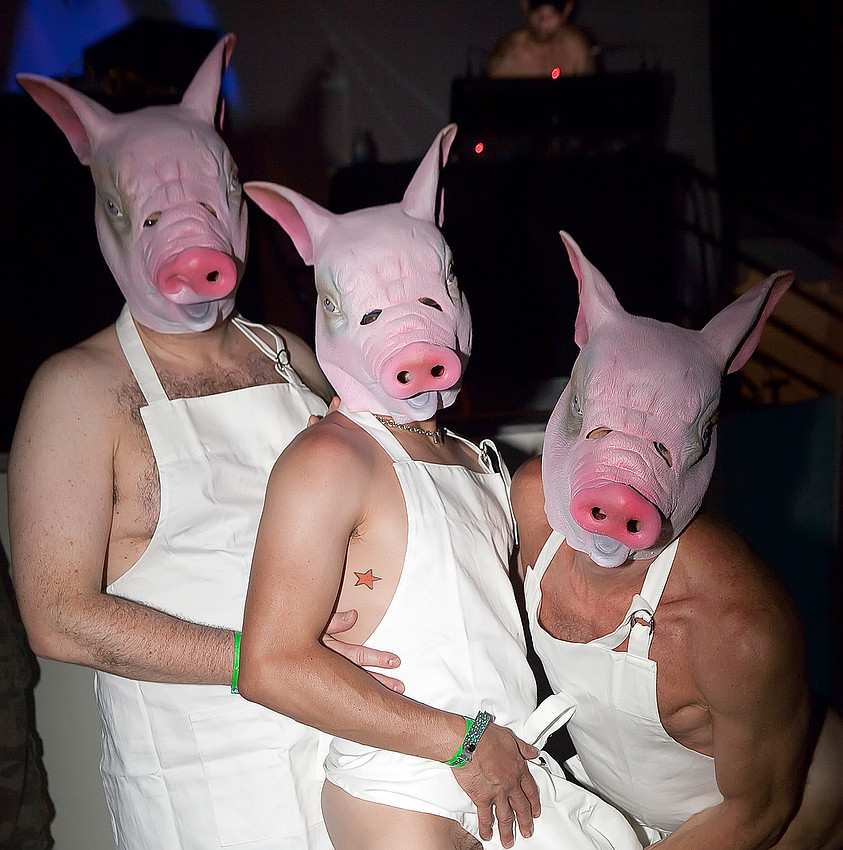
The Magic of "Once Upon a Pines Party"
The 2011 edition embraced a whimsical fairy-tale theme that encouraged attendees to transform themselves into storybook-inspired characters. Creative costumes, theatrical accessories, and imaginative styling turned the beachfront into a fantasy world unlike any other.
Koitz's photograph perfectly captures that atmosphere, preserving a moment when fashion, performance, and community came together beneath the lights of Fire Island Pines.
The 2026 Pines Party
This year's Pines Party returns July 31 through August 2, bringing another unforgettable weekend of music, performances, and fundraising to Fire Island Pines. The legendary Beach Party remains the centerpiece of the celebration, with additional events taking place throughout the community.
For many attendees, the Pines Party is more than an annual tradition—it's a celebration of LGBTQ+ resilience, friendship, creativity, and generosity that continues to inspire new generations.
Whether remembered through photographs like this one or experienced firsthand on the beach, the Pines Party remains one of the defining events in LGBTQ+ nightlife and Fire Island history.
Photo: © koitz – 2011 Pines Party, "Once Upon a Pines Party."
Cherry Grove Through the Lens of koitz is a visual chronicle of one of America's most historic LGBTQ+ communities. Over two decades, Basque-American photographer koitz has documented life in Cherry Grove and neighboring Fire Island Pines in Fire Island, capturing everything from intimate portraits and beach life to iconic community traditions and nightlife.
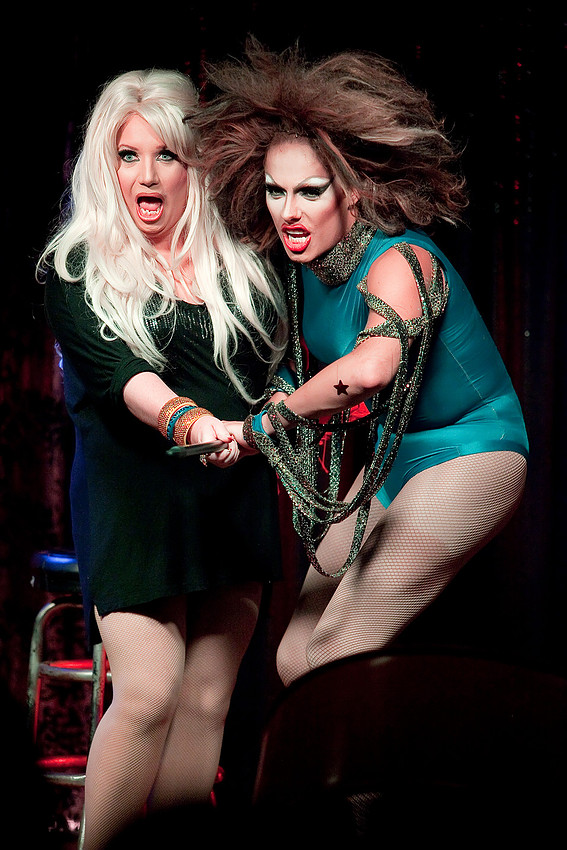
His work is notable for:
- Celebrating queer joy and freedom, portraying Cherry Grove as a place where LGBTQ+ people can express themselves openly.
- Documenting community traditions, especially the famous Invasion of the Pines, drag performances, parties, and seasonal gatherings.
- Blending documentary and fine-art photography, using natural light, vibrant color, and candid moments to preserve both the people and the spirit of Fire Island.
- Creating a historical archive, with many of his photographs becoming part of the Cherry Grove Archives Collection, helping preserve the cultural history of this pioneering LGBTQ+ haven.
A major milestone in his work was the 2020 publication of koitz Gay Fire Island, a photography book covering 14 years of queer life in Cherry Grove and Fire Island Pines. The book was recognized by curator Elizabeth Avedon as one of the notable photography books of 2020.
The Cherry Grove Archives has also featured "koitz Art Walk", an outdoor exhibition combining large-format photographs with audio stories from residents and the photographer himself, offering visitors both visual and oral histories of the community.
Overall, koitz's photographs serve not only as striking works of art but also as an important record of LGBTQ+ culture, preserving moments of celebration, resilience, intimacy, and belonging in one of the world's most iconic queer destinations.
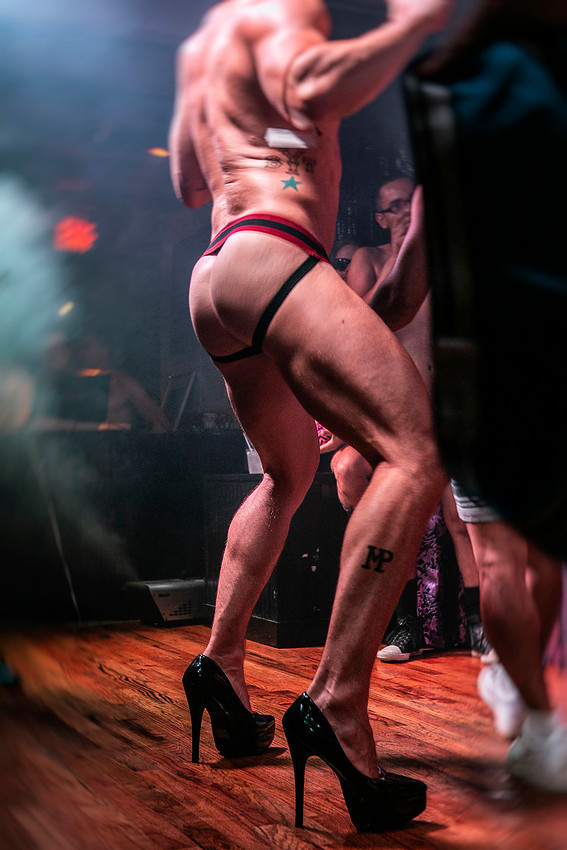
]]>
New York City has long been one of the world's great centers of LGBTQ+ culture, where nightlife, art, performance, and personal expression intersect. From historic neighborhoods and legendary clubs to Pride celebrations, drag performances, Fire Island gatherings, and fine art nude photography, the city has inspired generations of artists and photographers. More than documenting events, queer nightlife photography preserves the people, places, and moments that define a community's history, identity, creativity, and freedom. For more than two decades, koitz has captured these authentic experiences through documentary and fine art photography, creating a lasting visual archive of New York's vibrant LGBTQ+ communities.
From historic neighborhoods and legendary nightlife venues to Pride celebrations, drag performances, and the iconic communities of Fire Island, the city has inspired generations of artists, activists, performers, and photographers. Queer nightlife photography in New York is about far more than documenting parties—it preserves the people, places, and moments that define a community's history and identity.
For more than two decades, koitz has photographed New York's queer nightlife through a blend of documentary and fine art photography. His work captures authentic moments from Manhattan, Brooklyn, Fire Island Pines, and Cherry Grove, creating an evolving visual archive of one of the world's most influential LGBTQ+ communities.
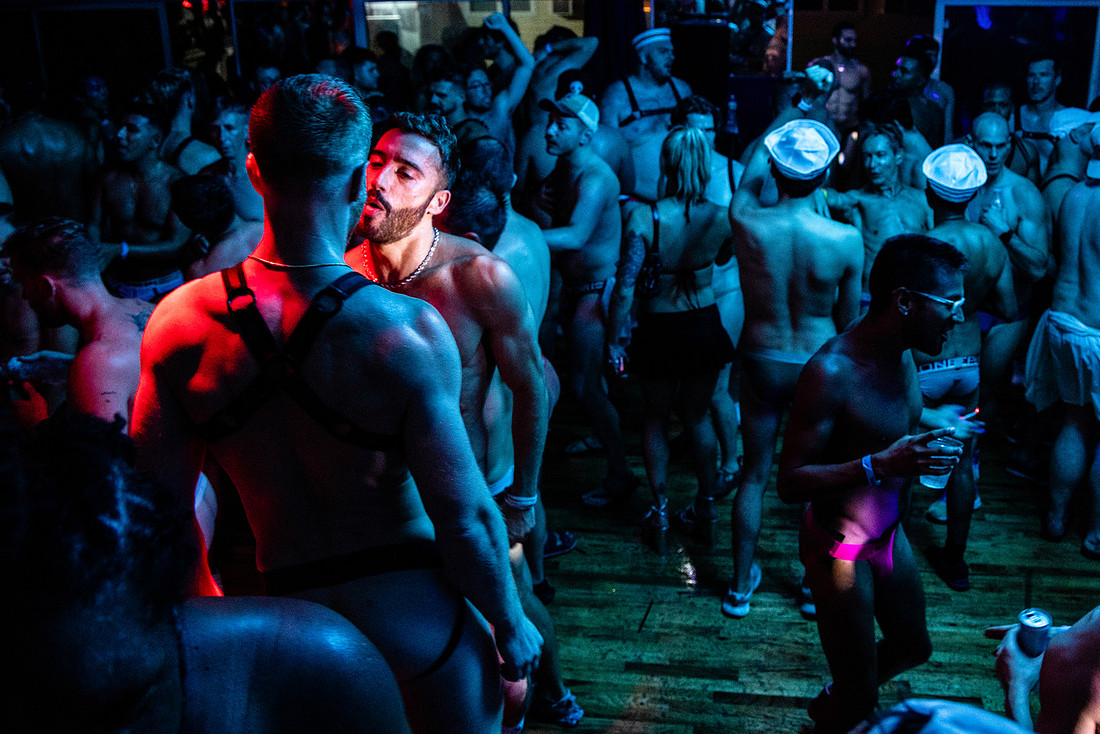
Why Queer Nightlife Photography Matters
For much of LGBTQ+ history, nightlife offered something that was difficult to find elsewhere: a place to gather openly, celebrate identity, and build community. Clubs, bars, cabarets, beaches, and cultural events became spaces where friendships were formed, creativity flourished, and movements for equality found their voice.
Photographing these environments means documenting much more than entertainment. Every image preserves a piece of living history—whether it is a legendary drag performance, a spontaneous dance floor celebration, a quiet conversation at sunset, or the excitement of a Pride weekend.
Documentary photography plays an essential role in preserving these stories for future generations, especially as venues close, neighborhoods evolve, and communities continue to change.
New York City After Dark
Few cities transform after sunset quite like New York.
The glow of Times Square, the energy of downtown Manhattan, Brooklyn's creative neighborhoods, rooftop gatherings, underground clubs, and waterfront celebrations create an atmosphere unlike anywhere else in the world. For photographers, these environments offer dramatic light, emotion, movement, and genuine human connection.
Rather than staging scenes, koitz approaches nightlife photography as visual storytelling. His photographs focus on authentic interactions, capturing the atmosphere of each event while respecting the people who make these spaces so meaningful.
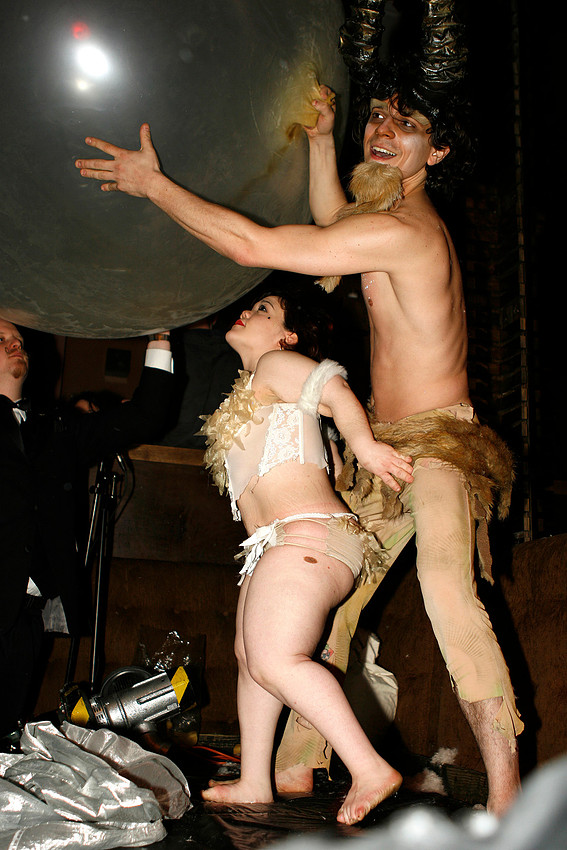
Fire Island: A Cultural Landmark
No discussion of queer nightlife photography in New York would be complete without Fire Island.
For decades, Cherry Grove and Fire Island Pines have served as internationally recognized destinations where LGBTQ+ people could celebrate freedom, creativity, and community. These beach communities have welcomed artists, performers, writers, and visitors from around the world, becoming symbols of resilience and belonging.
koitz has documented Fire Island for more than twenty years, photographing its beaches, architecture, legendary events, and everyday life. From the annual Invasion of the Pines to sunset gatherings along the boardwalks, his images preserve traditions that continue to shape queer culture today.
Photographing Drag, Pride, and Community
Queer nightlife photography encompasses many different forms of expression.
Some evenings revolve around spectacular drag performances and live entertainment. Others celebrate Pride, community fundraisers, beach parties, cultural festivals, or intimate portrait sessions between friends.
Every event contributes to a larger story about identity, creativity, and belonging.
koitz's documentary approach allows these moments to unfold naturally, creating photographs that feel honest, timeless, and emotionally connected to the communities they represent.
Documentary Photography Meets Fine Art
The strongest documentary photographs often become works of fine art.
By combining careful composition with authentic storytelling, koitz creates images that are both historically significant and visually compelling. His work has been collected by photography enthusiasts, LGBTQ+ community members, interior designers, and collectors seeking artwork with genuine cultural value.
Each photograph reflects a moment that cannot be recreated—a celebration, a performance, a friendship, or a landscape that continues to evolve with time.
Preserving LGBTQ+ History Through Photography
Photography has become one of the most powerful ways to preserve LGBTQ+ history.
Many of the venues, performers, and community spaces that defined previous generations exist today only through photographs. As New York continues to change, visual documentation becomes increasingly important.
This growing archive represents more than individual events. It tells the ongoing story of people who have shaped New York's artistic, cultural, and social landscape through visibility, resilience, and creativity.
Explore the Collection
The Nightlife by koitz collection celebrates more than two decades of queer nightlife photography in New York City and Fire Island. From documentary images of Pride celebrations and drag performances to quiet beach sunsets and vibrant nightlife, the collection offers a unique perspective on LGBTQ+ life captured from within the community.
If you are interested in collecting fine art photography, licensing editorial images, or commissioning documentary photography for cultural organizations, events, publications, or hospitality projects, we invite you to explore the gallery and discover the stories behind each photograph.
]]>
Featuring Photographs by koitz
For almost three decades, the Pines Party has been one of the most iconic LGBTQ+ events in the United States. Held each summer on the pristine beaches of Fire Island Pines, New York, the celebration combines music, spectacular productions, imaginative costumes, and a powerful sense of community, attracting visitors from around the world.
Founded in 1999 as a fundraiser for the Stonewall Community Foundation, the Pines Party is much more than an all-night dance event. It represents a tradition of inclusion, artistic expression, and philanthropy, raising millions of dollars to support LGBTQ+ organizations and initiatives.
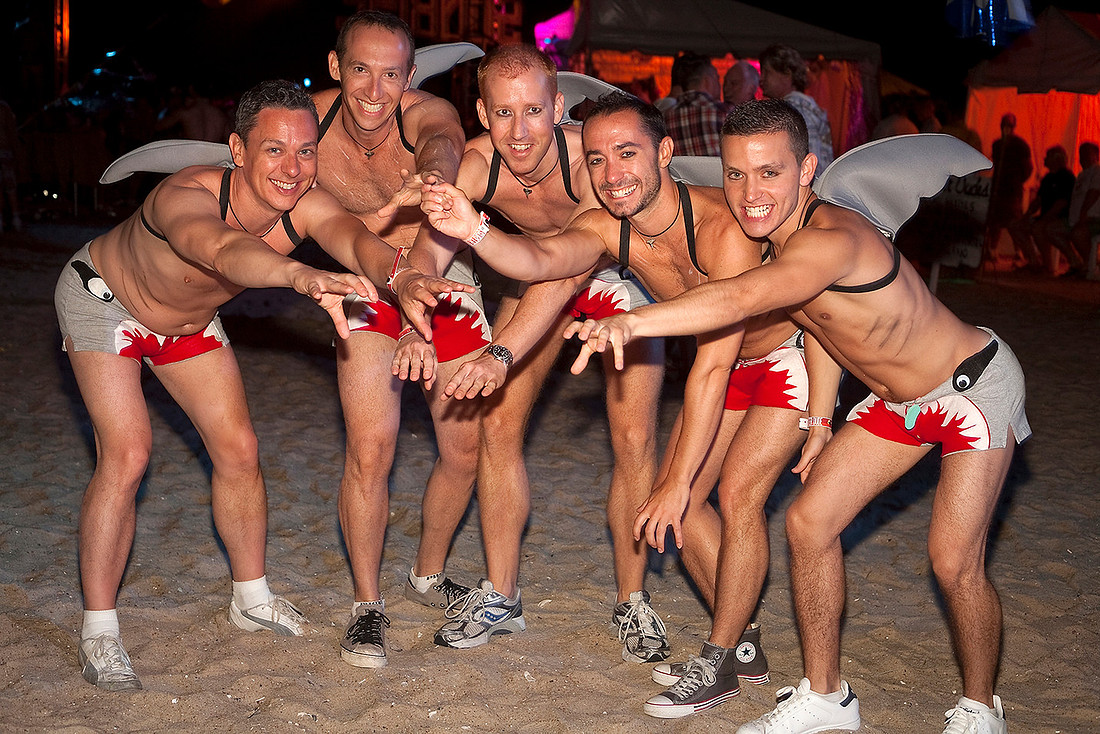
A Celebration of Creativity
One of the defining features of the Pines Party is the creativity of its attendees. Every year, guests arrive in elaborate costumes inspired by fairy tales, mythology, pop culture, marine life, fantasy, and summer themes. From playful shark outfits and surfers to Robin Hood-inspired ensembles and the Three Little Pigs, the event showcases an extraordinary display of imagination and individuality.
As night falls, Fire Island's beachfront transforms into an open-air dance floor where internationally renowned DJs, immersive lighting, and artistic performances create one of the most distinctive party experiences in the world.
Fire Island's LGBTQ+ Legacy
Fire Island Pines has long been regarded as one of America's most important LGBTQ+ destinations. Since the mid-20th century, it has offered a welcoming space where generations of gay men, lesbians, bisexual, transgender, and queer people have gathered to celebrate identity, friendship, and freedom.
The Pines Party has become a symbol of that legacy, blending celebration with community support through its charitable mission.
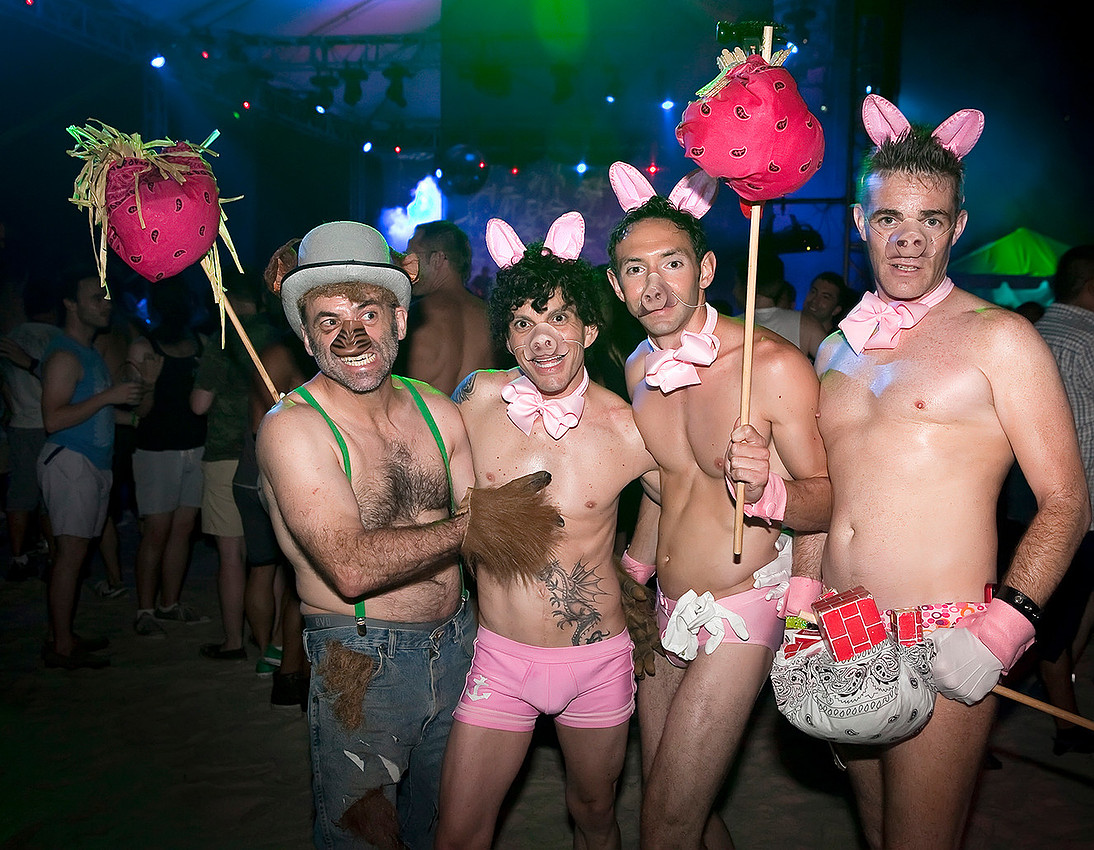
koitz's Photographic Record
The photographs in this gallery, captured by koitz, document the vibrant spirit of the Pines Party. Rather than focusing solely on the spectacle, koitz's images highlight the personalities, creativity, and joy of the participants.
From groups dressed as sharks on the beach to playful fairy-tale characters, colorful dancers, and surfers arriving beneath the iconic Pines Party banner, the photographs offer an authentic glimpse into one of Fire Island's most memorable celebrations. His work preserves not only the elaborate costumes and festive atmosphere but also the sense of camaraderie that has made the event a landmark of LGBTQ+ culture.
Today, these photographs serve as both artistic documentation and historical testimony to an event that continues to define Fire Island's summer season.
]]>
The koitz Fire Island Archive is more than a photography collection. It is a growing visual record of LGBTQ+ life, documenting the people, places, traditions, and cultural moments that have shaped Fire Island Pines, Cherry Grove, and New York's queer community over more than three decades.
Rather than presenting photographs as isolated images, the archive organizes them through stories, communities, events, and themes. Every photograph contributes to a larger narrative about identity, belonging, creativity, and the history of one of America's most influential LGBTQ+ destinations.
Whether you are a researcher, historian, curator, student, collector, or simply someone interested in Fire Island, the archive offers multiple ways to discover its photographs.
Begin with Fire Island
For many visitors, Fire Island is the starting point.
The archive documents two historic LGBTQ+ communities:
- Fire Island Pines
- Cherry Grove
Together these neighboring communities have served as places of freedom, artistic expression, activism, friendship, and chosen family for generations.
Photographs explore both iconic locations and everyday moments, creating a visual history that spans decades.
Explore by Subject
One of the easiest ways to navigate the archive is through its subjects.
Major collections include:
- Portrait photography
- LGBTQ+ community life
- Pride celebrations
- Drag performance
- Beach culture
- Artists and performers
- Architecture
- Documentary photography
- Nightlife
- Performance art
- Public events
- Community gatherings
Each collection reveals a different aspect of Fire Island's cultural identity while connecting to the broader story of LGBTQ+ history.
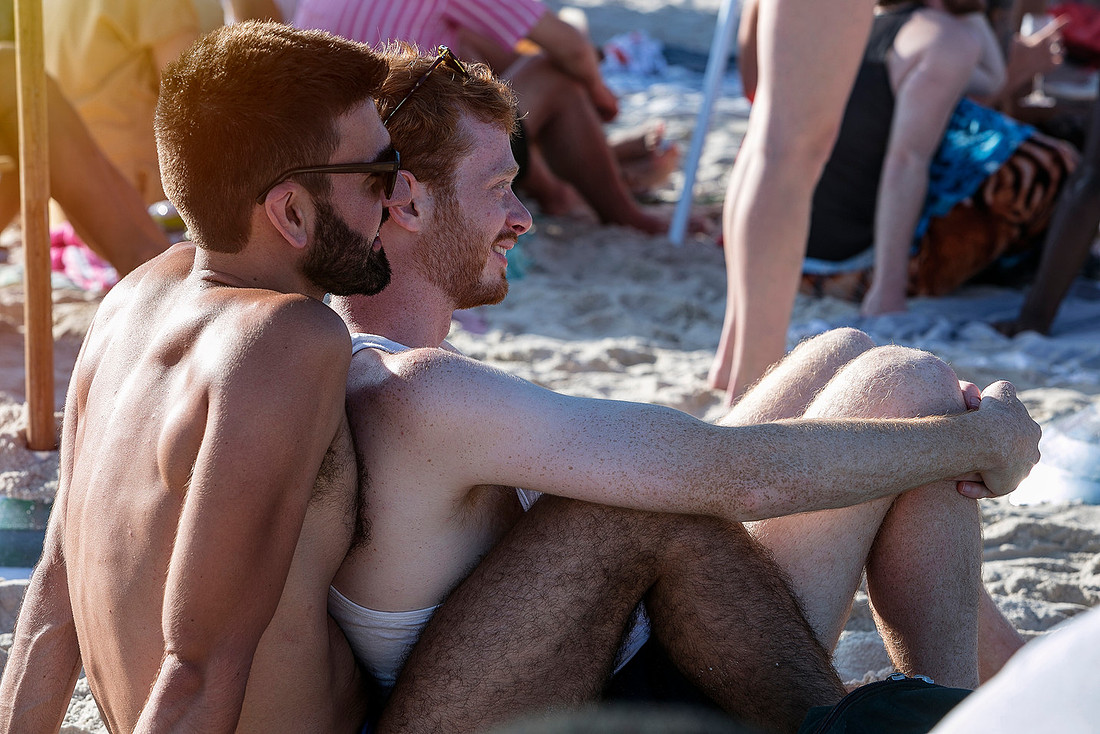
Discover the People
People are at the heart of the archive.
Thousands of photographs document:
- Artists
- Performers
- Activists
- Writers
- Musicians
- Dancers
- Community leaders
- Friends
- Visitors
- Longtime residents
Many individuals appear throughout multiple years, allowing viewers to see both personal stories and the evolution of the community over time.
The archive also includes portraits of internationally recognized cultural figures alongside everyday members of the Fire Island community, reflecting the belief that every life contributes to history.
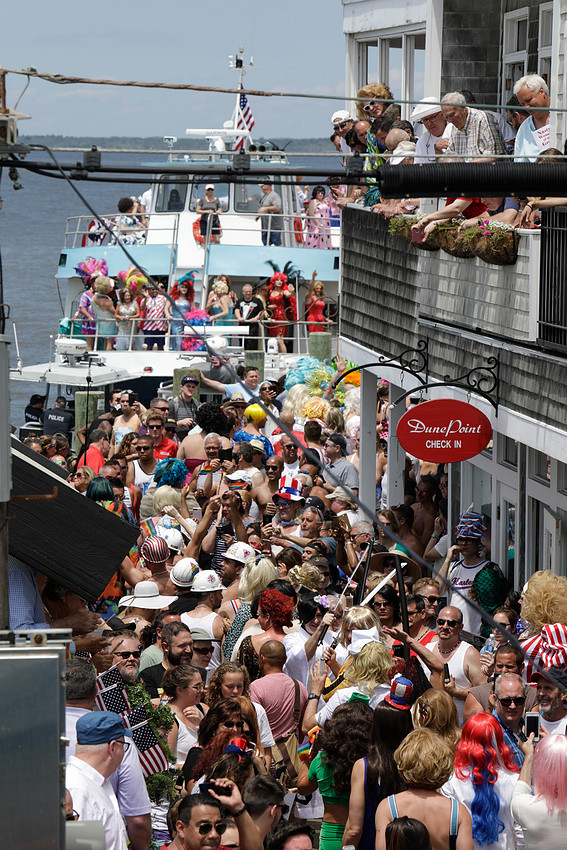
Follow the Story Through Time
The archive spans more than three decades of photography.
Exploring photographs chronologically allows visitors to see how Fire Island has evolved through changing architecture, fashions, performances, public events, and community traditions.
Rather than documenting isolated moments, the archive reveals continuity across generations.
This long-term perspective transforms photography into an important historical resource.
Explore Through Projects
Many photographs belong to larger creative and documentary projects.
These include:
- Gay Fire Island
- In the Meat Rack
- Exhibition projects
- Documentary photography series
- Portrait collections
- Public history collaborations
Viewing photographs within these projects provides additional historical and cultural context.
Beyond Photography
The archive extends beyond still images.
Related work includes:
- Documentary filmmaking
- Journalism
- Books
- Oral stories
- Podcast interviews
- Public exhibitions
- Community history projects
Together these materials create a richer understanding of LGBTQ+ culture than photography alone.
Why Context Matters
Every photograph gains meaning through context.
Captions, dates, locations, events, and historical notes help connect images to the people and communities they represent.
A portrait becomes more than a face.
A celebration becomes more than a party.
A beach scene becomes part of the history of Fire Island.
By preserving both photographs and their stories, the archive ensures that future generations can understand not only what happened, but why it mattered.
A Living Archive
Unlike a completed museum collection, the koitz Fire Island Archive continues to grow.
Each season brings new portraits, community events, artistic collaborations, performances, and documentary projects. New photographs join older ones, expanding an archive that records both continuity and change.
As Fire Island evolves, so does the archive, preserving an ongoing visual history of LGBTQ+ life.
Begin Your Journey
Every visitor discovers the archive differently.
Some begin with portraits.
Others are drawn to documentary photography, Pride celebrations, architecture, drag performance, or the landscapes of Fire Island.
However you choose to explore, each photograph is connected to a larger story of community, resilience, creativity, and belonging.
Together, these images form one of the most comprehensive visual archives of contemporary LGBTQ+ life on Fire Island, preserving not only remarkable moments but also the people who made them possible.
Frequently Asked Questions
What is the koitz Fire Island Archive?
The koitz Fire Island Archive is an ongoing photographic archive documenting LGBTQ+ life in Fire Island Pines, Cherry Grove, and New York City through portraiture, documentary photography, exhibitions, books, and filmmaking.
What subjects does the archive include?
The archive includes portraits, Pride celebrations, drag performances, artists, architecture, community events, nightlife, beach culture, documentary photography, and everyday life.
Who uses the archive?
Researchers, museums, educators, journalists, historians, collectors, students, and members of the LGBTQ+ community use the archive to explore Fire Island's cultural history and visual heritage.
Is the archive still growing?
Yes. koitz continues to photograph Fire Island, adding new work each season and expanding the archive as the community continues to evolve.
]]>
Every photography book begins long before the first page is designed. It starts with years of observation, thousands of photographs, and a desire to preserve moments that might otherwise disappear.
For photographer koitz, Gay Fire Island was never intended as simply a collection of beautiful images. It became a visual history of a remarkable LGBTQ+ community—one shaped by friendship, creativity, celebration, resilience, and belonging.
Published in 2020, the book brings together fourteen years of photographs made in Fire Island Pines and Cherry Grove, two communities that have played an essential role in modern LGBTQ+ history. The images document not only iconic events and legendary parties but also the quieter moments that define everyday life: conversations on boardwalks, afternoons on the beach, portraits of friends, performers preparing backstage, sunsets shared with chosen family, and the rhythms of summer that have drawn generations to Fire Island.
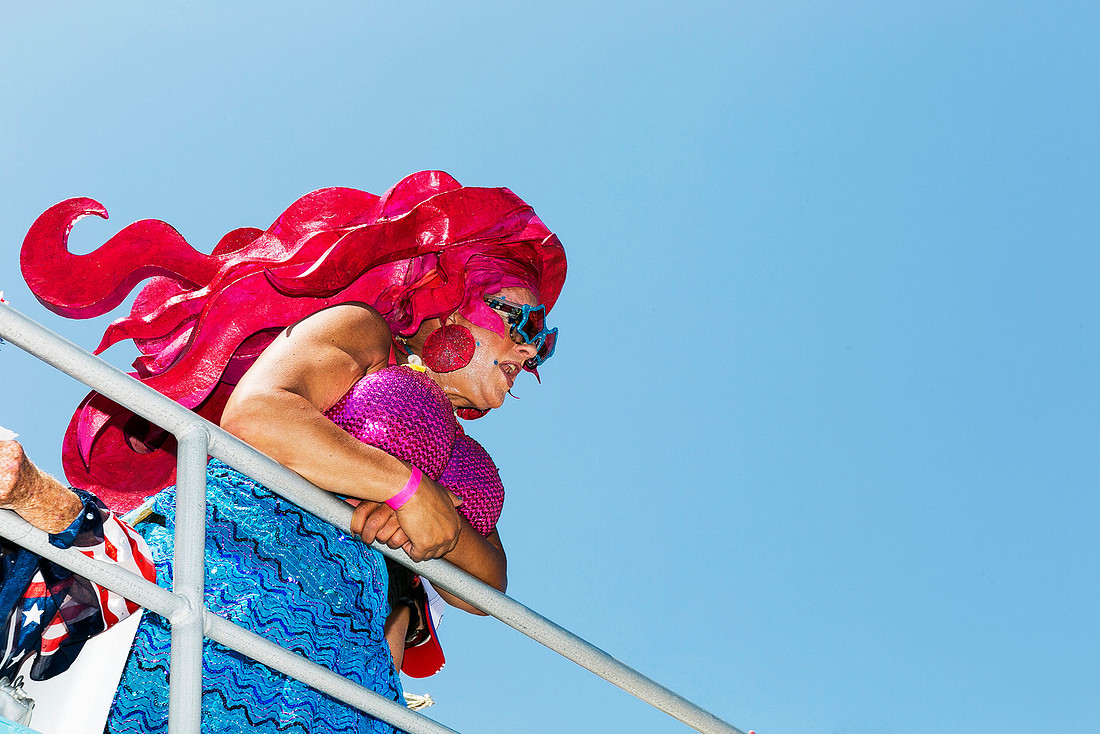
Photographing Without Knowing There Would Be a Book
When many of the photographs were made, there was no plan to publish them.
The work grew naturally through years of living within the community, camera in hand, documenting people and places as they evolved. The photographs accumulated season after season, becoming an increasingly rich archive of LGBTQ+ life.
Only later did it become clear that the collection represented something larger than individual images. Together they told the story of a community and a place that deserved to be preserved.
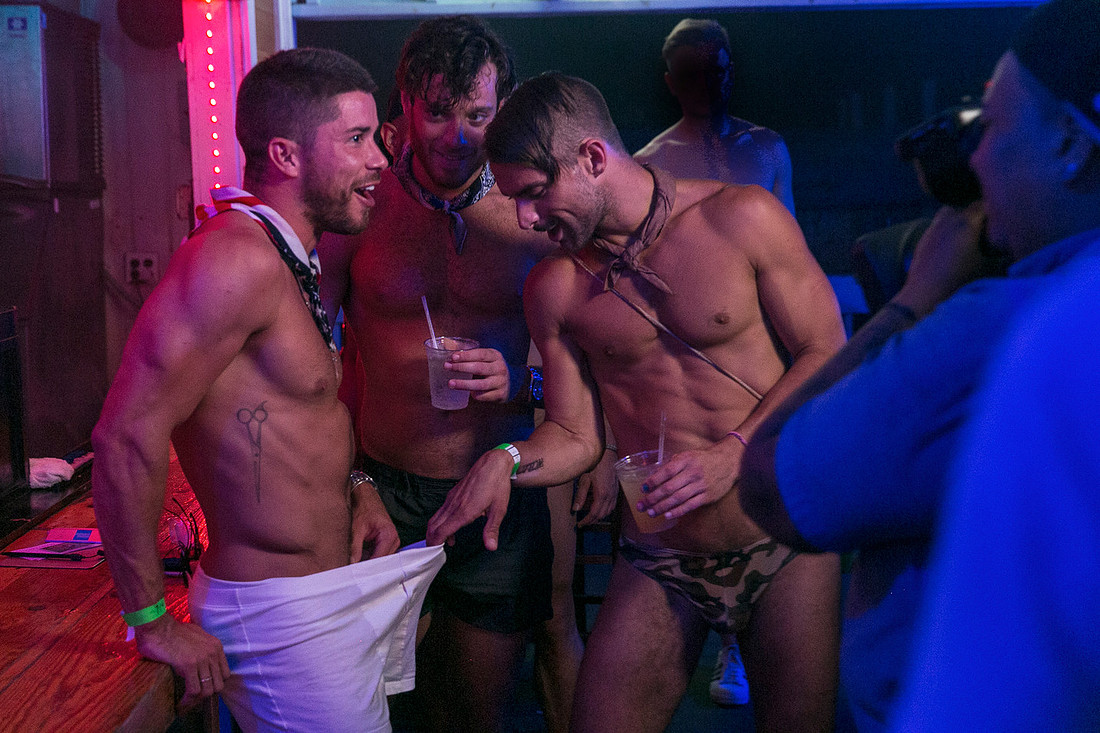
More Than Beaches and Parties
Fire Island is often associated with beaches, architecture, and summer celebrations. While those elements are certainly part of its identity, they represent only a small part of the story.
The photographs in Gay Fire Island explore the many dimensions of community life:
- Portraits of friends and longtime residents
- Drag performances and cabaret
- Pride celebrations
- Artists and performers
- Everyday moments
- Beach culture
- Community gatherings
- Quiet landscapes
- Intimate conversations
- Shared traditions
Together these images reveal a place where identity, creativity, and belonging intersect.
Building a Visual Archive
As the collection expanded, it became clear that the photographs documented more than personal memories.
They preserved changing architecture, evolving fashions, community traditions, public events, and the people who shaped Fire Island's cultural life. Many of the individuals photographed returned year after year, allowing the archive to document the passage of time as well as the continuity of community.
Viewed together, the photographs form one of the most comprehensive visual records of contemporary LGBTQ+ life on Fire Island.
Editing Thousands of Images
Creating a photography book is an act of selection.
From thousands of photographs made over fourteen years, only a small number could be included. Each image needed to contribute to a larger narrative rather than simply stand alone.
The editing process focused on balancing portraits with landscapes, celebrations with quieter moments, well-known figures with everyday community members, and documentary observation with visual storytelling.
The result is a book that reflects both the energy and the intimacy of Fire Island.
A Book About Community
Although individual photographs feature specific people, Gay Fire Island is ultimately a portrait of community.
It celebrates friendships formed over decades, chosen families, artistic expression, and the freedom that Fire Island has offered generations of LGBTQ+ people.
The photographs show a place where people gather not only to escape everyday life but to create lasting relationships and shared traditions.
Recognition and Legacy
Following its publication, Gay Fire Island was recognized by photography curator Elizabeth Avedon as one of the outstanding photography books of 2020.
More importantly, the book has become part of a growing effort to preserve LGBTQ+ visual history. Museums, archives, researchers, and readers increasingly recognize the importance of documenting communities whose stories have often been overlooked in traditional historical records.
As Fire Island continues to evolve, the photographs in Gay Fire Island preserve a particular moment in its cultural history while contributing to a broader understanding of queer life in America.
Continuing the Archive
The publication of Gay Fire Island did not mark the end of the project.
Photography continues.
New portraits are made each season.
Community traditions evolve.
New generations arrive while longtime residents continue to shape the character of Fire Island.
The archive grows alongside the community it documents, ensuring that today's photographs will become tomorrow's history.
Gay Fire Island is therefore more than a photography book. It represents one chapter in an ongoing commitment to documenting LGBTQ+ life through photography, preserving not only remarkable images but also the stories, relationships, and communities that give those images meaning.
Frequently Asked Questions
What is Gay Fire Island?
Gay Fire Island is a photography book by koitz, published in 2020, featuring fourteen years of documentary and portrait photography from Fire Island Pines and Cherry Grove.
What does the book document?
The book documents LGBTQ+ community life, including portraits, artists, performers, Pride celebrations, beach culture, architecture, nightlife, and everyday moments that define Fire Island.
Why was Gay Fire Island created?
The book was created to preserve an important visual history of Fire Island's LGBTQ+ communities and to share photographs that collectively document more than a decade of community life.
Is the project still ongoing?
Yes. koitz continues to photograph Fire Island, expanding an archive that now spans decades and documents the continuing evolution of LGBTQ+ culture and community.
]]>
Portrait photography has long played an important role in documenting LGBTQ+ history. More than simply recording a person's appearance, a portrait can capture identity, confidence, friendship, performance, and a sense of belonging. On Fire Island, where generations of LGBTQ+ people have gathered to celebrate community and self-expression, portraits become both personal memories and historical documents.
For more than two decades, koitz, a Basque-American queer photographer, has created portraits throughout Fire Island Pines and Cherry Grove, documenting the people who have shaped one of the world's most significant LGBTQ+ communities. His work celebrates not only well-known performers and artists but also friends, neighbors, visitors, and longtime residents whose stories form the fabric of Fire Island's cultural life.
Portraiture as Community Documentation
Every portrait tells two stories.
The first belongs to the individual—their personality, style, confidence, and presence.
The second belongs to the community that surrounds them.
Fire Island has always been more than a vacation destination. For many LGBTQ+ people, it represents a place where identity can be expressed openly, friendships become chosen family, and creativity flourishes. Portrait photography preserves these experiences, documenting the people who have built and sustained this unique community over time.
By photographing individuals across decades, koitz has created an archive that reflects both personal identity and collective history.
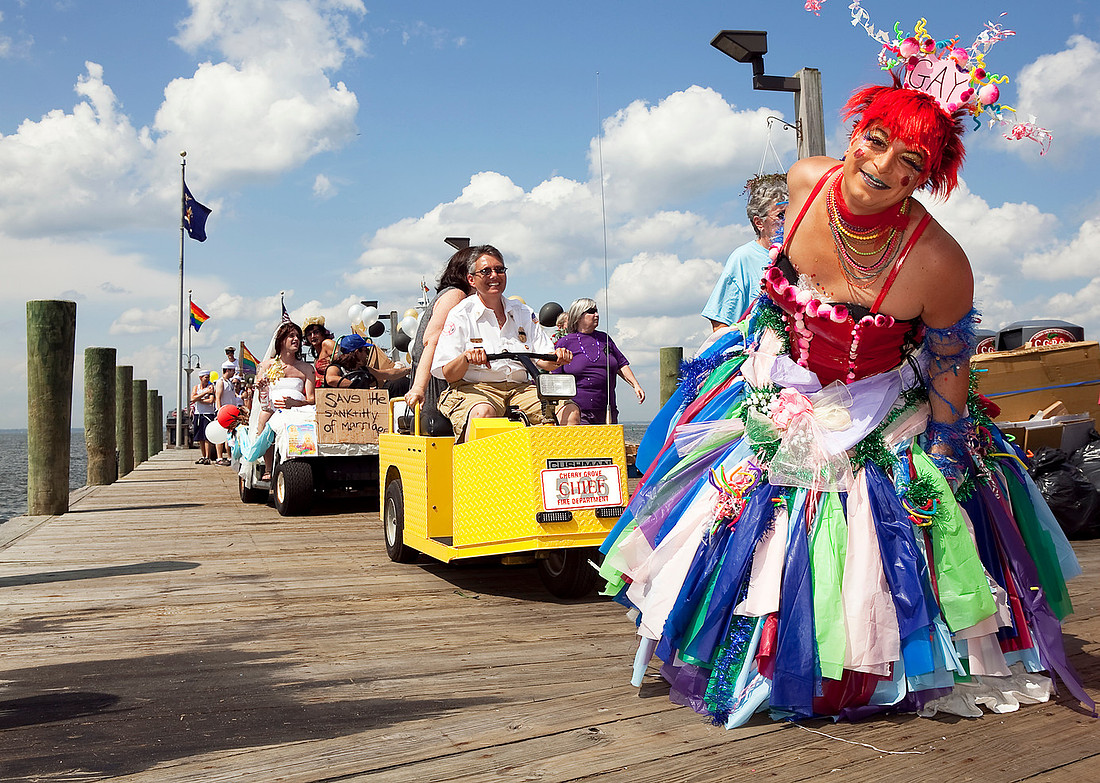
Performance as Identity
Performance is woven into the culture of Fire Island.
Drag artists, musicians, dancers, actors, DJs, and entertainers have transformed stages, beaches, homes, and public spaces into places of creativity and celebration. Portraits of performers capture far more than costumes or theatrical moments—they reveal confidence, artistry, humor, vulnerability, and self-expression.
Whether photographed backstage, during rehearsals, at community events, or in spontaneous moments, these portraits preserve the creative energy that has long defined Fire Island's cultural landscape.
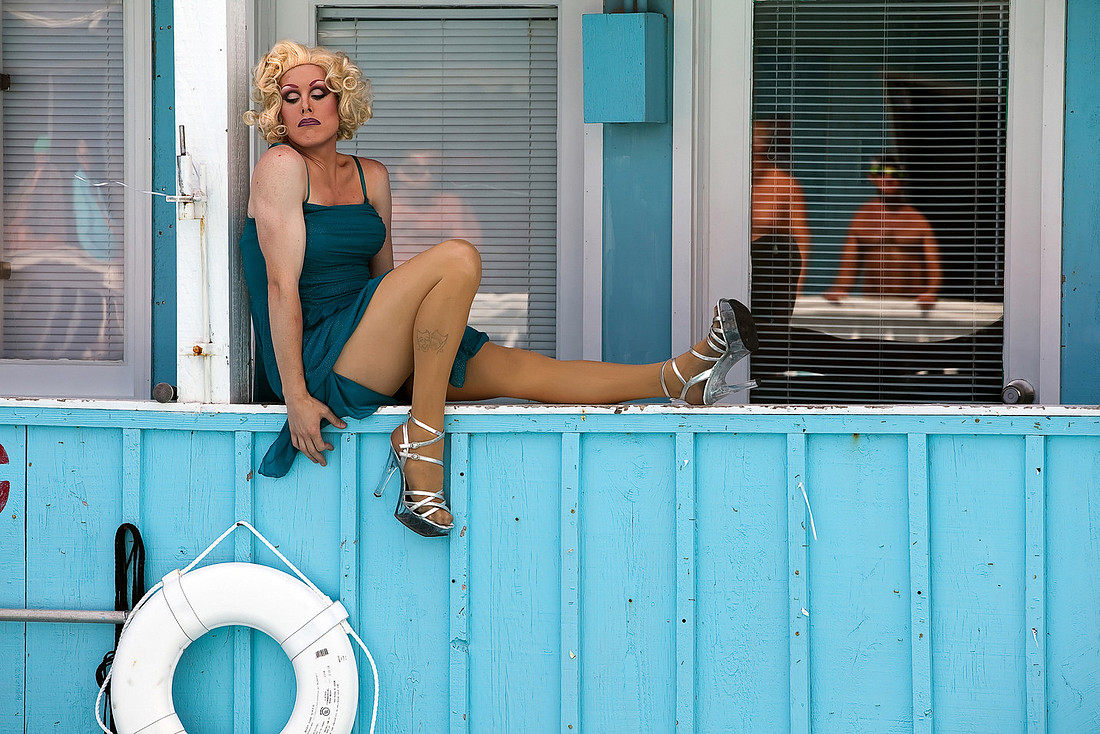
Portraits Beyond Celebrity
While koitz has photographed internationally recognized artists and performers, his archive places equal importance on everyday members of the community.
A portrait of friends walking the beach, neighbors gathering for sunset, or longtime residents sharing stories contributes just as much to the historical record as photographs of public figures.
This democratic approach reflects the belief that LGBTQ+ history is created collectively. Every individual contributes to the evolving story of Fire Island.
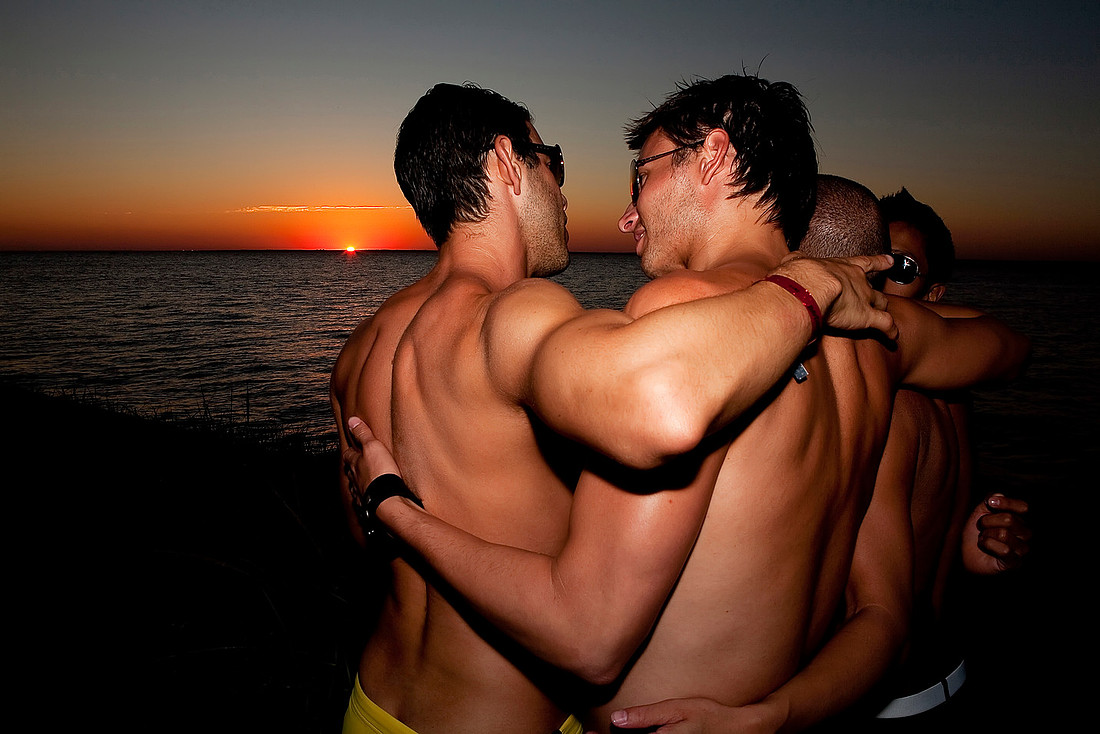
Natural Light and Place
Fire Island itself is an active participant in every portrait.
The beaches, dunes, boardwalks, waterfronts, gardens, and distinctive architecture provide more than beautiful settings—they communicate a sense of place that is inseparable from the people being photographed.
Natural light, open landscapes, and seasonal changes shape the atmosphere of each image, creating portraits that feel connected to the environment rather than isolated from it.
These visual elements help viewers understand not only who is being photographed but where their stories unfold.
Portrait Photography as Historical Record
As communities evolve, portrait photography becomes increasingly valuable.
Faces change.
Generations succeed one another.
Buildings disappear.
Traditions evolve.
Portraits preserve these transitions, creating a visual timeline that future historians, researchers, and community members can revisit.
For LGBTQ+ communities, whose histories have often been overlooked or excluded from traditional archives, portrait photography provides an essential record of lived experience.
Belonging in Front of the Camera
One of the defining qualities of Fire Island portraiture is its sense of belonging.
Rather than observing from a distance, many photographs emerge from relationships built over years of trust, friendship, and shared experiences. This closeness allows subjects to appear naturally, revealing genuine expressions rather than formal poses.
The resulting portraits communicate authenticity, warmth, and connection—qualities that define both the photographs and the community they document.
Building an Archive of Queer Life
Taken individually, each portrait captures a single moment.
Viewed together, thousands of portraits become something much larger: a visual archive documenting the evolution of LGBTQ+ life on Fire Island.
They preserve artists and activists, performers and residents, celebrations and quiet conversations, ensuring that future generations can see the people whose lives shaped this extraordinary community.
Through photography, koitz continues to expand an archive that celebrates diversity, creativity, resilience, and belonging—one portrait at a time.
Frequently Asked Questions
What makes Fire Island portrait photography unique?
Fire Island portrait photography reflects the history, culture, and community of Fire Island Pines and Cherry Grove, where LGBTQ+ people have gathered for generations. The portraits combine personal identity with a strong sense of place and community.
What does koitz photograph on Fire Island?
koitz photographs portraits, performers, artists, community members, Pride celebrations, drag performances, beach life, architecture, cultural events, and everyday moments throughout Fire Island Pines and Cherry Grove.
Why are portraits important in LGBTQ+ history?
Portraits preserve individual identities while documenting broader social and cultural history. They provide visual evidence of changing communities, fashion, artistic expression, and the diversity of LGBTQ+ life across generations.
How do portraits contribute to a photography archive?
Portraits add personal narratives to an archive, connecting individuals with specific places, events, and communities. Together they create a visual history that complements documentary photography and written records.
]]>
A photograph can capture a smile, a celebration, or a fleeting moment in time. But without context, even the most compelling image can lose much of its meaning. In a queer photography archive, context transforms photographs into historical documents, preserving not only what happened but also why it mattered.
For more than three decades, koitz, a Basque-American queer photographer, filmmaker, and journalist, has documented LGBTQ+ life in Fire Island Pines, Cherry Grove, and New York City. His archive extends far beyond a collection of images. It preserves the people, places, relationships, traditions, and cultural moments that have shaped queer communities across generations.
As LGBTQ+ history continues to gain recognition, contextual archives are becoming invaluable resources for historians, curators, educators, journalists, and future generations seeking to understand the evolution of queer life.
A Photograph Is Only the Beginning
Photography records what the camera sees. Context explains what the camera cannot.
Every archival photograph raises important questions:
- Who created the image?
- Who appears in the photograph?
- Where and when was it taken?
- What event or community does it represent?
- Why is this moment historically significant?
Answering these questions gives photographs lasting historical value.
A portrait taken on the beach at Fire Island may appear to be a simple summer scene. With contextual information, however, it becomes part of the history of one of America's most influential LGBTQ+ communities, documenting decades of community, artistic expression, activism, and chosen family.
Documenting LGBTQ+ Life Beyond the Headlines
Much of LGBTQ+ history has focused on landmark events such as the Stonewall uprising, the HIV/AIDS crisis, or marriage equality. While these moments remain essential, everyday life is equally important.
Through documentary photography, koitz has spent decades recording the quieter moments that define community:
- Pride celebrations
- Drag performances
- Artists and performers
- Beach culture
- Nightlife
- Portraits
- Community gatherings
- Cultural traditions
- Public art
- Friendships and chosen families
These photographs reveal the richness of queer life beyond headlines, preserving joy, creativity, intimacy, and resilience.
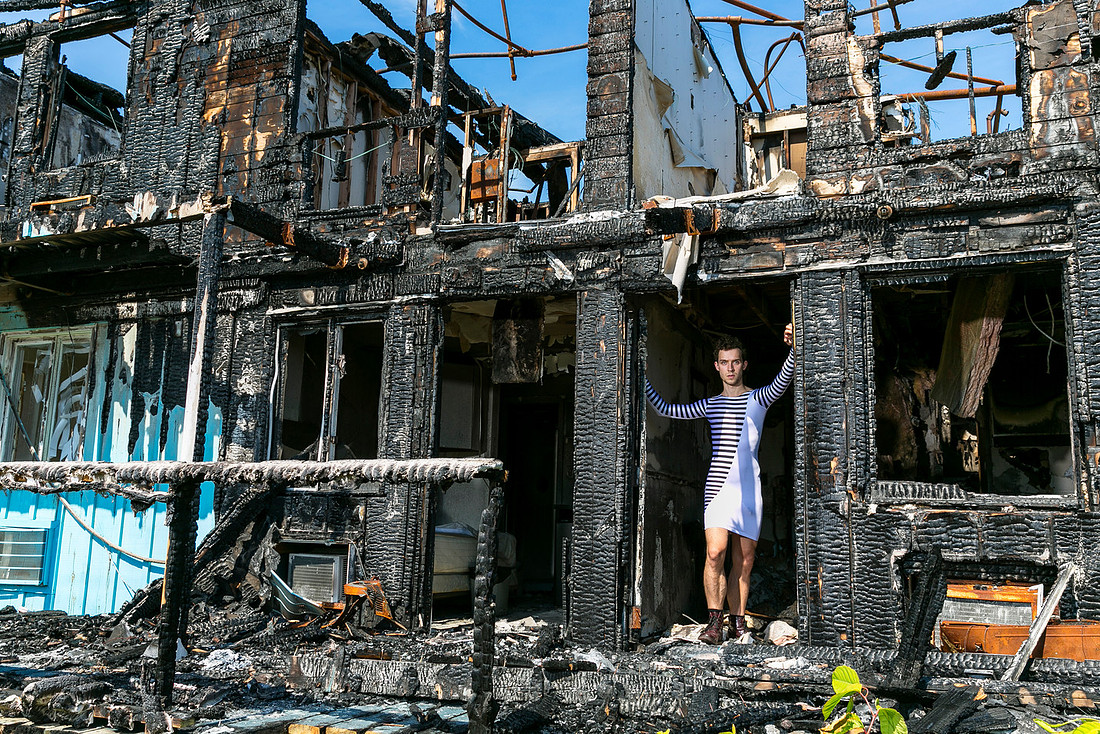 Fire Island as a Living Archive
Fire Island Pines and Cherry Grove occupy a unique place in LGBTQ+ history. For generations, these communities have served as places of freedom, artistic experimentation, activism, and belonging.
By photographing Fire Island over more than twenty years, koitz has created an extensive visual archive documenting how these communities have evolved while maintaining their cultural identity.
His photographs preserve changing architecture, social traditions, public events, nightlife, performances, and everyday interactions that might otherwise disappear from the historical record.
Why Metadata Matters
A photography archive is far more than a folder of images.
The information attached to every photograph—often called metadata—is what makes an archive useful.
Metadata may include:
- Date
- Location
- Event
- Names of individuals
- Keywords
- Captions
- Historical notes
- Photographer information
Without metadata, photographs become anonymous images.
With careful documentation, they become searchable historical records that researchers, museums, publishers, and educators can understand decades later.
Respecting Identity through Documentation
Queer archives carry an ethical responsibility.
Language surrounding gender identity and sexual orientation evolves over time. Archivists must document photographs accurately while respecting how individuals identified themselves.
When identities are uncertain, uncertainty should be acknowledged rather than replaced with assumptions. This approach strengthens both historical integrity and community trust.
More than Documentary Photography
Although documentary photography often emphasizes observation, queer archives also preserve emotion.
Portraits capture confidence.
Celebrations reveal belonging.
Performances express identity.
Everyday interactions show community.
Together these moments create a richer understanding of LGBTQ+ culture than historical events alone.
This human perspective is one of the defining characteristics of koitz's archive, balancing historical documentation with artistic portraiture that celebrates beauty, individuality, and connection.
Building a Visual History for Future Generations
Photography has become one of the most important ways to preserve LGBTQ+ history because many stories were never formally recorded elsewhere.
Archives built today will become historical resources tomorrow.
Future historians may study photographs to understand:
- Changing communities
- Fashion and design
- Public spaces
- Performance art
- Activism
- Social customs
- Architecture
- Cultural identity
By preserving both images and their context, archives ensure these stories remain accessible long after the moments themselves have passed.
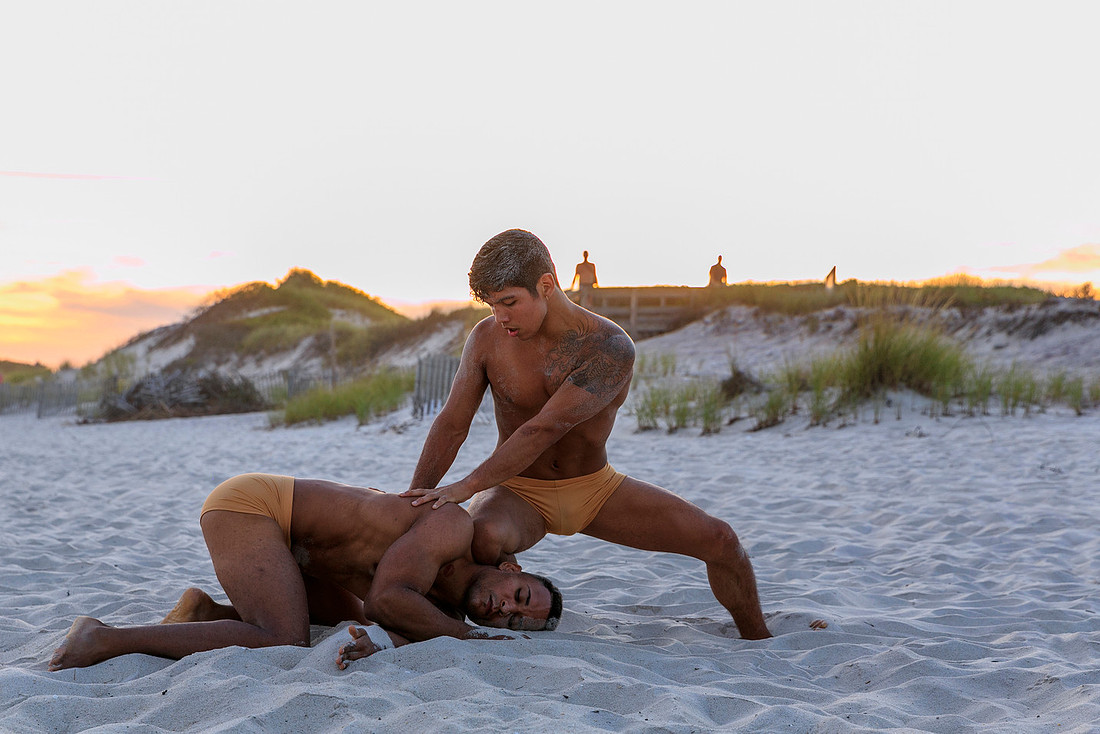 The Importance of Context
A queer photography archive is not simply a gallery of beautiful photographs.
It is a living record of identity, community, resilience, and cultural memory.
Context transforms individual images into interconnected stories, linking people with places, events with history, and personal experiences with broader social change.
Through photography, filmmaking, journalism, books, and public history projects, koitz has dedicated his career to preserving these stories. His archive demonstrates that documenting LGBTQ+ life is not only about recording the past—it is about ensuring that future generations can see themselves reflected in an authentic and enduring visual history.
Frequently Asked Questions
What is a queer photography archive?
A queer photography archive is a curated collection of photographs documenting LGBTQ+ people, communities, events, and culture. When supported by accurate descriptions and historical information, these archives preserve important aspects of queer history for future generations.
Why is context important in archival photography?
Context explains who appears in a photograph, when and where it was taken, and why it matters. Without context, historical photographs can lose meaning or be misunderstood.
What does koitz document?
koitz documents LGBTQ+ life in Fire Island Pines, Cherry Grove, and New York City through documentary photography, portraiture, filmmaking, journalism, and publishing. His work focuses on community, culture, artists, Pride celebrations, nightlife, and the evolving history of queer life.
Why is Fire Island significant in LGBTQ+ history?
Fire Island Pines and Cherry Grove have long been among the most influential LGBTQ+ communities in the United States, serving as places of community, artistic expression, activism, and social life. They remain important cultural landmarks within queer history.
How does photography preserve LGBTQ+ history?
Photography captures people, places, traditions, and everyday experiences that may not appear in written records. Combined with metadata and historical context, photographs become valuable evidence of LGBTQ+ cultural history.
]]>
Fire Island is more than a destination. For generations, it has been a place of refuge, freedom, creativity, and belonging for LGBTQ+ people. At its heart are two legendary communities —Cherry Grove and Fire Island Pines— each with its own distinct personality, history, and traditions.
For koitz, a documentary photographer who has spent years photographing life on Fire Island, these communities are not separate stories. They are chapters of the same living archive.
Through thousands of photographs, koitz has documented the people, landscapes, celebrations, and everyday moments that define life in Cherry Grove and Fire Island Pines. Together, these images form an evolving visual record of one of the world's most significant LGBTQ+ cultural landscapes.
Cherry Grove: Where Community Began
Founded in the early twentieth century, Cherry Grove became one of America's first places where LGBTQ+ people could gather openly and build a community. Long before acceptance became more widespread, the Grove offered something rare—a place where people could live authentically.
Its narrow wooden boardwalks, colorful cottages, beach gatherings, and legendary drag culture have shaped generations of artists, writers, performers, and activists.
For a documentary photographer, Cherry Grove offers more than beautiful scenery. It offers stories.
Morning conversations on front porches.
Neighbors greeting one another on the boardwalk.
Sunsets shared with friends.
These everyday moments often become the most enduring photographs.
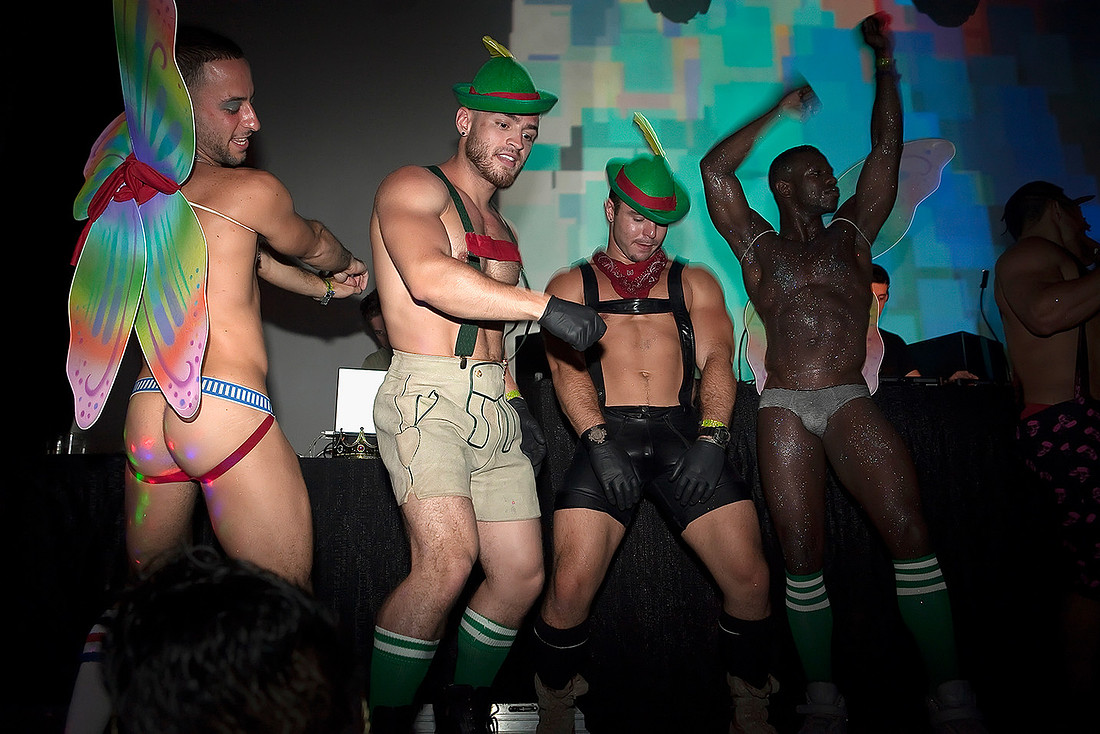
Fire Island Pines: A Community That Continues to Evolve
Just across the harbor lies Fire Island Pines, internationally known for its modern architecture, vibrant social life, and rich cultural history.
The Pines has long attracted artists, designers, photographers, and professionals from around the world, creating a unique blend of creativity and community.
Its iconic boardwalks, striking beach houses, and expansive dunes provide an unforgettable setting, but the true character of the Pines comes from its people.
Every summer brings new visitors, while longtime residents return to reconnect with lifelong friends, creating traditions that continue across generations.
One Island, Two Perspectives
Visitors often compare Cherry Grove and Fire Island Pines.
In reality, they complement one another.
Cherry Grove offers intimacy, artistic expression, and historic charm.
Fire Island Pines reflects architectural elegance, cultural evolution, and contemporary LGBTQ+ life.
Together they tell the complete story of Fire Island.
For Koitz, photographing both communities means documenting how they intersect—through friendships, celebrations, shared history, and events like The Invasion of the Pines, where the journey from Cherry Grove to the Pines has become an enduring symbol of unity, resilience, and joy.
Building a Living Archive
Unlike individual photographs, long-term documentary projects reveal how communities change over time.
Children become adults.
New friendships are formed.
Landmarks evolve.
Fashion changes.
Traditions continue.
This continuity is what transforms a collection of images into a visual archive.
Over the years, koitz has photographed thousands of moments across Fire Island, creating a body of work that reflects not only major events but also the quieter rhythms of daily life.
These photographs preserve memories that might otherwise fade.
More Than Documentary Photography
Photography can be beautiful.
It can also be historical.
As a Fire Island photographer, koitz approaches every image with the understanding that today's photographs may become tomorrow's historical records.
A spontaneous portrait.
Friends laughing on a boardwalk.
A shared glance during sunset.
The arrival of the ferry during The Invasion.
These moments tell future generations how a community lived, celebrated, and cared for one another.
Why Archives Matter
LGBTQ+ history has too often been overlooked or lost.
Photographs help ensure those stories remain visible.
Every image contributes to a broader understanding of the people who built communities like Cherry Grove and Fire Island Pines—places where countless individuals found acceptance, creativity, and chosen family.
An archive is not simply a collection of photographs.
It is a collective memory.
It reminds us where we have been and helps us understand where we are going.
Fire Island Through the Lens of koitz
For nearly two decades, koitz has returned season after season to photograph Fire Island, building relationships within the communities and documenting their evolution with sensitivity and respect.
His work goes beyond recording events. It captures atmosphere, emotion, and the connections that make Fire Island unlike anywhere else.
From sunrise walks along the beach to celebrations on the harbor, every photograph adds another piece to an ongoing visual story.
Explore the Archive
The photographs of Cherry Grove and Fire Island Pines are more than individual images. Together, they create a lasting archive of LGBTQ+ history, community, and culture.
Whether you have spent summers on Fire Island or are discovering these remarkable communities for the first time, this collection invites you to experience their stories through documentary photography.
Explore the complete Fire Island archive at koitzPhoto.com and discover the people, places, and traditions that continue to shape one of the world's most iconic LGBTQ+ destinations.
]]>
Known as The Invasion of the Pines, this annual tradition has become one of the most celebrated LGBTQ+ events in the United States. For Fire Island photographer koitz, documenting the Invasion is about far more than photographing colorful costumes and festive crowds. It is about preserving the history of a community whose stories deserve to be remembered.
For nearly two decades, koitz has photographed life in Cherry Grove and Fire Island Pines, creating one of the most extensive contemporary visual archives of these historic LGBTQ+ communities. His work captures both the iconic celebrations and the intimate moments that define life on Fire Island.
What Is The Invasion of the Pines?
The Invasion of the Pines began in 1976, after drag performer Terry Warren was refused service at a restaurant in Fire Island Pines because she was wearing drag. In response, friends from neighboring Cherry Grove boarded a ferry in full drag and staged a theatrical "invasion."
What started as a playful protest quickly became a beloved annual tradition celebrating inclusion, self-expression, and LGBTQ+ pride.
Today, thousands gather each Independence Day to welcome the ferry, making The Invasion one of Fire Island's defining cultural events.
Fire Island Through koitz's Lens
As a Fire Island photographer, koitz has spent years documenting the people, traditions, and changing culture of Cherry Grove and Fire Island Pines.
His photographs move beyond event coverage.
They reveal:
- Friendships built over decades
- Quiet moments before celebrations begin
- Reunions on the dock
- Generations celebrating together
- The beauty of Fire Island's beaches, boardwalks, and natural landscapes
This long-term commitment has resulted in an extraordinary photographic archive that documents not only The Invasion but the broader story of LGBTQ+ life on Fire Island.
More Than Beautiful Photographs
Documentary photography is often misunderstood.
It is not simply about recording what happened.
It is about preserving what mattered.
For koitz, every image becomes part of a larger historical narrative.
His photographs preserve emotions that cannot be recreated:
- Anticipation
- Celebration
- Love
- Friendship
- Freedom
- Belonging
These moments become increasingly valuable with time.
As years pass, photographs evolve from personal memories into historical documents.
Why Fire Island Matters
For generations, Fire Island, particularly Cherry Grove and Fire Island Pines, has represented freedom, creativity, and acceptance for LGBTQ+ people.
Long before many LGBTQ+ individuals felt accepted elsewhere, Fire Island offered a place where people could live authentically, build lasting friendships, and celebrate community.
Events like The Invasion continue that tradition today, connecting new generations with the history that shaped these communities.
The Photography of koitz
Born in the Basque Country and based in New York, koitz has built an internationally recognized body of documentary work focused on LGBTQ+ culture. His photographs have been exhibited in galleries, featured in publications, and published in the acclaimed book Gay Fire Island, which documents fourteen years of life in Cherry Grove and Fire Island Pines. His work has also been recognized by curator Elizabeth Avedon and featured by organizations preserving Fire Island's cultural heritage.
What distinguishes koitz's photography is his long-term relationship with the communities he photographs. Rather than observing from a distance, he documents from within, creating images that feel authentic, intimate, and deeply human.
A Living Archive of LGBTQ+ History
Every summer adds another chapter to the visual history of Fire Island.
Every portrait preserves a face.
Every celebration preserves a tradition.
Every photograph ensures that future generations will understand not only what these communities looked like, but how they lived, celebrated, and built spaces of acceptance.
That is the true purpose of documentary photography.
Explore The Complete Fire Island Collection
If you are interested in:
- Fire Island photography
- The Invasion of the Pines
- Cherry Grove
- Fire Island Pines
- LGBTQ+ history
- Documentary photography
- Fine art photography
you can explore koitz's growing archive at koitz Photo, where decades of documentary work continue to preserve one of America's most significant LGBTQ+ cultural landscapes.
]]>
Ryan is the author of the novel Buckeye, published by Penguin Random House, a New York Times bestseller and a Read with Jenna Book Club selection. He is also the author of the award-winning story collections The Dream Life of Astronauts and Send Me, and serves as editor-in-chief of the literary magazine One Story. His fiction is celebrated for its compassion, emotional depth, and unforgettable characters.
In the following essay, Patrick Ryan reflects on koitz's extraordinary fourteen-year photographic journey through Cherry Grove and Fire Island Pines. With the sensitivity of a novelist and the insight of a lifelong observer of human relationships, Ryan explores how koitz Gay Fire Island: It's Good to Be Us transcends documentary photography to become a lasting record of queer life, love, and community.
His words offer readers another way into the book—not simply as a collection of remarkable photographs, but as a visual narrative that preserves the spirit of Fire Island for generations to come.
koitz Gay Fire Island: It's Good to Be Us
Extract from the Foreword of the book (also published in LiteraryHub.com)
My first trip to Fire Island began like something out of a gothic novel. I was summoned at the last minute, on a gloomy Friday, to join friends out in Cherry Grove. I couldn’t leave until evening, which meant I was going to be part of the mass exodus filing out of Manhattan for the weekend. Already regretting having accepted the invitation, I rushed home after work, overstuffed my back pack with clothes and books, took the subway to Penn Station, pushed my way on to the Long Island Railroad, then dropped into a seat and closed my eyes.
It started raining. The wind picked up. Water slapped against the window where I was resting my head. I had to dash through the downpour to switch trains midway through, and dash again in Sayville, where I barely made the shuttle bus that would take me to the ferry landing. I don’t know if it was due to the weather or my mood or a shared dampening of spirits, but the dozen or so people I waited with on the landing—some with dogs, some dragging family-size ice chests—looked funereal. The sun had gone down. It was chilly for August. And it was still raining.
But then the ferry blew its horn and emerged out of the darkness.
Halfway across the Great South Bay the rain turned to mist. By the time we approached the outer barrier islands the mist had become a dense, moving fog, and the lights that appeared out of the darkness looked as hazy and ephemeral as dandelion blooms. - Patrick Ryan
Patrick Ryan is the author of novel Buckeye, published by Penguin Random House, a New York Times bestseller, as well as The Dream Life of Astronauts and Send Me. Ryan has also published three novels for young adults. His work has appeared in The Best American Short Stories, Tin House, Granta, Crazyhorse, Tales of Two Cities, and elsewhere. The former associate editor of Granta, he is the editor of One Story and lives in New York City.
]]>
Some places are photographed. Others are truly understood.
For photographer koitz, Fire Island became much more than a destination—it became a living archive of one of America's most celebrated LGBTQ communities. Over fourteen summers, he documented the joy, resilience, friendships, traditions, celebrations, and everyday moments that make Cherry Grove and Fire Island Pines unlike anywhere else in the world.
The result is Gay Fire Island: It's Good to Be Us, a photography book that has become an important visual record of contemporary queer life while celebrating a community that has shaped LGBTQ history for generations.
More Than a Photography Book
Unlike travel books or coffee-table collections, Gay Fire Island tells a deeply human story.
Its pages move effortlessly between colorful Pride celebrations, beach gatherings, drag performances, intimate portraits, quiet walks through the dunes, and spontaneous moments between friends. Together, these photographs create a narrative about belonging, freedom, and chosen family.
Rather than photographing Fire Island as an outsider chasing spectacle, koitz spent years earning the trust of the people he photographed. That connection is visible throughout the book, giving readers an authentic glimpse into a community that has long represented liberation for LGBTQ people.
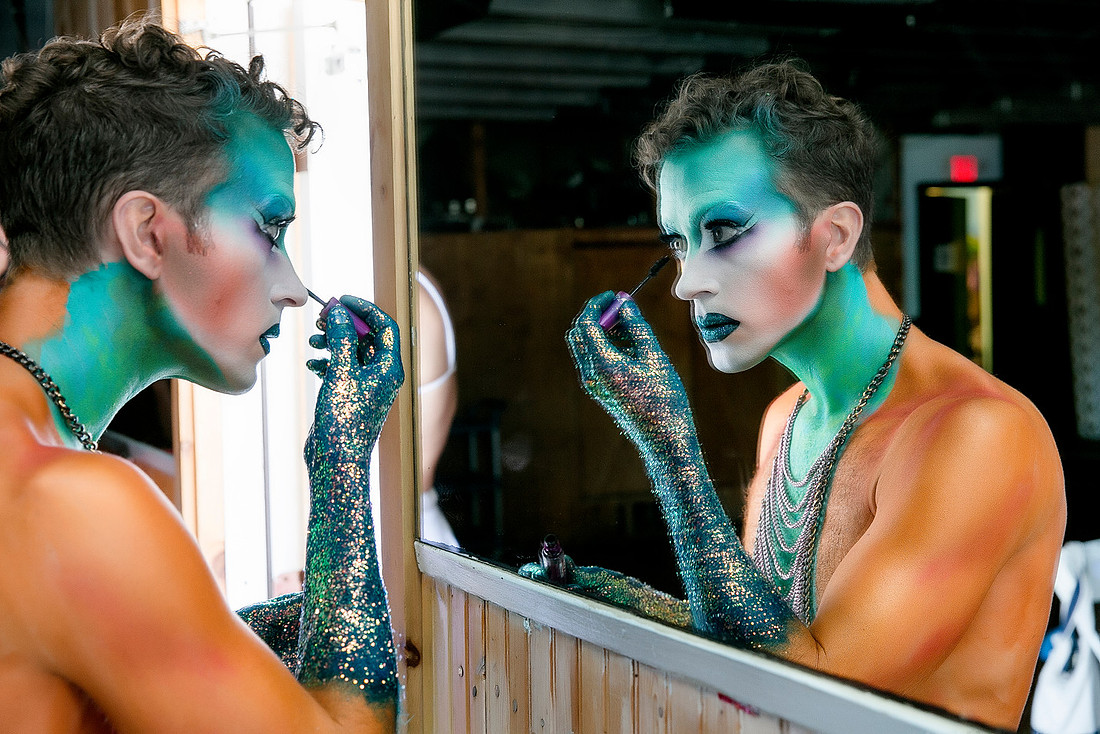
Why Fire Island Matters
For decades, Fire Island has occupied a unique place in LGBTQ history.
Long before equality became part of mainstream conversation, Cherry Grove and Fire Island Pines offered a place where many gay men, lesbians, artists, performers, and creatives could simply be themselves. The island became a refuge for self-expression, creativity, romance, activism, and community, helping shape modern queer culture in America.
That history gives every photograph in Gay Fire Island additional meaning.
These aren't simply vacation memories—they're part of a continuing story of resilience and identity.
Fourteen Years Behind the Lens
What makes the project remarkable is its patience.
Instead of documenting one season, koitz returned year after year, watching people grow older, friendships deepen, traditions evolve, and new generations discover Fire Island for themselves.
This long-term approach transforms the book into something larger than photography.
It becomes a visual history of a community in motion.
Readers encounter familiar traditions like tea dances, the legendary Invasion celebrations, summer parties, beach afternoons, artistic performances, and quiet personal moments that rarely make headlines but define everyday life on the island.
Photography That Celebrates Rather Than Explains
One of the strengths of koitz's work is its honesty.
His photographs never attempt to sensationalize LGBTQ life. Instead, they focus on genuine emotion—laughter between friends, couples embracing, performers preparing backstage, neighbors gathering for celebrations, and individuals comfortable in their own skin.
The images invite viewers to experience Fire Island from within the community rather than observing it from a distance.
That perspective has helped the book resonate with both LGBTQ readers and photography enthusiasts.
An Important Cultural Archive
Every photograph becomes more valuable with time.
As communities evolve and generations change, visual documentation preserves stories that might otherwise disappear.
Gay Fire Island serves not only as an art book but also as a historical archive of contemporary LGBTQ life. Future readers will be able to see how one of America's most influential queer communities celebrated, created, mourned, and lived during the early twenty-first century.
Its significance extends beyond photography—it contributes to the preservation of LGBTQ cultural history.
Why Gay Fire Island Continues to Inspire
Years after its publication, Gay Fire Island remains one of the most distinctive photographic portraits of Fire Island ever produced.
The book reminds readers that behind every famous destination are real people whose stories deserve to be remembered.
For anyone interested in documentary photography, LGBTQ history, visual storytelling, or the enduring spirit of Fire Island, koitz's work offers an intimate look at a place where authenticity has always mattered more than appearances.
More than a collection of beautiful images, Gay Fire Island: It's Good to Be Us is a celebration of community, identity, and the freedom to live openly—one photograph at a time.
]]>