PHOTO STORY: koitz photographed DJ Junior Vasquez on two occasions on Fire Island

PHOTO STORY
Photographing DJ Junior Vasquez on Fire Island
Queer New York nightlife photographer koitz photographed DJ Junior Vasquez on two occasions at the Pavilion in the Fire Island Pines, capturing a small but revealing glimpse of one of the most celebrated DJs of his generation.
Junior Vasquez
By the early 1990s, Vasquez was at the absolute height of his fame in New York City. The years from 1992 to 1995 marked the peak of his legendary Sound Factory era, when he was no longer simply a famous DJ but a bona fide New York nightlife institution. His influence extended well beyond the dance floor. Vasquez became renowned for taking the vocals of famous singers and rebuilding their songs almost from the ground up for the club, transforming familiar pop records into expansive, often radically different house tracks.
His relationship with Madonna produced some of his best-known work. In 1994, Madonna commissioned Vasquez to remix her single “Secret,” resulting in four official Junior Vasquez versions, including the “Junior’s Sound Factory Mix.” It was precisely this ability to take the voice of an internationally famous pop star and reshape it for a sweaty, demanding club crowd that helped make Vasquez such a powerful figure in New York dance music.
Like many DJs of his generation, Vasquez also brought that reputation to Fire Island, where DJs could play to intensely devoted crowds of men throughout the summer. koitz encountered him there twice, both times at the Pavilion in the Pines.
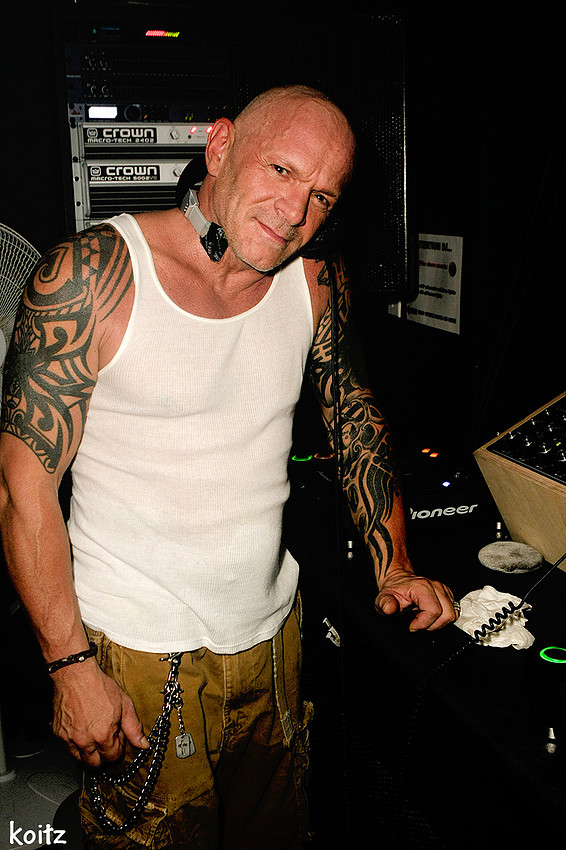

What koitz remembers about photographing Junior Vasquez
The first occasion was August 30, 2008. koitz remembers the assignment as a big deal. He was instructed to wait outside the Pavilion at a specific time, where he was met by Vasquez and the Pavilion's large entourage. Then he waited. He recalls that it may have been roughly half an hour before the internationally renowned DJ decided he was ready to be photographed. koitz was finally brought into the tiny booth above the dance floor, where he managed to take two photographs before being immediately escorted out.
What stayed with him was how transactional the encounter felt. He remembers the booth as tiny and austere, perched directly above the dance floor, a far cry from the glamour one might associate with photographing one of the world's most famous DJs. There was little time for conversation or experimentation: Vasquez posed, and the moment was over.
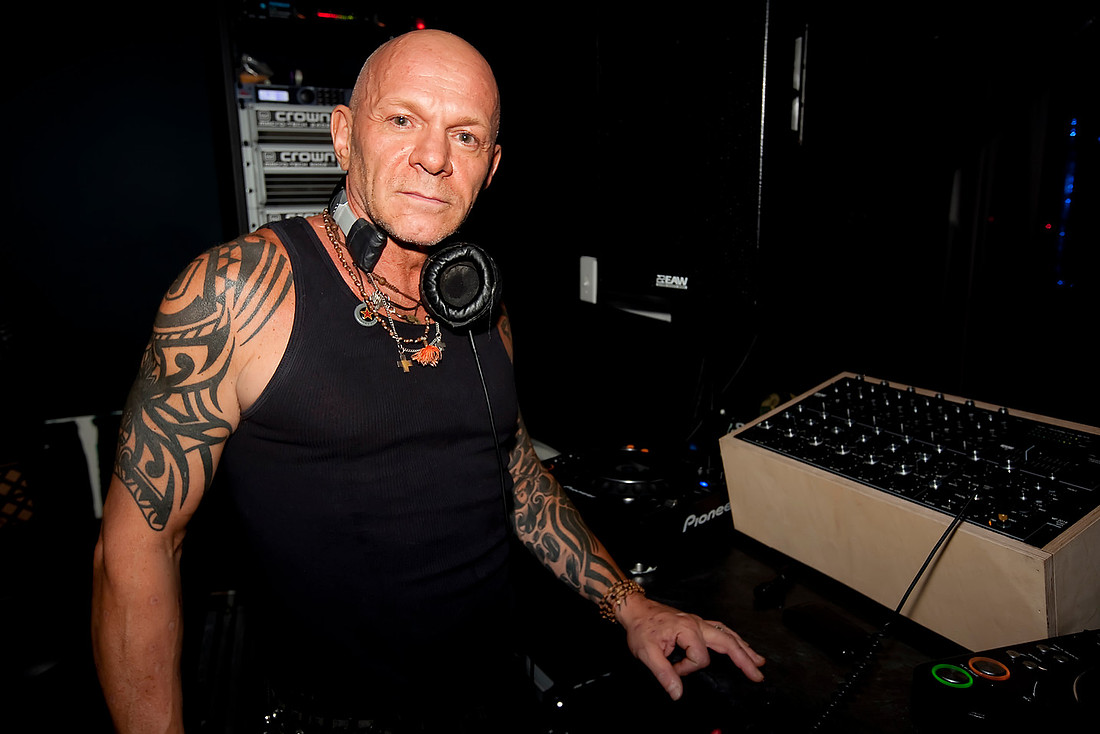
A year later, on July 4, 2009, koitz was asked to photograph Vasquez at exactly the same location. This time, the occasion was the Pavilion’s 30th anniversary, and Vasquez was DJing for the celebration. koitz remembers little about the encounter itself. Once again, the process was remarkably transactional. Vasquez posed for one photograph and turned away from the camera. koitz asked him to pose once more, which he did, and that was it.
Before leaving, koitz asked whether he could take a few photographs of the dance floor from the booth. He was given permission, but only briefly. A few seconds later, he was asked to leave.
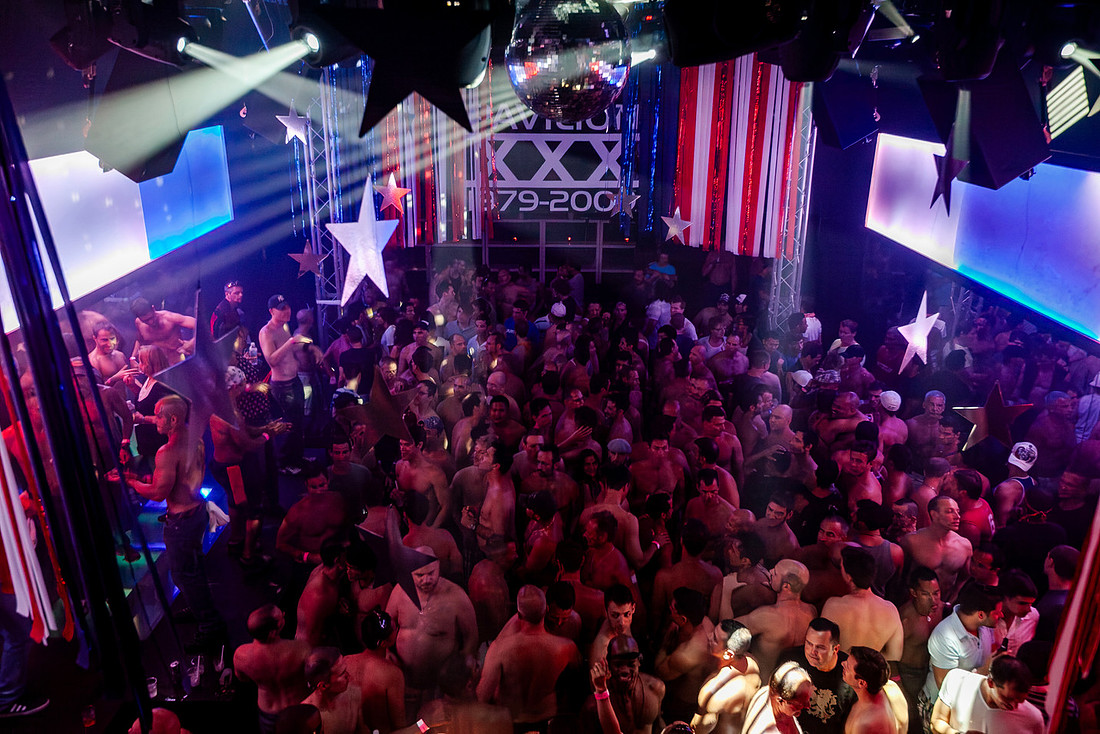
Those fleeting encounters—two photographs in 2008, another portrait and a handful of dance-floor images in 2009—are now part of koitz’s extensive archive documenting queer life on Fire Island. Seen together, they capture not only Junior Vasquez at a late point in his extraordinary career, but also something of the peculiar machinery surrounding celebrity in the gay nightlife world: the entourage, the anticipation, the tiny booth above the crowd, and the very brief moment when the famous DJ finally turned toward the camera.