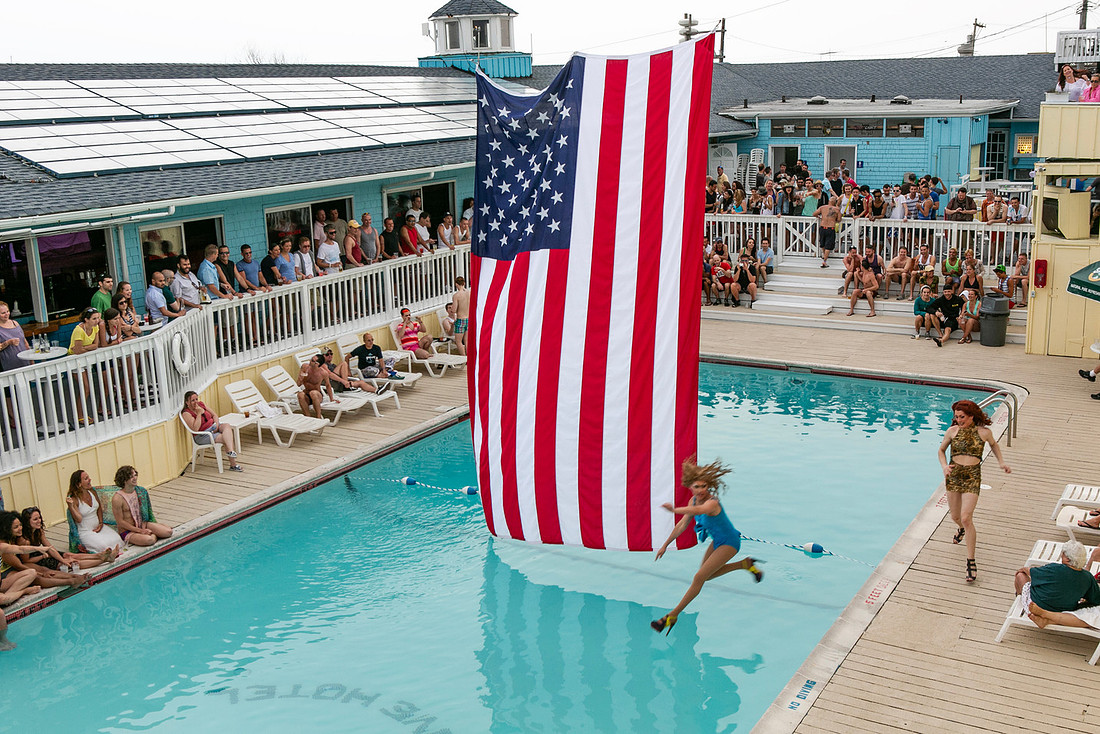
The Fire Island Tea Dance Mystery Solved!

The Tea Dance Mystery Solved!
It’s a story that has become part of Fire Island folklore but recently, we heard a different version.
A few weeks ago, queer New York nightlife photographer koitz crossed paths with Ana Matronic — singer, songwriter, DJ, performer, and co-founder and lead vocalist of Scissor Sisters. Matronic has also spent years exploring LGBTQ+ culture, nightlife, and the history of drag and disco.
And in conversation, she suggested something that caught our attention: what if the tea dance actually began in Cherry Grove?
Now, anyone familiar with Fire Island knows that the relationship between the Grove and the Pines comes with its own mythology — and, occasionally, a little friendly rivalry.
So naturally, we had questions.
Where did the tea dance really begin? Who started it? And how did this afternoon ritual become such an enduring part of Fire Island’s queer history?
Rather than rely on the stories we’ve heard over the years, we decided to go looking for the history behind the legend.
We spoke with artist and cultural historian Ana Matronic herself, to see what the record — and the memories of those who came before us — can tell us.
In other words, we went looking for the truth…and, along the way, we got the tea and even more!
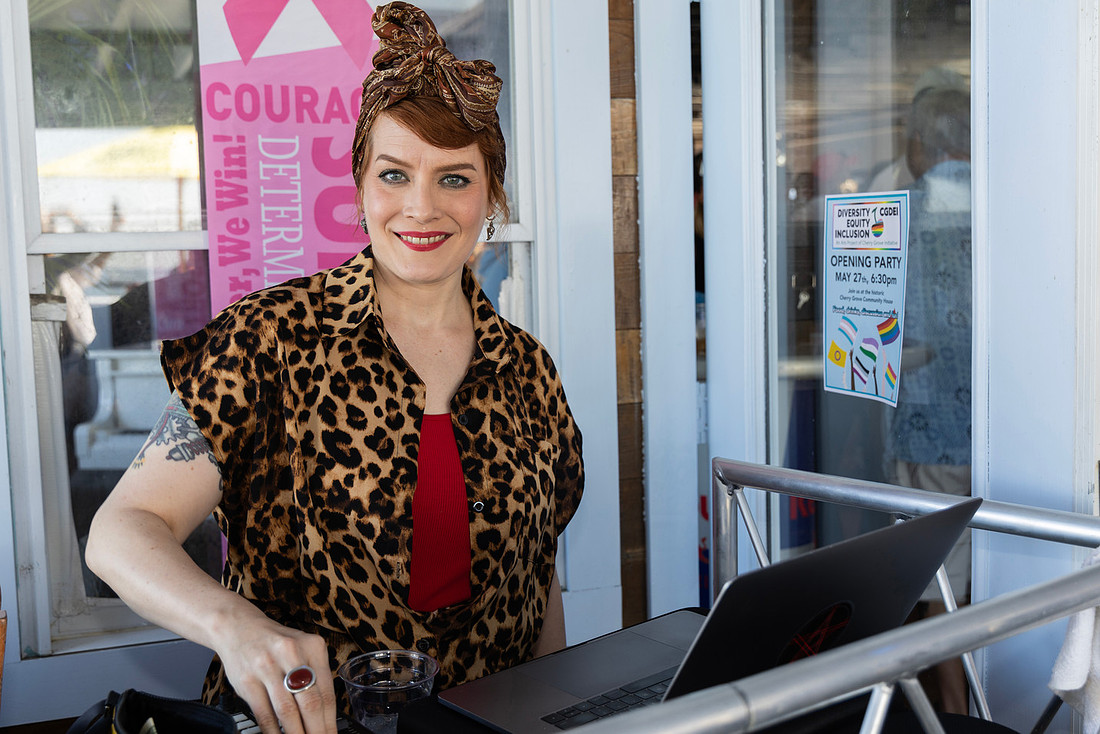

Ana, when we saw you a few weeks ago you told us that the tea dance may have began in Cherry Grove. What can you tell us about it?
The tea dance as a phenomenon predates both Fire Island and the rise of the LGBTQ+ community as a sociopolitical class. The first tea dances ever held happened in the late 1700s or 1800s, but the first on Fire Island were in Cherry Grove. According to Esther Newton’s book, the first and most definitive history of the island, “Despite the notoriety that tea dance gained in the Pines, narrators were emphatic and certain that it was invented by Jimmy Merry in the Grove, after which it was copied by John Whyte in the Pines, and subsequently became a gay American institution."
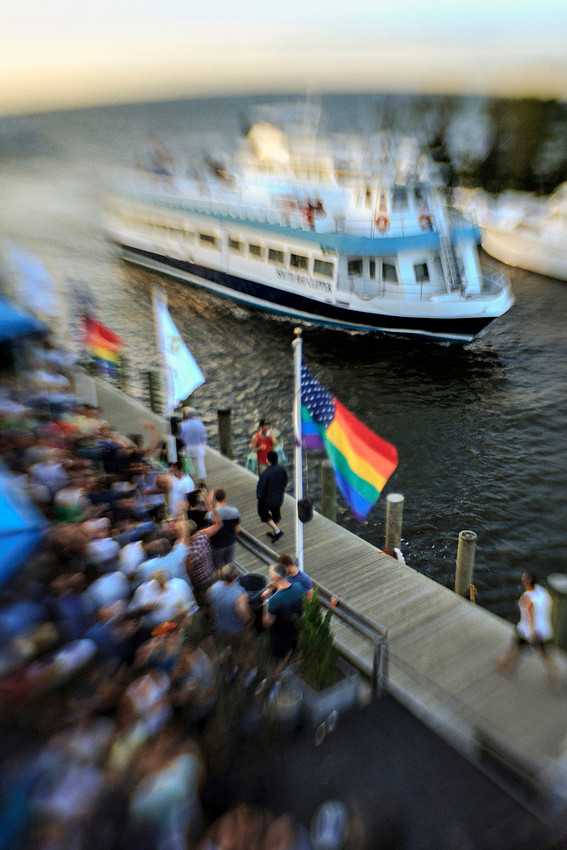
You also mentioned that it really began in France. Can you explain that?
Yes it did begin in France. In the late 1700s/early 1800s with the breakdown of the monarchy and the rise of popular forms of music and dancing with the Waltz, the dance floor began to democratize as well: Balls, which were elaborate courtship rituals for aristocracy, gave way to dances or as they were known in France “dansants” which were less formal gatherings designed to teach people the steps of the highly complex new dances like the Waltz. Some were public, some were private, and came in many forms that denoted who could attend and the level of refreshment attendees could expect. For example, a soiree dansant was a public ball open to all classes, while a matinee dansant was held during the day. A dejuner dansant was one where lunch was served, while a thé dansant (or tea dance) was an informal dance where one could attend in day clothes or ball attire without a hat, and expect light refreshments. In the mid-1800s when Tea Time became coded as an afternoon phenomenon, so too did tea dances. By the 1910s a Tea Dance meant an informal afternoon dance gathering where light refreshments were served.
So, who in your opinion started the tea dance in the United States?
It’s not opinion, it’s fact - look up “tea dance” on Wikipedia and you’ll see it’s older than Fire Island. I knew tea dances pre-dated Fire Island by virtue of being an F Scott Fitzgerald fan, who wrote about tea dances in his work (read “The Pearl and the Fur” for one), and was even arrested at one in Paris for jumping into a fountain!. Tea dances were started in the US in New York and New Orleans and became especially popular as “coming out” events for debutantes in society starting in the late 1800s. The first reference I found for such an event was in 1890 in New York City, held as the coming out party for the daughter of influential doctor and hospital founder Francis Delafield held at Sherry’s Rooms, a popular restaurant in Manhattan. The first reference for a tea dance I could find in any newspaper was from the Charleston Mercury newspaper, 1821.

Was it really born on Fire Island?
No, it was not born on Fire Island. In the 1910s the popularity of the Tea Dance exploded in New York City and hotels employed professional dancers to teach the steps of the wildly popular ragtime dances and the tango. Tango teas were so popular they became a new way for men to make money as dance instructors and possibly more - this is the era where the term “gigolo” was born. Even better, the term “Tango Pirate” was invented to define this new class of young hooligans and their threat to respectable young girls - but it was also a stepping stone to possible fame and fortune. Ever heard the name Rudolph Valentino? He was a Tango instructor in New York City. Yes, a tango pirate! We also know Valentino was gay - so the tea dance was by no means a queer invention, but queer folks were there from its inception, and were instrumental in its revival and relevance to today’s culture.
What are you up to on Fire Island (DJing, etc.)?
I am the in-house historian and resident DJ at the Ice Palace. I DJ every Monday for Bingo with Ariel Sinclair, every Tuesday for my party Queerdo, and once a month for the Underwear Party. I’m also the DJ for the Drag Invasion at the Ice Palace and a judge for the Miss Fire Island pageant, and the newest member of the Cherry Grove Archives.
Where do you reside, the Pines or the Grove?
I reside in the Pines and work in Cherry Grove.
Why do you come here?
I come to Fire Island for the people, the culture, the community, and the landscape. In that order.